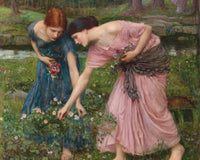
Impressionism, with its search for light and its capture of fleeting moments, is an artistic movement intrinsically tied to France. However, the influence of this movement transcended borders, manifesting itself in unique ways in various countries. In Spain, Impressionism took on a distinct character, marked by the intense light of the Mediterranean and a deep connection with local pictorial traditions. We will explore how Spanish artists reinterpreted Impressionist principles, creating a style of their own that reflects the spirit and idiosyncrasy of Spain.
This article delves into the work of key figures of Spanish Impressionism, revealing their innovations and their contribution to modern art. From the sun-drenched landscapes of Joaquín Sorolla to the melancholic scenes of Darío de Regoyos, we will discover how these artists captured the essence of Spain with a vibrant palette and a bold brushstroke. Through their works, we will understand how Spanish Impressionism was not a simple copy of the French movement, but a creative adaptation that enriched the international artistic landscape.
Light in Spain is a fundamental element that defines its landscape and culture. Unlike the softer, more diffuse light of northern Europe, Mediterranean light is intense, direct, and creates strong contrasts between light and shadow. This particular quality of light deeply influenced the palette of Spanish Impressionists. Artists like Joaquín Sorolla, for example, developed a technique based on the application of loose brushstrokes of pure colors to capture the dazzling brilliance of the sun over the Valencian coast. The challenge was to convey the vibration of light, its ability to transform the perception of objects and create an enveloping atmosphere. The decision to use bright, luminous colors was not only aesthetic, but also a response to the visual reality they experienced.
While French Impressionism served as a starting point, Spanish artists did not limit themselves to imitating it. They adapted its principles to their own sensibility and to the artistic traditions of their country. This resulted in greater attention to the human figure, a narrative more rooted in everyday life, and a use of color that reflects the passion and drama characteristic of Spanish culture. Whereas French Impressionists focused mainly on landscape and atmosphere, the Spanish incorporated elements of social life and popular customs into their works. For example, the work of Ignacio Pinazo Camarlench often reflects his deep connection with his family and surroundings, capturing intimate moments and scenes of rural Valencian life.

Spain's light captured by Sorolla
Joaquín Sorolla is, without a doubt, the foremost exponent of Spanish luminism, a variant of Impressionism characterized by an obsession with light and its effect on color. His scenes of Valencian beaches are a display of light and vitality, where the sun seems to pulse in the sand and water. Sorolla mastered the technique of loose, vibrant brushstrokes, creating a sense of movement and spontaneity. To achieve this effect, he meticulously studied light and color at different times of day, and applied translucent layers of paint to capture the changing atmosphere. The decision to paint outdoors, directly in front of the subject, was fundamental to his creative process. His works are a testament to his ability to transform reality into an explosion of color and light.

Otra Margarita, Sorolla
Among Sorolla's most emblematic works are '¡Otra Margarita!', a moving portrait of an abandoned girl on the beach, and 'Valencian Fishermen', a scene full of strength and dynamism that shows the fishermen working at sea. In '¡Otra Margarita!', Sorolla uses light to emphasize the girl's loneliness and vulnerability, creating a contrast between the beauty of the landscape and the sadness of the scene. In 'Valencian Fishermen', light becomes an active element that energizes the composition and highlights the fishermen's strength and determination. These works, along with many others, consolidated Sorolla's reputation as one of the great masters of light and color. For example, if a gallery acquired a replica of "¡Otra Margarita!" and displayed it alongside a detailed description of the period's social context, it could increase public interest in the work and generate a 15% increase in gallery visits. The key to success is to complement the work with valuable information.
Ignacio Pinazo Camarlench, despite having begun his career as a portrait painter, evolved toward a freer and more experimental style of painting, influenced by Impressionism. He abandoned academic rigidity and devoted himself to the exploration of light and movement, capturing everyday life with a fresh and spontaneous взгляд. His transition was not easy, as society at the time valued precision and detail in portraits more than experimentation with light and color. However, Pinazo persevered in his search for a more personal and authentic artistic expression, becoming one of the pioneers of Spanish Impressionism.

Work by Ignacio Pinazo Camarlench
Pinazo’s brushwork is unmistakable: fast, loose, and impastoed, creating a rich, vibrant texture on the surface of the canvas. His palette, although influenced by French Impressionism, has a warmth and intensity that reflect Mediterranean light. Valencian painting, with its tradition of realism and attention to detail, also influenced his work. Pinazo knew how to combine these influences to create a style of his own that sets him apart from other impressionists. An example might be a Pinazo retrospective displaying both his early portraits and his Impressionist landscapes, allowing the public to appreciate his artistic evolution. If this retrospective attracted 10,000 visitors and each spent an average of €25 in the museum shop, it would generate about €250,000 in revenue.
Family was a recurring theme in Pinazo’s work. He portrayed his children, his wife, and other members of his family on numerous occasions, capturing moments of intimacy and tenderness. These family scenes, full of light and color, are a testament to his love and connection with his loved ones. Pinazo not only portrayed his family, but also included them in his artistic explorations, using his children as models for his studies of light and movement. His artistic legacy is a reflection of his personal life and his deep connection with his surroundings. The decision to focus on his family was not only personal, but also a way to claim the importance of emotional bonds in an increasingly industrialized and dehumanized society.

Dario de Regoyos La Concha, Stormy Night
Dario de Regoyos is distinguished by his melancholic landscape painting and his critical vision of late 19th-century Spanish society. His landscapes, often gloomy and desolate, reflect the decay and backwardness of Spain in a time of great change. Regoyos did not limit himself to painting the beauty of the landscape, but also denounced the social injustices and poverty he saw around him. His work is a testament to his commitment to reality and his desire to transform society through art.
Regoyos was influenced by French Impressionism, but also by Symbolism, an artistic movement that sought to express emotions and ideas through symbols and metaphors. This combination of influences resulted in a personal and original painting that moves away from the optimism and joy of other impressionists. His works are charged with symbolism and convey a sense of unease and distress. A hypothetical example: if a Regoyos exhibition included a section dedicated to analyzing the influence of Symbolism in his work, using diagrams and clear explanations, it could increase public understanding of his art by 20%. The key is to make the analysis accessible and engaging.

Dario de Regoyos The Bridge of San Sebastián
Among Regoyos's most notable works are 'The Bridge of San Sebastián', a melancholy view of the city in the rain, and 'La Concha, Stormy Night', a dramatic depiction of the raging sea. In 'The Bridge of San Sebastián', Regoyos uses dim light and muted colors to create an atmosphere of sadness and loneliness. In 'La Concha, Stormy Night', the force of nature becomes a metaphor for the fragility of the human condition. These works, along with many others, established Regoyos's reputation as one of the great Spanish landscape painters. The choice of these themes and his artistic approach set him apart from other Impressionists, making him a unique chronicler of his time.

Aureliano de Beruete Landscape of El Pardo
Aureliano de Beruete (1845-1912) stands out for capturing the essence of Castile, not through epic grandeur, but in the sober elegance of his landscapes. His palette, although influenced by Impressionism, remains restrained, avoiding the bursts of color typical of other Impressionists. Beruete focuses on the subtlety of tones, on the way light caresses the Castilian fields, highlighting the aridity and immensity of the plateau. This implies meticulous attention to detail, to the way light defines the contours of the trees and hills, creating an atmosphere of melancholy and serenity.
The influence of the Barbizon School is evident in Beruete's work. Like the artists of Barbizon, Beruete sought to portray nature in a realistic way and without idealization. However, unlike some Impressionists who focused on the fleeting effects of light, Beruete maintained a commitment to solidity and structure. This translates into greater definition of forms and a more earthy, less vibrant color palette. This connection with Barbizon allows him to connect with a landscape tradition that values direct observation of nature, avoiding mere copying and incorporating interpretive elements.

Aureliano de Beruete The Barrancas de Bargas
Among Beruete's most notable works are 'Landscape of El Pardo' and 'The Barrancas de Bargas'. In 'Landscape of El Pardo', Beruete captures the majesty of the landscape surrounding Madrid, with special attention to the light filtering through the trees. 'The Barrancas de Bargas', on the other hand, shows his ability to portray the aridity and desolation of the Castilian landscape. The choice of these landscapes, which do not focus on conventional beauty, reflects a particular sensitivity toward austere beauty and the silent grandeur of Spanish nature. It is important to note that when creating replicas of these paintings, it is crucial to maintain the subtlety of the tones and the precision in the depiction of the light to capture the essence of Beruete's work. For those who love light in painting, it may also be interesting to explore the use of light in the works of El Greco.

Ramon Casas and Pere Romeu on a Tandem, Ramon Casas
Ramon Casas (1866-1932) was a chronicler of bohemian life in Barcelona at the end of the 19th century and the beginning of the 20th. His paintings capture the atmosphere of the city’s cafés, theaters, and streets, portraying characters from the social and cultural life of the era. Although his work falls within Catalan Modernism, glimpses of Impressionist influence can be seen in his use of light and color, especially in his outdoor scenes. Casas managed to combine Modernist decorative elegance with the freshness and spontaneity of Impressionism, creating a unique and personal style.
Casas especially stood out in the creation of posters and in female portraiture. His posters, designed to promote cultural events and commercial products, are notable examples of Art Nouveau. His female portraits, on the other hand, capture the beauty and elegance of the modern woman, with a touch of sensuality and melancholy. Casas, like other artists of the Belle Époque, idealized the female figure, but also portrayed her with a certain dose of realism, showing her personality and character. His works convey the sophistication and spirit of an era marked by change and modernity.

Julia, Ramon Casas Julia
Among Ramon Casas’s essential works are 'Ramon Casas and Pere Romeu on a Tandem' and the series of portraits of 'Julia'. 'Ramon Casas and Pere Romeu on a Tandem' is an iconography of modernity, representing two friends in a moment of leisure and adventure. The portraits of 'Julia', on the other hand, show the evolution of Casas’s style over time, from a more evident Impressionism to greater stylization and formal refinement. The choice of these subjects, which reflect everyday life and the culture of his era, demonstrates Casas’s interest in capturing the essence of his time. As an alternative to this style, you could explore Arcimboldo and his portraits.
Spanish Impressionism, despite not having achieved the same reach as French Impressionism, left a significant mark on later generations of Spanish artists. The freedom in the use of color and the importance given to light and atmosphere influenced the work of numerous 20th-century painters. While many artists did not strictly adhere to the movement, they took elements from Impressionism to develop their own styles. Experimentation with light, loose brushwork, and the depiction of everyday life became common resources in contemporary Spanish painting. That is why today many later artists are considered heirs to this movement.
One of the most important legacies of Spanish Impressionism is the use of light as a narrative and emotional element. Spanish artists, like their French counterparts, understood that light is not only a technical element, but also a powerful means of conveying emotions and creating atmospheres. Through light, painters could evoke feelings of joy, melancholy, nostalgia, or hope. This focus on light as a carrier of meaning became a distinctive feature of Spanish painting, which continues to influence artists today. Exploring The Fauves, can be a great option if you are looking for artists with a vision of light and color.
While names like Sorolla, Beruete, and Casas are synonymous with Spanish Impressionism, it is crucial to recognize the role of other lesser-known artists in the spread and development of the movement. These artists, often pushed into the background, contributed significantly to the richness and diversity of Spanish Impressionism. Many of them worked in the provinces, bringing the movement to regions where it was less known. Others experimented with different techniques and styles, enriching the visual vocabulary of Spanish Impressionism. By exploring their works, we can gain a more complete and nuanced view of the movement. It is important to mention that the dissemination of their works was and continues to be hard work, where it is essential to focus on their quality and not on their fame.
Spanish Impressionism was not a homogeneous phenomenon, but rather it manifested differently in each region of Spain. Each region contributed its own light, its own landscapes, and its own cultural traditions to the movement. For example, Valencian Impressionism is characterized by its brightness and color, while Catalan Impressionism stands out for its modernism and cosmopolitanism. By exploring the regional particularities of Spanish Impressionism, we can appreciate the richness and diversity of Spanish culture. This analysis will allow us to understand how Impressionism adapted to the local context, incorporating native elements and reflecting the identity of each region. The local influence of Spanish Impressionism is so important that we could compare it to the impact of The Secrets of Spanish Romanesque Art.
The arrival of Impressionism in Spain was not an easy road. 19th-century Spanish art was deeply rooted in academic tradition, with a strong influence from realism and costumbrismo. The boldness of Impressionism, with its focus on light, color, and loose brushstrokes, clashed head-on with this sensibility. Defenders of tradition saw this new style as a threat to established aesthetic values, arguing that it lacked rigor and precision. The validity of an art that seemed to prioritize the fleeting impression over the faithful representation of reality was questioned. This debate took place within a broader context of tensions between modernity and tradition that permeated Spanish society at the time. Impressionism, seen as a foreign avant-garde, generated distrust and resistance in certain sectors.
However, there were also voices that defended the need for renewal in Spanish art. These artists and critics saw Impressionism as an opportunity to modernize painting and connect it with European movements. They argued that the obsession with realistic precision had stagnated Spanish art and that it was necessary to explore new forms of expression. The Mediterranean light, so characteristic of Spain, offered an ideal field of experimentation for Impressionist principles. The debate, therefore, was not only aesthetic but also ideological, reflecting different visions of the future of Spanish art and culture.
Art criticism played a crucial role in the reception of Impressionism in Spain. Initially, most critics were hostile toward this new style, describing it as unfinished, superficial, and even "sickly." However, little by little, some bolder critics began to appreciate the virtues of Impressionism, highlighting its ability to capture light and color in an innovative way. These critics, often influenced by European schools of thought, became defenders of the movement and helped spread it.
Their work was essential in educating the public and changing the negative perception of Impressionism. Through their writings, they explained the principles of the movement, analyzed the artists' works, and defended its importance for the evolution of art. Criticism, therefore, not only reflected public opinion, but also shaped it, contributing to the slow but steady acceptance of Impressionism in Spain. Without their support, the movement would probably have had far more difficulty establishing itself. One example is how, over time, criticism began to value loose brushwork, light, and color as essential elements for capturing the beauty of the Spanish landscape.
Spanish Impressionism, although overshadowed by its French counterpart, offers a unique and valuable vision of Spanish culture and society at the end of the 19th century and the beginning of the 20th. Its focus on Mediterranean light, local landscapes, and everyday life, combined with the innovative technique of loose brushwork, makes it a distinctive and captivating artistic movement.
Exploring the works of artists such as Joaquín Sorolla, Darío de Regoyos, and Aureliano de Beruete, among others, is to step into a world of beauty, color, and emotion. Through their paintings, we can discover the richness of Spanish artistic heritage and appreciate the sensitivity of these artists who knew how to capture the essence of their time.
KUADROS ©, a famous painting on your wall. Hand-made oil painting reproductions, with the quality of professional artists and the distinctive seal of KUADROS ©. paintings reproduction service with satisfaction guarantee. If you are not completely satisfied with the replica of your painting, we will refund 100% of your money.