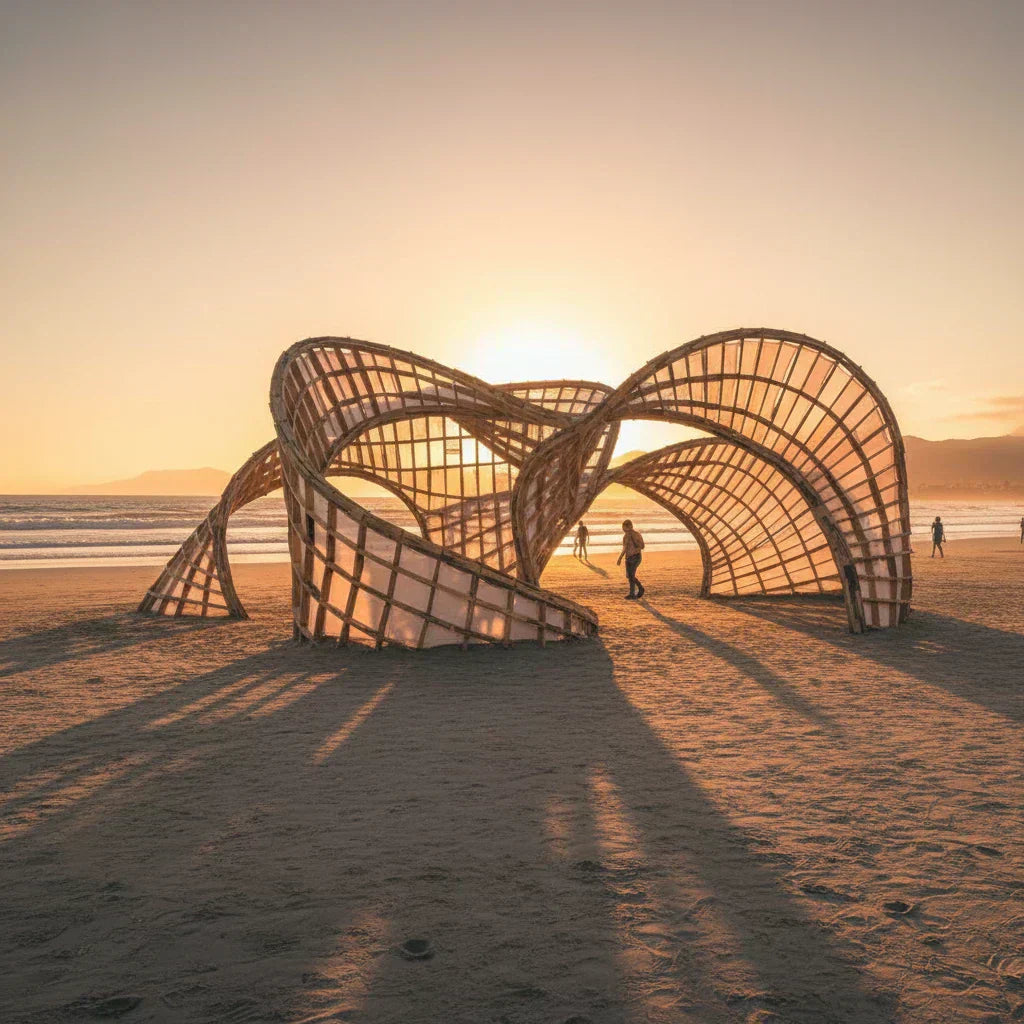
Art, in its essence, has always sought to transcend time. However, there is a fascinating current that embraces impermanence, the beauty of the ephemeral. Ephemeral architecture, with its creations destined to disappear, invites us to reflect on the value of the moment, the mark we leave behind, and the transient nature of existence. It is an art that defies conventions, that is built to be contemplated and then, quite simply, to vanish.
From artistic installations that last just a few hours to pavilions designed for specific events, ephemeral architecture redefines our relationship with space and time. It reminds us that experience can be as valuable as durability, and that memory can be a monument as powerful as steel and concrete. We will explore this fascinating world where art is built to disappear, leaving behind an echo of beauty and reflection.
Ephemeral architecture is distinguished by its intrinsically temporary nature. Unlike permanent constructions, conceived to last for centuries, ephemeral structures are designed to exist for a limited period, which can range from just a few hours to several months. This challenge to permanence is precisely what defines its uniqueness and artistic power. It is an art that celebrates the moment, that values fleeting experience above material longevity. In a world obsessed with longevity and accumulation, ephemeral architecture invites us to contemplate the beauty of the transient, reminding us that everything inevitably comes to an end.
This type of architecture often incorporates elements of performance and public participation, blurring the lines between art, design, and lived experience. The installation becomes an event, an opportunity for interaction and collective reflection. The subsequent disappearance of the work does not diminish it; rather, it reinforces its impact, transforming it into an unforgettable memory. Think, for example, of a pavilion built for a music festival, hosting concerts and activities for a few days, and then being dismantled and repurposed. Its value lies not in its physical permanence, but in the experience it provided to thousands of people.
The central question posed by ephemeral architecture is precisely this: why invest time, resources, and creativity in something that is destined to disappear? The answer lies in the pursuit of an intense and meaningful experience that goes beyond mere functional utility. Ephemeral architecture offers a platform for experimentation, innovation, and artistic expression without the limitations imposed by the need for durability. It allows architects and designers to explore new forms, materials, and concepts, freeing themselves from conventions and established codes.
In addition, ephemeral architecture can fulfill important social and cultural functions. It can serve as a catalyst for urban regeneration, revitalizing abandoned or underused spaces. It can raise awareness about environmental issues by using recycled or biodegradable materials. It can celebrate events and commemorations, creating unique and memorable spaces. In short, ephemeral architecture is a powerful tool for transforming our surroundings and enriching our lives, even if its presence is brief. It is often used to create immersive environments, as we can see in the sets created for theater or visual presentations.
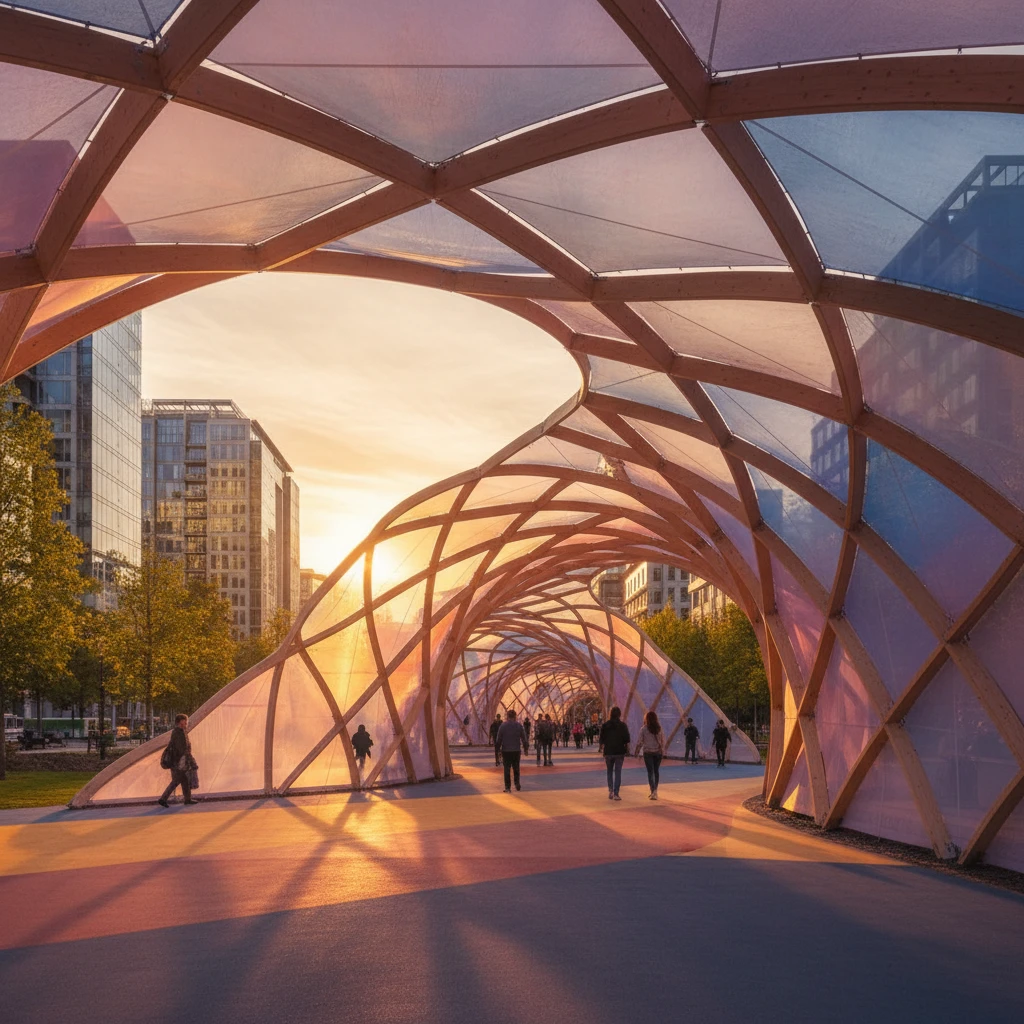
Defining ephemeral architecture involves considering several key criteria that go beyond simple temporariness. Although limited duration is a distinguishing factor, it is not the only one. An ephemeral structure is also characterized by its purpose, its context, and the materials used. Purpose refers to the specific objective for which the structure is created, whether for an event, an exhibition, a celebration, or an urban intervention. Context refers to the physical and social environment in which the structure is placed, and how it interacts with it. Finally, materials play a fundamental role in determining the work's temporary nature, as well as its environmental impact.
Another important criterion is the ease of assembly and disassembly. Ephemeral structures are usually designed to be built and taken down quickly, using modular or prefabricated systems. This helps minimize costs and environmental impact, as well as making transportation and reuse easier. In addition, ephemeral architecture is often characterized by its experimental and innovative nature, using unconventional technologies and materials. Prefabrication and modular design allow greater flexibility in adapting to different spaces and needs. A good example is inflatable structures used at sporting or cultural events.
Context and purpose are crucial elements in understanding the meaning and value of an ephemeral structure. The context, both physical and social, influences the design and functionality of the work, determining its relationship with the surroundings and with the public. An art installation in a public space, for example, must take into account the flow of people, the scale of the place, and the activities that take place there. Purpose, for its part, defines the objective of the structure and the message it is intended to convey. An ephemeral structure created to raise awareness about climate change, for example, may use recycled or biodegradable materials and adopt forms that evoke the fragility of nature.
The interaction between structure and context can create unique and transformative experiences. A light installation in a historic building, for example, can highlight its architecture and create a magical atmosphere. A pavilion built in a park can offer a space for gathering and community among neighbors. The key lies in the ability of the ephemeral structure to engage in dialogue with its surroundings, generating a positive and lasting impact, even if its presence is brief. In fact, ephemeral urban interventions can act as catalysts for long-term urban regeneration projects, demonstrating the potential of a space and generating interest in its transformation.
The choice of materials is fundamental in ephemeral architecture, as it determines its duration, aesthetics, and environmental impact. Materials such as ice, sand, and flowers, known for their fragility and transience, become powerful artistic tools in the hands of innovative architects and designers. Ice, for example, makes it possible to create sculptures and structures of great beauty that melt over time, reminding us of the fleeting nature of life. Sand, shaped by the wind and tides, is transformed into castles and ephemeral landscapes that disappear to the rhythm of nature. Flowers, with their explosion of color and delicate fragrance, adorn spaces and celebrations, wilting as the days go by.
The use of these perishable materials responds not only to aesthetic criteria, but also to conceptual ones. Fragility becomes a metaphor for the human condition, for the ephemeral beauty of nature, and for the need to appreciate the present moment. By working with these materials, artists and designers challenge the conventions of traditional architecture, which seeks permanence and solidity. Instead, they embrace impermanence, transformation, and constant renewal.
Sustainability is a central topic in contemporary ephemeral architecture. Awareness of the environmental impact of construction has led architects and designers to seek more ecological and responsible alternatives. The use of recycled, biodegradable, and locally sourced materials has become common practice, reducing the carbon footprint and minimizing waste generation. In addition, ephemeral architecture offers the opportunity to experiment with innovative construction systems that prioritize energy efficiency and the use of natural resources.
Designing for disassembly is another fundamental aspect of sustainability in ephemeral architecture. Structures must be designed to be easily dismantled and reused, minimizing the need for demolition and the generation of rubble. Materials must be carefully selected so that they can be recycled or composted at the end of their useful life. In this sense, ephemeral architecture can serve as a laboratory for experimentation with new materials and technologies that contribute to a more sustainable future.
Innovation in the field of recycled and biodegradable materials has opened up a range of possibilities for ephemeral architecture. From corrugated cardboard to bamboo, including bioplastics and composite materials based on agricultural waste, there are numerous sustainable alternatives to conventional materials. Corrugated cardboard, for example, is a lightweight, durable, and easily recyclable material used to create modular structures and temporary pavilions. Bamboo, a fast-growing plant with high strength, is ideal for building lightweight and ephemeral structures, especially in warm and humid climates.
Bioplastics, made from renewable sources such as corn starch or sugarcane, are a biodegradable alternative to petroleum-derived plastics. Composite materials based on agricultural waste, such as wheat straw or hemp, offer an innovative solution for making use of agricultural byproducts, reducing dependence on conventional materials and contributing to the circular economy. The choice of these materials not only reduces the environmental impact of ephemeral architecture, but can also create added aesthetic value, highlighting the natural beauty of the materials and their connection with the surroundings. A project carried out in 2024 used mycelium, the root of fungi, to create a temporary structure that fully decomposed at the end of the event, enriching the soil.

Christo and Jeanne-Claude: wrapping the world in temporary art
Christo and Jeanne-Claude are, without a doubt, two of the most emblematic names in ephemeral architecture. Their work is characterized by monumentality, spectacle, and temporality. For decades, this pair of artists revolutionized the art world with their large-scale interventions, wrapping buildings, bridges, and landscapes in fabric, creating ephemeral installations that transformed the perception of space and challenged the conventions of public art. From the Reichstag in Berlin to the Pont Neuf in Paris, passing through the coast of Australia and the Colorado Valley, Christo and Jeanne-Claude left an indelible mark on the world landscape, demonstrating the power of art to generate awe and reflection.

Tribute to Christo at the Arc de Triomphe in Paris
Their creative process was as important as the final work. Each project required years of planning, negotiation, and collaboration with local authorities and landowners. Funding was obtained exclusively through the sale of preparatory drawings and collages, avoiding any kind of sponsorship or public subsidy. This commitment to independence and artistic integrity allowed them to maintain full control over their work and ensure its ephemeral nature. The disappearance of the installation was as important as its creation, as it reinforced its message about the fleeting nature of beauty and the importance of appreciating the present moment. The permits were complex, as their projects impacted sensitive natural areas and required rigorous environmental impact assessments. Their work, although temporary, required considerable investment, reaching over 70 million dollars in some cases.

Tadao Ando: light and space as ephemeral elements
Although Tadao Ando is known mainly for his permanent architecture, based on concrete and geometry, his work also explores the ephemerality of light and space. Through the manipulation of natural light, the creation of introspective spaces, and the integration of architecture with the landscape, Ando generates unique sensory experiences that evoke the transience of time and the beauty of nature. His churches, such as the Church of Light in Osaka, are a clear example of how light can transform a space and create a spiritual and transcendent atmosphere.

Tadao Ando architecture
Ando's architecture seeks to connect human beings with nature, creating spaces that invite contemplation and reflection. Light, water, and wind become essential elements in his work, interacting with concrete and geometry to generate a rich and complex sensory experience. His spaces are conceived as settings for life, where light and shadow play a fundamental role, creating dynamic and changing environments that reflect the passage of time. Ando's architecture, although permanent in its materiality, is ephemeral in its essence, as it captures the fleeting nature of light and the beauty of the moment, creating spaces that invite introspection and connection with the transcendent.
Ephemeral architecture, through urban installations, plays a crucial role as a catalyst for social interaction. By temporarily occupying public spaces, these works invite people to gather, contemplate, and talk. They are not simply aesthetic objects, but rather tools that foster connection between citizens and their surroundings. The success of an ephemeral art installation lies in its ability to create a shared experience. The criteria for evaluating this success include the number of people impacted, the quality of the interaction that takes place (does it spark conversation, play, reflection?), and the emotional resonance it leaves within the community. A common obstacle is the lack of public participation if the installation is not sufficiently attractive or accessible. It is vital that designers consider the diversity of the population and create works that are inclusive and meaningful for everyone. The choice of location is also fundamental: a strategic space can attract more people and maximize the work's impact.

Theaster Gates: Dorchester Projects
There are numerous examples of ephemeral installations that have managed to revitalize forgotten urban spaces, transforming them into vibrant, lively meeting points. One example is the "Pop-Up Park" intervention in Detroit, where an abandoned parking lot was temporarily turned into a green oasis with plants, seating, and activities for children. This initiative not only improved the aesthetics of the site, but also encouraged social interaction and a sense of community among neighbors. Another notable example is the "Theaster Gates: Dorchester Projects" project in Chicago, where several abandoned buildings were transformed into cultural and artistic centers, attracting visitors and generating new economic opportunities for the area. These interventions show how ephemeral art can generate a lasting impact, even after the installation has physically disappeared. The key lies in careful planning, community participation, and the ability to create memorable experiences.

Burning Man Festival
Festivals and events play a fundamental role in promoting ephemeral architecture, as they provide an ideal platform to showcase this type of work and reach a broad and diverse audience. These events, from music and art festivals to fairs and community celebrations, offer the perfect setting for creating temporary installations that complement the festive atmosphere and attract visitors’ attention. A notable example is the Burning Man Festival, where complex large-scale artistic structures are built and then burned at the end of the event. Another example is the Festival of Lights in Lyon, where the city is transformed into a visual spectacle with ephemeral light installations. Ephemeral architecture in these contexts is often designed to be interactive and participatory, inviting the public to explore, touch, and experience the work of art directly. This interaction creates a sense of community and belonging, and helps promote the value of art and design in society. In addition, festivals offer artists the opportunity to experiment with new materials and techniques, driving innovation and creativity in the field of ephemeral architecture. It is important to note that integrating sustainability into these events is becoming increasingly relevant, with a focus on environmentally friendly materials and construction processes.
The ephemeral nature of these artistic constructions resonates deeply with the transitory condition of life itself. Their limited existence reminds us of the importance of appreciating the present and not clinging to material things. Fleetingness thus becomes a powerful metaphor that invites us to reflect on our own mortality and on the value of time. Ephemeral art confronts us with impermanence, encouraging us to value experiences and relationships over the accumulation of objects. This reflection can be especially impactful in a society obsessed with permanence and consumption, where planned obsolescence is the norm. When contemplating a work that we know will soon disappear, we are urged to live the present moment more intensely and to cherish the fleeting beauty that surrounds us. The choice of materials and the design of the work can further reinforce this message, using elements that evoke fragility and transience.
Although ephemeral architecture physically disappears, its impact can endure in the collective memory of a community. These temporary installations can become cultural landmarks, symbols of a shared event or historical moment. Photographs, videos, and personal memories help keep the memory of these works alive, passing their meaning on to future generations. One example is the rainbow of flowers that was created in Paris after the 2015 attacks, an ephemeral symbol of solidarity and hope that remained etched in the city’s memory. Ephemeral architecture can also serve as a catalyst for the creation of new public spaces and the revitalization of abandoned urban areas. By demonstrating the potential of a place, these installations can inspire permanent projects that improve the community’s quality of life. The key lies in thorough documentation of the work and in creating a narrative that captures its meaning and impact. This narrative can be shared through exhibitions, publications, and digital platforms, ensuring that the memory of the work endures over time. Likewise, it is crucial to involve the community in the creation and documentation process, so that they feel part of the work’s story.
In a society increasingly focused on the accumulation of material goods, ephemeral architecture reminds us of the value of experience over possession. Rather than offering permanent objects that we can acquire and accumulate, these temporary installations give us unique, unrepeatable moments that we can treasure in our memory. Ephemeral architecture invites us to disconnect from the material world and connect with the present, appreciating the beauty and emotion that the moment offers us. This experience can be especially valuable in an increasingly virtual and digital world, where we tend to spend more time interacting with screens than with the real world. By taking part in an ephemeral installation, we are invited to interact with other people, explore our surroundings, and experience the joy of sharing a special moment. This experience can have a lasting impact on our emotional well-being and on our connection with the community. The key lies in designing experiences that are meaningful, memorable, and invite reflection.
In contrast to the fleeting nature of ephemeral architecture, monumental sculpture represents the pursuit of eternity in art. These works, often made from durable materials such as stone, bronze, or steel, are designed to endure over time, standing up to the onslaught of weather and changing fashions. Monumental sculptures are often erected as symbols of power, religion, or cultural identity, and become iconic landmarks in the urban landscape. Think of Michelangelo's David or the Statue of Liberty, works that have transcended generations and continue to inspire admiration and awe. Unlike ephemeral architecture, which focuses on the momentary experience, monumental sculpture seeks to convey a lasting and transcendent message. This pursuit of permanence involves a different approach to the creative process, with greater attention to material selection, construction technique, and the historical and cultural context of the work. However, monumental sculpture also has its limitations. Its high cost, logistical complexity, and environmental impact can be major obstacles to its realization. In addition, its permanence can generate controversy and debate, especially if the work represents values or ideas that are not shared by the whole community. Observing works such as The Velázquez Enigma: Beyond the Meninas reminds us how permanent art is a dialogue with the past that offers reflections on the present.

Marcel Duchamp's Fountain
Conceptual art, despite not always being manifested in durable physical objects, seeks a form of permanence through the primacy of the idea. Instead of focusing on the materiality and longevity of the work, conceptual art emphasizes the underlying concept, the artist's intention, and the intellectual impact it seeks to generate in the viewer. Documentation of the work, through photographs, videos, texts, and diagrams, becomes an essential element for preserving the idea and conveying it to future generations. A classic example is Marcel Duchamp's work "Fountain," a signed urinal presented as a work of art, which revolutionized the art world by questioning the very definition of beauty and creativity. The idea behind the work, rather than the object itself, is what has endured over time. Conceptual art can take various forms, from ephemeral installations to performances and social projects. What unites these works is their focus on the idea and their ability to generate reflection and debate. Unlike monumental sculpture, which seeks physical permanence, conceptual art seeks intellectual permanence, challenging our preconceived ideas and expanding our understanding of the world. Even if a physical object disappears, the idea will remain and be reinterpreted over time.
Augmented reality (AR) and virtual reality (VR) offer a promising future for ephemeral architecture, making it possible to extend the life of these works beyond their physical existence. By using mobile devices and VR headsets, users can overlay digital images onto the real world or immerse themselves in virtual environments that recreate ephemeral installations in their entirety. This allows people to experience the artwork even after it has been dismantled, sharing the experience with others and creating a permanent digital archive of the work. AR and VR can also enhance the experience of ephemeral architecture during its physical existence, adding interactive information, visual effects, and soundscapes that complement the artwork. For example, an ephemeral installation in a park could come to life through an AR app, revealing the history of the work, the materials used, and the artist's inspiration. In addition, VR makes it possible to create virtual replicas of ephemeral works that can be visited by people all over the world, democratizing access to art and culture. The combination of ephemeral architecture with AR and VR technologies opens up a world of creative possibilities, allowing artists to experiment with new forms of expression and reach a global audience. However, it is important to consider the accessibility of these technologies, ensuring that they are available to everyone, regardless of their socioeconomic level or digital skills. This requires an inclusive approach in the design and implementation of AR and VR applications.
Bio-architecture represents a growing trend in the field of ephemeral architecture, seeking to integrate nature into the temporary design of works. This approach involves the use of biodegradable materials, living plants, and ecological systems to create installations that are sustainable and environmentally friendly. Bio-architecture not only reduces the environmental impact of ephemeral architecture, but also creates healthier and more pleasant spaces for people. Bio-architectural installations can function as vertical gardens, green walls, bamboo structures, and pavilions built with recycled and compostable materials. These works are not only aesthetically appealing, but also help improve air quality, reduce noise, and promote biodiversity in urban environments. One example of bio-architecture is the construction of a temporary structure using straw bales and earth, which can serve as a shelter, meeting place, or urban garden. After use, the structure can be dismantled and the materials can be reused or composted, closing the work's life cycle. Bio-architecture requires a deep knowledge of natural materials, sustainable construction techniques, and the principles of ecology. In addition, it involves close collaboration between architects, landscape designers, biologists, and other professionals to create installations that are functional, aesthetically pleasing, and environmentally responsible. The key lies in finding a balance between artistic creativity, environmental sustainability, and economic viability.
Participatory design has become an essential methodology in the creation of temporary spaces, fostering collaboration between designers and the local community. This approach allows end users to take an active role in the planning and design of temporary installations, ensuring that the spaces reflect their needs and aspirations. Participatory design can include workshops, surveys, brainstorming sessions, and other activities that involve the community in decision-making. By integrating the voices and experiences of users, more relevant, inclusive, and meaningful spaces can be created for everyone. For example, in planning an urban festival, designers can work with local residents to identify areas of interest, specific needs, and aesthetic preferences. This can result in the creation of temporary installations that celebrate local identity, promote social interaction, and improve the quality of life in the community. In addition, participatory design can foster a sense of belonging and responsibility toward temporary spaces, increasing the likelihood that they will be cared for and used sustainably. The key to successful participatory design lies in establishing open and transparent communication between designers and the community, ensuring that all voices are heard and valued. This requires an attitude of humility, respect, and empathy on the part of designers, as well as a willingness to adapt plans and designs based on the community's opinions and suggestions.
Sustainable lighting and energy efficiency are key aspects in the design of temporary spaces, as they help reduce energy consumption, minimize greenhouse gas emissions, and create comfortable, pleasant environments. By choosing low-consumption light sources, such as LED lamps, energy use can be significantly reduced compared with traditional incandescent or fluorescent bulbs. In addition, the use of lighting control systems, such as motion sensors, timers, and dimmers, makes it possible to adjust lighting to the actual needs of each moment, avoiding energy waste. Natural lighting is another important strategy for reducing energy consumption in temporary spaces. By designing installations that make the most of sunlight, it is possible to reduce the need for artificial lighting during the day, creating healthier and more pleasant environments. To do this, translucent materials such as polycarbonate or glass can be used to allow natural light to pass through, as well as shading systems such as awnings, blinds, or louvers, to control the amount of light entering the space. In addition to reducing energy consumption, sustainable lighting can also improve the quality of life of users of temporary spaces. By choosing light sources with an appropriate color temperature and a good color rendering index, more comfortable and pleasant environments can be created that promote well-being and productivity. It is also important to avoid glare and light pollution, using luminaires with appropriate design and directing light where it is needed.
Waste management and recycling are crucial aspects during the celebration of events and festivals, since these generate large amounts of waste that can have a negative impact on the environment if they are not properly managed. To minimize this impact, it is essential to implement a comprehensive waste management plan that includes source separation, selective collection, composting, and recycling of the different types of waste generated. Source separation consists of sorting waste into different containers according to its type (paper, cardboard, plastic, glass, organic matter, etc.) by event participants. To make this task easier, it is important to provide clearly identified containers placed strategically throughout the event venue, as well as to inform and raise awareness among participants about the importance of separating waste correctly. Selective collection consists of collecting the different types of waste separated at source by a specialized company, which transports them to treatment and recycling plants. It is important to coordinate selective collection with the responsible company to ensure that it is carried out efficiently and that the waste is properly treated. Composting is a biological process that transforms organic matter (food scraps, garden waste, etc.) into compost, a natural fertilizer that can be used to fertilize gardens and vegetable patches. Composting can be carried out on site using portable composters, or organic waste can be sent to industrial composting plants. Recycling consists of transforming waste into new products, reducing the need to extract natural resources and decreasing the amount of waste sent to landfills. It is important to ensure that recyclable waste is sent to recycling plants that use appropriate technologies and comply with environmental quality standards. In addition to source separation, selective collection, composting, and recycling, it is essential to reduce waste generation at source by promoting the use of reusable products, such as cups, plates, and cutlery made from durable materials, and avoiding the use of unnecessary containers and packaging. It is also important to raise awareness among event participants about the importance of reducing, reusing, and recycling through information and awareness campaigns.
Technology plays an increasingly important role in creating immersive experiences and interactive spaces, allowing designers to create environments that respond to users' stimuli and offer personalized, memorable experiences. From touchscreens and projectors to motion sensors and augmented reality, technology offers a wide range of tools to transform temporary spaces into dynamic, interactive environments. One of the most common applications of technology in the creation of immersive experiences is the use of screens and projectors to create audiovisual installations that immerse the user in a virtual world. These installations can be used to tell stories, create sensory atmospheres, or simulate natural or urban environments. Augmented reality (AR) is another technology that is gaining popularity in the creation of interactive spaces. AR makes it possible to overlay computer-generated images and animations onto the real world, creating experiences that combine physical and virtual elements. For example, AR can be used to display additional information about objects or places, to create interactive games, or to simulate the presence of virtual characters in a physical space. Motion sensors are another useful tool for creating interactive spaces that respond to users' movements. These sensors can be used to activate lights, sounds, or animations when a person approaches a certain place, or to control interaction with a video game or an art installation. Artificial intelligence (AI) is also beginning to be used in the creation of immersive experiences and interactive spaces. AI can be used to analyze user behavior and adapt the experience in real time, to create virtual characters with which users can interact, or to automatically generate creative content. In addition to the technologies mentioned, there are many other technological tools that can be used to create immersive experiences and interactive spaces, such as virtual reality (VR), 3D printing, robotics, and the Internet of Things (IoT). The choice of the right technology will depend on the project's objectives, the available budget, and the characteristics of the space.
Ephemeral architecture, by its transient nature and its ability to transform urban and natural spaces, has become an inexhaustible source of inspiration for contemporary painters. These structures, designed to exist only for a short period, often challenge traditional architectural conventions and explore new forms, materials, and spatial relationships. For artists, this represents a unique opportunity to observe the interaction between space, light, and form from fresh perspectives.
A key factor in this inspiration is the creative freedom that ephemeral architecture allows. Unlike permanent buildings, temporary installations are often built without the functional and regulatory constraints that limit conventional architecture. This allows architects and designers to experiment with bold and unconventional ideas, creating structures that are purely aesthetic or conceptual. Painters, in turn, find in these creations fertile ground to explore themes such as transience, transformation, and the relationship between art and the surrounding environment.
Another important aspect is the emotional impact that ephemeral architecture can generate. These installations are often created to celebrate special events, commemorate milestones, or prompt reflection on important issues. The ephemeral atmosphere and sense of urgency that surround them can intensify viewers' emotions and create lasting memories. Painters, by capturing these experiences in their works, can convey the same sense of wonder, melancholy, or celebration felt when visiting a temporary installation.
There are numerous examples of paintings that capture the essence of temporary installations, although they are not always explicitly identified as such. For example, some paintings that depict world fairs or universal expositions, such as those held in Paris at the end of the 19th century, show impressive temporary structures designed to impress visitors and showcase the technological advances of the time. These paintings, often created by Impressionists and Post-Impressionists, capture the vibrant atmosphere and sense of novelty that characterized these events.
Color plays a fundamental role in representing ephemeral architecture in painting. Artists often use bright, contrasting colors to highlight the forms and textures of the installations, as well as to convey the energy and emotion of the moment. Light, both natural and artificial, is also an important element, as it can create dramatic effects and highlight the fleeting beauty of the structures. The choice of perspective is also crucial, as it can influence the way the viewer perceives the space and scale of the installation. Sometimes, these works serve as historical documents, preserving the memory of installations that no longer exist.
Beyond literal representation, some painters use ephemeral architecture as a starting point to explore more abstract concepts. For example, an artist might take inspiration from the form of a temporary structure to create a series of paintings that explore themes such as transformation, change, and impermanence. In these cases, ephemeral architecture becomes a symbol of the fleeting nature of life and the beauty of the transient.
The documentation of ephemeral architecture presents unique challenges. Unlike permanent buildings, which can be studied and photographed over time, temporary installations disappear after a short period, making it crucial to capture their essence while they exist. Photography and video have become indispensable tools for preserving the memory of these works, allowing viewers to relive the experience and appreciate their design and meaning.
Architectural photography, in particular, plays a fundamental role in documenting ephemeral architecture. Photographers specialized in this field use advanced techniques to capture the form, texture, light, and space of the installations, creating images that convey their beauty and complexity. The choice of angle, composition, and lighting are crucial for creating photographs that are both informative and aesthetically pleasing. In addition, photography can capture the interaction between the installation and its surroundings, showing how it integrates into the urban or natural landscape.
Video offers an additional dimension to documenting ephemeral architecture. Through the recording of moving images and sound, video can capture the complete experience of visiting a temporary installation. It can show how people interact with the structure, how the light changes throughout the day, and how the atmosphere shifts at different times. In addition, video can include interviews with the architects, designers, and artists involved in creating the installation, providing valuable insight into its concept and creative process. Drone technology has also revolutionized the way ephemeral architecture is documented, making it possible to obtain spectacular aerial views that show the installation from unique perspectives.
Museums and archives play a crucial role in preserving the memory of ephemeral architecture. Through the collection, preservation, and display of photographs, videos, plans, models, and other materials related to these installations, museums and archives ensure that their legacy endures for future generations. In addition, they can organize exhibitions and educational programs that explore the history, significance, and impact of ephemeral architecture.
An important challenge for museums and archives is the ephemeral nature of the materials related to these installations. Many of these materials, such as sketches, models, and digital documents, are fragile and susceptible to deterioration. Therefore, it is essential to implement appropriate conservation strategies to ensure their long-term preservation. This may include digitizing documents, storing photographs and videos in secure formats, and creating databases that make information easily accessible.
Collaboration among museums, archives, architects, designers, and artists is essential to ensure the complete and accurate documentation of ephemeral architecture. By working together, they can share information, exchange materials, and develop joint strategies to preserve this important aspect of cultural heritage. In addition, public participation in documenting ephemeral architecture can enrich the collections of museums and archives, providing diverse perspectives and personal memories.
While Patrick Demarchelier was world-famous for his fashion photography, his lens also captured the fleeting beauty of installations and temporary structures. Demarchelier, recognized for his ability to capture the essence of his subjects with simple, direct elegance, brought that same sensitivity to documenting ephemeral architecture. His work in this field, although less known than his fashion work, reveals an appreciation for transitory beauty and human creativity.
Demarchelier’s approach was characterized by his attention to detail and his ability to capture light and shadow in a way that enhanced the shape and texture of the structures. Rather than simply documenting the installations, Demarchelier sought to convey the emotion and atmosphere of the moment, creating images that invited the viewer to experience the artwork in a deeper way. His photographic style, which combined technical precision with artistic sensitivity, enabled him to create images that were both informative and aesthetically pleasing.
Demarchelier’s work in documenting ephemeral architecture highlights the importance of photography as a tool for preserving the memory of these transient creations. His images, by capturing the beauty and complexity of the installations, allow future generations to appreciate the ingenuity and creativity of the architects and artists who created them. In addition, his work demonstrates how photography can transcend mere documentation and become an art form in its own right.
Art has long been a powerful tool for social commentary and change. Throughout history, artists have used their work to challenge social norms, raise awareness of important issues, and inspire action. From Goya’s paintings political works to Banksy’s public art installations, art has served as a catalyst for dialogue and social change.
One of the ways art drives social change is by raising awareness of important issues. Artists can use their work to draw attention to poverty, inequality, environmental injustice, and other pressing problems. By depicting these issues in a compelling and provocative way, artists can help educate the public and inspire people to take action. For example, Dorothea Lange’s photographs of the Great Depression helped raise awareness of the hardships faced by low-income Americans and led to greater support for social welfare programs.
In addition to raising awareness, art can also empower marginalized communities. Community art projects can give people a voice and a platform to express their experiences and concerns. These projects can also help build social cohesion and promote dialogue among different groups. For example, the Mural Arts Program in Philadelphia has involved thousands of residents in creating murals that reflect the history and culture of their neighborhoods.
Art can also challenge social norms and inspire new ways of thinking. By breaking with convention and challenging traditional assumptions, artists can help us see the world in a new way. For example, Picasso’s paintings revolutionized the art world and challenged traditional notions of beauty and representation. Similarly, Judy Chicago’s feminist art installations challenged sexist attitudes and helped pave the way for greater gender equality.
In the 21st century, technology has become an integral part of our lives, transforming the way we work, communicate, and even create art. The fusion of art and technology has given rise to new and innovative forms of artistic expression, from interactive installations to computer-generated art.
One of the most interesting ways technology is impacting art is through the rise of digital art. Digital artists use software, hardware, and other electronic tools to create artworks in a variety of media, including still images, animation, video, and sound. Digital art offers artists a wealth of creative possibilities, allowing them to experiment with new shapes, colors, and textures. Some digital artists create artworks that are completely virtual, while others combine digital elements with traditional techniques.
Another exciting area of the fusion of art and technology is interactive art. Interactive art installations allow viewers to actively participate in the artwork, changing its form or content in response to their actions. These installations may use a variety of technologies, including sensors, cameras, touchscreens, and virtual reality. Interactive art creates a more engaging and immersive experience for the viewer, blurring the boundaries between the artist, the artwork, and the audience.
Technology is also enabling artists to create artworks that are more complex and sophisticated than ever. 3D modeling programs allow artists to create virtual sculptures that can be 3D printed in a variety of materials. Animation software allows artists to create animated films and videos that are incredibly realistic and detailed. And machine learning algorithms are being used to generate artworks that are strikingly original and creative.
As the world faces ever greater environmental challenges, artists are using their work to raise awareness of these issues and inspire action. Environmental art encompasses a wide range of artistic practices that address themes related to nature, ecology, and sustainability.
One way environmental artists raise awareness about environmental issues is by creating artworks that highlight the beauty and fragility of the natural world. These artists may create paintings, sculptures, photographs, or installations that capture the majesty of natural landscapes, the diversity of wildlife, or the delicate interconnectedness of ecosystems. By showcasing the beauty of the natural world, these artists hope to inspire people to protect it.
Another approach to environmental art is to address environmental issues directly through the artwork. Some artists create installations that highlight the effects of pollution, deforestation, or climate change. Others use recycled or repurposed materials in their artwork, demonstrating the importance of sustainability and waste reduction. By addressing environmental issues directly, these artists hope to raise awareness and inspire people to take action.
Environmental art can also play an important role in restoring damaged ecosystems. Some artists collaborate with scientists and ecologists to create art projects that help restore degraded habitats, clean up pollutants, or promote biodiversity. These projects may include creating rain gardens, installing artificial wetlands, or planting native trees. By combining artistic creativity with scientific knowledge, these projects can help restore the health and vitality of the environment.
From the paintings cave paintings of Lascaux to today’s contemporary art installations, art has been an essential part of the human experience. Throughout history, art has served as a form of expression, communication, exploration, and connection. Art can inspire us, challenge us, comfort us, and transform us. And in an increasingly complex and uncertain world, art remains a vital source of meaning and purpose.
The power of art lies in its ability to transcend language and culture. Art can communicate ideas and emotions that are difficult to express in words. It can bring together people from different backgrounds and perspectives. And it can help us better understand ourselves and the world around us.
Art also has the power to challenge social norms and promote change. Artists have long used their work to question authority, expose injustice, and advocate for equality. Art can be a powerful tool for protest and resistance. And it can inspire us to imagine a better world.
Ultimately, the power of art lies in its ability to touch our lives in a profound and meaningful way. Art can make us feel something, think something, or do something. It can open our hearts and minds. And it can help us discover our own creative potential. Therefore, let us continue to appreciate, support, and celebrate art in all its forms.
KUADROS ©, a famous painting on your wall. Hand-made oil painting reproductions, with the quality of professional artists and the distinctive seal of KUADROS ©. paintings reproduction service with a satisfaction guarantee. If you are not completely satisfied with your painting replica, we will refund 100% of your money.