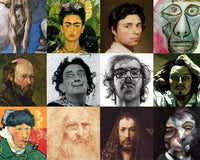
Rembrandt van Rijn, a name synonymous with pictorial mastery, transcended mere representation to delve into the human psyche. His brushstrokes not only captured physical appearance, but also revealed the emotional complexities that resided within his characters. How did this Dutch master manage to convey such depth in his works?
Dutch Baroque, unlike its counterpart in other European countries, was characterized by restraint and a focus on everyday life. While Italian Baroque reveled in grandeur and ostentation, Dutch artists, influenced by Calvinism and a rising bourgeois society, opted for realistic representation and introspection. Rembrandt was a key exponent of this movement, moving away from grandiose religious themes and focusing on the humanity of his subjects. This rejection of opulence translated into a more restrained color palette, a more realistic treatment of figures, and greater attention to the details of everyday life.
Rembrandt was not content with painting superficial portraits; he sought to capture the essence of the human being. His interest lay in psychology, in the emotions and experiences that shaped his characters. Through careful observation and the study of anatomy, Rembrandt managed to represent not only physical appearance, but also the emotional state of his models. His characters convey a wide range of feelings: joy, sadness, doubt, regret. This focus on human psychology became a distinctive feature of his work, setting him apart from other artists of his time. To understand Rembrandt's depth, it is crucial to analyze how he chose his models, often ordinary people, whose wrinkles and expressions revealed a life full of experiences. The goal was not idealized beauty, but emotional truth.

Rembrandt's chiaroscuro
Chiaroscuro, derived from the Italian *chiaroscuro* (light-dark), is a painting technique based on the dramatic contrast between light and shadow to create volume, depth, and emotional intensity. While it was not invented by Rembrandt, he took it to new heights of expressiveness. Its origins date back to the Renaissance, with figures such as Leonardo da Vinci using *sfumato* (a subtle blending technique) to create chiaroscuro effects. Later, Caravaggio propelled chiaroscuro into a more theatrical and contrasting style, deeply influencing Rembrandt's work. The technique involves the careful manipulation of light to direct the viewer's attention, highlight important details, and create a sense of atmosphere and mystery.
Rembrandt not only mastered chiaroscuro, but transformed it into a tool for psychological exploration. Unlike Caravaggio, who used chiaroscuro to create dramatic and theatrical effects, Rembrandt used it to reveal the inner lives of his characters. His works are characterized by a warm, diffuse light that emerges from the darkness, illuminating the faces and hands of his figures, while the rest of the composition is plunged into shadow. This technique creates a sense of intimacy and focus, drawing the viewer's attention to the most important details. Light, in Rembrandt's hands, becomes an instrument for revealing the soul.

The False Chiaroscuro of The Night Watch
The Night Watch (1642), despite its mistaken title (the work is darkened by time and varnish), is a paradigmatic example of Rembrandt's use of chiaroscuro. Light selectively illuminates the main characters, creating a dynamism and sense of movement that make it a masterpiece. The Anatomy Lesson of Dr. Nicolaes Tulp (1632) also demonstrates Rembrandt's mastery of this technique. The light focuses attention on the dissected body and the faces of the observers, capturing their curiosity and awe. In both works, chiaroscuro not only defines form, but also guides the viewer's gaze and emphasizes the narrative. The strategic choice of where to place light and shadow is fundamental to understanding the emotional impact of these paintings.
Rembrandt was a master of composition, using this element to guide the viewer's gaze and create narrative tension. His compositions are rarely symmetrical or static; instead, he opts for dynamic arrangements that suggest movement and conflict. He often employs diagonal lines and foreshortening to create a sense of instability and drama. The placement of the characters, their gestures and gazes, all contribute to the creation of a complex and compelling visual narrative. For example, in *The Feast of Belshazzar*, tension is created through the arrangement of the characters around the table, their expressions of surprise and fear, and the mysterious inscription that appears on the wall.
Light and shadow, as we have seen, are fundamental elements in Rembrandt's work, and their strategic use intensifies the drama of his scenes. Light not only illuminates, but also reveals and conceals, creating a sense of mystery and ambiguity. Areas of deep shadow suggest danger, fear, or introspection, while areas of bright light reveal moments of truth, revelation, or hope. Rembrandt used these contrasts to manipulate the viewer's emotions, creating a visually striking and emotionally resonant experience. The intensity of the chiaroscuro varies depending on the scene, adapting to the mood and the narrative.

The Return of the Prodigal Son, a display of feeling
The Return of the Prodigal Son is considered one of Rembrandt’s masterpieces and an outstanding example of his ability to convey deep emotion. The composition is simple yet powerful: the repentant son, kneeling, is welcomed by his father, whose hands express compassion and forgiveness. Light illuminates the faces of the two figures, while the rest of the scene falls into shadow. The figures observing the scene, in the darkness, represent different reactions: envy, curiosity, indifference. The work is a study of forgiveness, redemption, and the human condition, and the masterful use of light and shadow contributes to the creation of an atmosphere of intense emotion and spirituality. This painting exemplifies Rembrandt’s ability to tell complex stories through imagery, using composition and chiaroscuro to intensify the emotional impact.
Rembrandt’s palette is characterized by the predominance of warm tones, such as ochre, brown, gold, and red. This choice is no accident; warm colors evoke feelings of warmth, intimacy, and humanity. Rembrandt used these colors to create a welcoming atmosphere and to connect emotionally with the viewer. In addition, earthy tones allowed him to represent reality more faithfully, capturing the texture and materiality of objects and faces. The choice of these colors may also be related to the oil painting techniques of the time, which favored the use of earthy, natural pigments. The use of warm colors contributed to creating a sense of timelessness and closeness in his works.
While earthy tones predominate, Rembrandt also used red and gold strategically to highlight key elements and direct the viewer’s attention. Red, the color of passion and vitality, was used to emphasize gestures, emotions, or important symbols. Gold, the color of divinity and wealth, was used to highlight valuable objects or to create a sense of grandeur. For example, in The Return of the Prodigal Son, the red of the father’s robe emphasizes his compassion and unconditional love. The subtle and strategic use of these vibrant colors adds depth and complexity to his compositions, creating a visual contrast that draws the eye to the focal points of the work. Just as Sorolla did with his Mediterranean light, Rembrandt mastered light and color to create depth.
The impasto technique, which consists of applying paint in thick, textured layers, is another distinctive feature of Rembrandt’s work. This technique not only adds dimension and realism to his paintings, but also creates light-and-shadow effects that intensify the visual impact. The thick, visible brushstrokes give a sense of movement and vitality, capturing the energy of the moment. Rembrandt used impasto to highlight the textures of skin, clothing, and objects, creating a tactile experience for the viewer. This technique, combined with his mastery of chiaroscuro and his palette of earthy colors, contributes to the creation of a unique and unmistakable style. Impasto, moreover, allowed Rembrandt to model light and shadow more precisely, creating exceptional effects of volume and depth. This technique not only enhances the realism of his works, but also adds an expressive and emotional quality to the pictorial surface.

Rembrandt challenged the conventions of his time by rejecting idealization in his portraits. Instead of softening wrinkles or hiding imperfections, he embraced them as marks of the experience and wisdom accumulated over time. This radical artistic decision transformed the way people were portrayed, especially older people. We see, for example, his portrait of Margaretha de Geer (1661), where every wrinkle around her eyes tells a life full of stories. For Rembrandt, true beauty lay in honesty and vulnerability, a revolutionary concept in a period when physical perfection was the norm.
The decision to paint uncompromising realism came with risks. Customers, accustomed to being portrayed in a flattering way, could feel offended by the lack of idealization. Rembrandt prioritized truth over flattery. His detailed brushwork and masterful use of light and shadow revealed the complexity of human character, making his portraits much more than simple physical representations. The common mistake is to think that Rembrandt focused only on ugliness, but he found beauty in imperfection, a beauty that spoke of a life fully lived.
The eyes in Rembrandt’s portraits are windows to the soul, conveying a deep range of emotions and moods. They are not simply facial features, but the focal point of the narrative. Through light, subtle shadows, and expression, Rembrandt reveals the inner complexity of his characters. In "The Night Watch" (1642), the gaze of each figure reflects their individuality and their role within the group, creating a captivating visual dynamic. We see that the eyes not only look, but also seem to think and feel, inviting the viewer to connect with them on a deeply emotional level.
The secret lies in the technique. Rembrandt used glazes, thin layers of transparent paint, to create depth and nuance in the eyes. Subtle variations in shine and focus revealed the subject’s age, mood, and personality. One example is the glint in the eyes of the Self-Portrait with Two Circles, which suggests introspection and deep self-awareness. Through the eyes, Rembrandt communicated the essence of the human being, which made his portraits so striking and enduring. The great pitfall would be trying to copy his technique without understanding the goal: to portray the soul.
Rembrandt painted numerous self-portraits throughout his life, creating a visual record of his physical and emotional evolution. These self-portraits are not simply representations of his appearance, but profound explorations of his own identity and his relationship with the world. Through each brushstroke, Rembrandt reveals his joys, his sorrows, his doubts, and his resilience. From the young artist full of ambition to the wise and reflective old man, each self-portrait offers a unique perspective on life and art.

Self-Portrait with Fur Collar
For example, in his Self-Portrait with Fur Collar (1634), Rembrandt portrays himself as a young, successful man, dressed in luxurious clothing and with a confident expression. In contrast, in his 1669 self-portrait, he depicts himself with deep wrinkles, graying hair, and a tired gaze, but also with profound wisdom and serenity. These self-portraits are an example of his brutal honesty and his ability to capture the essence of human experience. Studying these self-portraits helps us understand his personal and artistic evolution, offering a unique insight into the mind of a genius. A practical step: analyze his self-portraits chronologically to see the progression of his technique and his emotional state.
Photography, from its beginnings, has been deeply influenced by painting, and Rembrandt is a key figure in this connection. Photographers have studied the way Rembrandt used light to create atmosphere, highlight textures, and convey emotions, adapting his techniques to their own medium. "Rembrandt lighting," a lighting technique used in portrait photography, is a direct testament to this influence. This method, which consists of creating a triangle of light on the subject’s cheek, is used to add depth, drama, and a touch of mystery to the portrait. Some contemporary photographers even recreate scenes from Rembrandt’s paintings using models and modern lighting techniques.
The use of light as a narrative tool in photography is based on the principles established by Rembrandt. The way light falls on a subject can reveal its character, tell a story, or evoke a specific emotion. For example, soft, diffused light can create an atmosphere of calm and serenity, while harsh, high-contrast light can generate tension and drama. Photographers who understand the power of light can use it to transform a simple image into a work of art. Many fashion and advertising photographers are inspired by the use of light in "The Night Watch" to create striking and memorable images. However, imitation without understanding can lead to superficial results. The key is to understand how Rembrandt used light to reveal inner truth.
Rembrandt's influence extends to contemporary art, where many artists continue to find inspiration in his technique, his style, and his worldview. Some artists reinterpret his classic works, while others use his principles to create original works that explore themes relevant to the 21st century. For example, the artist [Nombre Artista] uses chiaroscuro techniques in his abstract paintings, creating dynamic and emotional compositions that recall Rembrandt's intensity. Another example is [Nombre Artista], who creates photographic installations that explore the idea of identity and vulnerability, inspired by Rembrandt's self-portraits.
Rembrandt's legacy remains alive in contemporary art because his work transcends time and space. His honesty, his compassion, and his ability to capture the essence of the human experience remain relevant to artists today. By studying his work, contemporary artists can learn to use light, color, and composition to create works that are both visually striking and emotionally resonant. Analyzing the work of artists such as Gerhard Richter and his series "Atlas" reveals a subtle but perceptible influence of the introspection present in Rembrandt's self-portraits. However, the challenge for contemporary artists is to avoid simple copying and find their own voice while honoring Rembrandt's legacy. It takes deep knowledge to truly reinterpret a master.

Portrait of An old man in red
Rembrandt navigated a very fine line between idealization and realism in his portraits. While he rejected the excessive idealization that was common in his time, he also did not simply seek to replicate reality in a literal way. His goal was to capture the essence of the individual, their character and their soul, using technique and light to reveal the subject's inner truth. Rather than softening imperfections, he used them to add depth and complexity to his portraits. However, he also made sure that his portraits were flattering in the sense that they revealed the inherent beauty of each individual, even in old age or illness. The clearest example is the portrait of An old man in red, where the dignity and wisdom of the elderly man shine through his age-marked features.
For Rembrandt, beauty did not lie in physical perfection, but in honesty and authenticity. The decision of where to draw the line between idealization and realism depended on the subject, their personality, and their story. For some subjects, he could emphasize their strength and determination, while for others he could highlight their vulnerability and fragility. The key was to find the right balance to create a portrait that was both faithful and respectful. A common mistake is to think that Rembrandt was a pure realist. In reality, he was a master of interpretation, using his art to reveal the emotional and psychological truth of his subjects. The final decision was always subjective and based on his understanding of human beings.
The debate over the representation of old age and imperfection
The representation of old age and imperfection in Rembrandt's work generated debate and controversy in his time. His contemporaries, accustomed to the idealization of beauty, often criticized his lack of flattery and his focus on features marked by age. However, others praised his honesty and his courage in showing the reality of life and the beauty found in imperfection. Rembrandt defended his approach, arguing that old age and imperfection were an integral part of the human experience and should be represented with respect and dignity. The controversy surrounding his portraits of the elderly reveals the tensions between social conventions and the artist's personal vision.
The debate over the representation of old age and imperfection remains relevant today. In a society obsessed with youth and beauty, Rembrandt's work reminds us of the importance of valuing experience, wisdom, and authenticity. His portraits of the elderly are a testament to the power of time and the beauty found in imperfection. They challenge us to question our own prejudices about beauty and to appreciate the richness and complexity of life in all its stages. A deep analysis of the contemporary critical reaction to Rembrandt's work reveals deep cultural divisions over beauty and old age. His courage in challenging these conventions made him a revolutionary artist.
The social context of the 17th century deeply influenced Rembrandt's artistic choices. He lived in a time of great change and transformation, marked by the rise of capitalism, the development of science, and the expansion of trade. Dutch society was relatively tolerant and open, which allowed Rembrandt to experiment with new ideas and techniques. However, he also faced challenges and pressures, including competition from other artists, client demands, and social expectations. Rembrandt, being a keen observer of his surroundings, used his art to reflect the complexities and contradictions of his time.
The rise of the bourgeoisie and its growing purchasing power created a market for art that celebrated everyday life and individual achievements. This allowed Rembrandt to explore themes and styles that were different from traditional religious and mythological subjects. His focus on realism and individuality reflected the values of a society that valued hard work, independence, and personal expression. However, his refusal to compromise his artistic vision also led him into conflicts with some clients and critics. Analyzing the relationship between Rembrandt and his patrons reveals the tensions inherent in artistic production in a commercial society. His ability to balance market demands with his own artistic vision is a testament to his genius and integrity. To learn more about the social context of the 17th century in the Netherlands, visit the Rijksmuseum: https://www.rijksmuseum.nl/en.
Rembrandt lived a life marked by both artistic success and personal tragedy. Understanding his relationships, losses, and financial difficulties is crucial to interpreting his work. His marriage to Saskia van Uylenburgh brought him initial prosperity and happiness, but her early death was a devastating blow. His later relationships, such as with Geertje Dircx and Hendrickje Stoffels, were marked by legal conflicts and social prejudice. His financial troubles led him to bankruptcy and the sale of his valuable art collection. These personal experiences are reflected in the emotional depth and humanity that characterize his portraits and self-portraits. For example, Saskia's death can be seen reflected in the melancholy present in some of his later female portraits. His financial difficulties may have influenced his choice of humbler, more everyday subjects in his later years. Analyzing his personal life allows us to better understand the motivations behind his art. Observe how his self-portrait evolves over time, reflecting the marks of aging, experience, and introspection. Do not overlook the importance of his relationship with Hendrickje Stoffels, who, despite not being married to him, was a loyal companion and a source of support in his later years. The depth of her love and loyalty is reflected in the portraits he made of her. His life, full of ups and downs, is a testament to the complexity of the human condition.
Although Rembrandt is known for his individual style, his training and the influences of his contemporaries were crucial to his development. He briefly studied with Jacob van Swanenburg in Leiden and then with Pieter Lastman in Amsterdam, who taught him basic techniques and introduced him to historical and biblical subjects. The influence of Caravaggio, though indirect, is evident in his dramatic use of chiaroscuro. In addition to his mentors, Rembrandt collaborated with other artists, such as Jan Lievens, with whom he shared a studio and a friendly rivalry. Analyzing the works of these artists and comparing them with Rembrandt's reveals how he absorbed influences and developed his own unmistakable visual language. However, what is truly extraordinary is how he managed to transcend those references and turn light into emotion and shadow into thought. Rembrandt did not imitate: he transformed. He took Caravaggesque drama and made it introspective; he adopted academic teachings and carried them toward a more human, less idealized, and deeply psychological representation. Even in his collaborations and in the competitive atmosphere of 17th-century Dutch art, his brush always sought something more than technical virtuosity: it sought truth. Understanding his masters and colleagues does not diminish his genius; on the contrary, it allows us to better appreciate the path he traveled to become one of the most penetrating portraitists in art history. In every face he painted, in every gaze lit from the shadows, there lives not only the influence of his time, but also the unrepeatable voice of an artist who turned his life—with its lights and shadows—into eternal work.
KUADROS ©, a famous painting on your wall. Hand-made oil painting reproductions, with the quality of professional artists and the distinctive seal of KUADROS ©. paintings reproduction service with satisfaction guarantee. If you are not completely satisfied with the replica of your painting, we will refund 100% of your money.