

Description
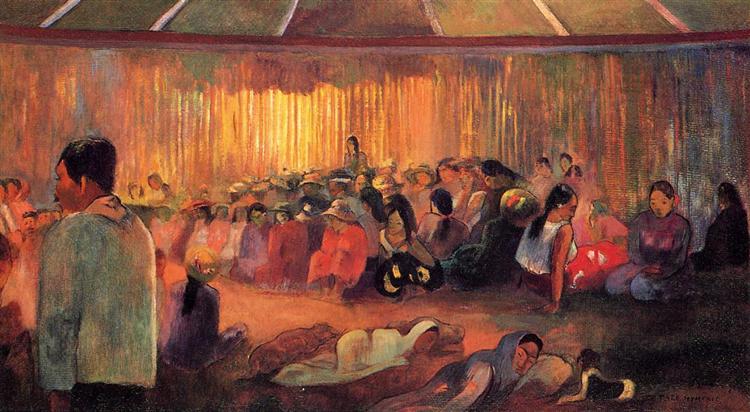
The work "La Casa del Canto" (1892) by Paul Gauguin is a vibrant testimony of his career as a precursor to symbolism and post -impressionist art. In this painting, the fusion of stylized shapes, saturated colors and a dreamlike environment underlines its search for a new form of artistic expression that transcends the mere representation of reality. The work captures a characteristic landscape, but is imbued with an emotional load that invites the viewer to explore not only the image, but also the inner world that can evoke.
He painting It presents a housing, stylized and fragmented, which becomes the focal center of the composition. The architecture seems to flow with the environment, showing an almost abstract design in its form, which is a distinctive firm of Gauguin's work. This architectural approach is not limited to mere representation, but is transformed into a symbol of connection with nature and the environment. The use of color is particularly remarkable: earthly and green tones evoke a sense of tranquility, while vibrant areas suggest the presence of life, tradition and culture.
The characters, although they are not the main approach of the work, are equally significant. Its representation is suggestive and evocative, encapsulating the essence of Ottoman communities. A sense of community and musicality is perceived through the atmosphere that is created in "La Casa del Canto". The possible residents of this house are portrayed in a stylized way, which suggests an intimate connection with the place and with the culture it represents. The inclusion of human figures, although not completely defined, adds an additional dimension to the work, suggesting that these people are an integral part of the landscape and the story that Gauguin tries to tell.
Gauguin's style is a constant dialogue between tradition and modernity. In "La Casa del Canto", its use of color and form achieves a sense of transcendence, where the visual walk becomes an almost spiritual experience. The color theory, which Gauguin used to express emotions and moods, finds expression in the vibrant and contrasting palette of this work. This expressive use of color also connects to the work with the tradition of symbolist painting of the late nineteenth century, where symbolism and personal emotion are located in the center of artistic creation.
"The House of Canto" is part of Gauguin's production during his stay in Tahiti, where the artist sought a more primitive and authentic life, far from the conventions of industrial Europe. This search influenced its representation of the human and cultural side of Tahitian life. The serene environment that is reflected in the painting can also suggest a utopian ideal, a desire for harmony and a direct connection with the primary roots of human existence, a recurring theme in his work.
The painting, therefore, not only offers a unique vision of the landscape and culture that Paul Gauguin embraced, but also reflects his artistic and philosophical dilemmas. "The House of Canto" is a clear example of how art can be a personal and cultural exploration vehicle, inviting the viewer to embark on a visual and reflective trip. In this sense, Gauguin gives us not only an image, but a window to a way of life, a set of meanings and a dialogue between the material and spiritual world.
KUADROS ©, a famous paint on your wall.
Hand-made oil painting reproductions, with the quality of professional artists and the distinctive seal of KUADROS ©.
Reproduction service paintings With a guarantee of satisfaction. If you are not completely satisfied with the replica of your painting, we refund your money 100%.