

Description
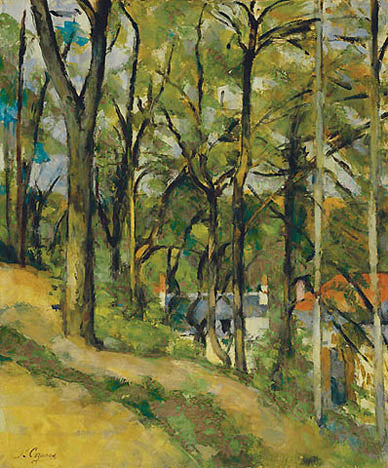
Paul Cézanne's work "The Garden" (1877) is erected as a palpable testimony of the road that the artist explored in search of a new way of representing reality. This painting, which shows a fruit garden or a garden, reveals the transition from naturalism to a more analytical construction of space and shape, characteristics that would later define its own style and its influence on Cubism.
Starting with its composition, "the garden" presents an open space in which nature displays a palette of vibrant colors. Cézanne, known for its ability to transform light and color into a sensory experience, use here shades ranging from the firm green of vegetation to the warm terrible tones of the soil. The arrangement of fruit trees, with their moderately dense and branched drinks, suggests a depth that invites the viewer to immerse the landscape.
The use of Cézanne's short and energetic brushstroke technique is particularly evident in this work. The textures are built through color layers that give life to the surface, creating a sense of movement and a palpable organicity. The combination of colors applied almost simultaneously gives a vibration effect, which causes the garden to vibrate under sunlight.
The choice of elements in the composition is equally significant. Although the work lacks human figures, this void resonates with the absence of traditional narrative in art. This decision allows the viewer to focus on the relationship between trees, earth and sky, promoting a deeper connection with nature as a space where human beings could, but do not necessarily have to be present. This proximity to nature can reflect the search for Cézanne in a pure way of representation, where the essence of a place and its atmosphere are the true protagonists.
In addition, the work offers us a vision of rural life in the nineteenth century, a recurring theme in the production of Cézanne, which highlighted the beauty and serenity of the Provencal countryside. Through its distinctive style, Cézanne not only presents a particular landscape, but makes it an exploration of the relationship between nature and art, a principle that would challenge conventional notions of representation.
In summary, "the garden" is a work that encapsulates the search for Paul Cézanne for a way of seeing the different world, one that departed from the merely representative to investigate the internal structure of the visible. Its combination of atmosphere, color and texture not only exhibit their technical mastery, but also anticipate and prepare the land for subsequent developments in modern painting, where the perception and construction of space would play increasingly prominent roles. This work, in its simplicity and complexity, remains an essential point of reference in the history of art and a mirror of the transformation of the landscape in the context of modernity.
KUADROS ©, a famous paint on your wall.
Hand-made oil painting reproductions, with the quality of professional artists and the distinctive seal of KUADROS ©.
Reproduction service paintings With a guarantee of satisfaction. If you are not completely satisfied with the replica of your painting, we refund your money 100%.