

Description
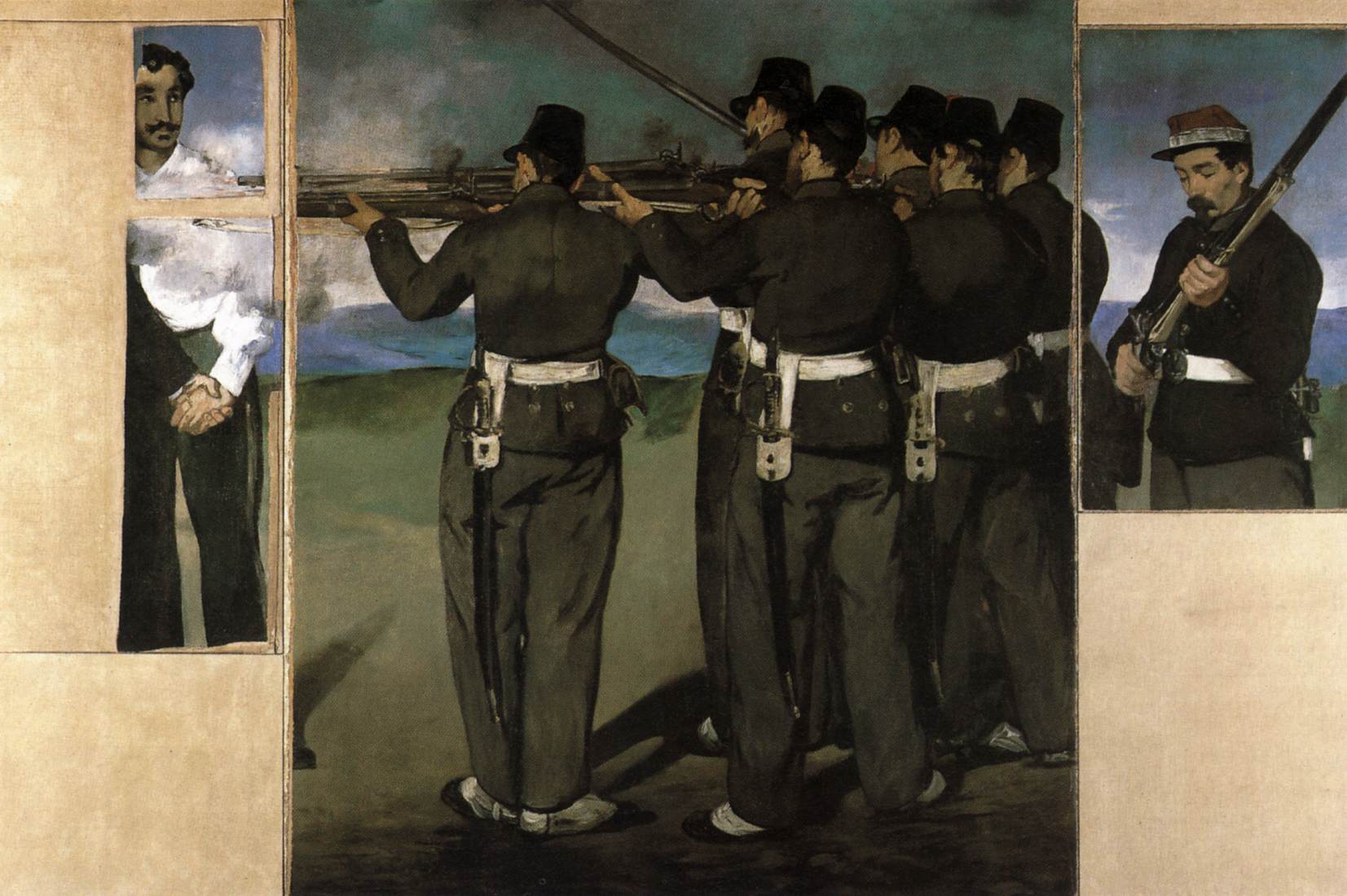
The painting The Execution of the Emperor Maximilian of Mexico (four fragments) by the artist Edouard Manet is a masterpiece that captivates the viewer with its unique artistic style and dramatic composition. The work is made up of four fragments that come together to form a striking image of the execution of Emperor Maximilian of Mexico in 1867.
Manet's artistic style is characterized by his realistic approach and his use of dark, somber colours. In this work, the artist uses a loose and rapid brushstroke technique to create a sense of movement and tension in the scene.
The composition of the painting is impressive, with the four fragments coming together to form a larger image. In the center of the work, we see Emperor Maximilian of Mexico kneeling in front of a firing squad, surrounded by Mexican soldiers. Around him, there is a crowd of spectators who watch the execution with horror and sadness.
The color in the painting is noticeably dark and gloomy, helping to create a tense and dramatic mood. Gray and black tones predominate in the work, with some touches of red and white to highlight certain details.
The story behind the painting is fascinating. In 1867, Emperor Maximilian of Mexico was captured and executed by Mexican forces after trying to establish a monarchical government in the country. Manet created this work in 1868, a year after the execution, as a form of protest against violence and injustice.
A little-known aspect of the painting is that it was originally created as a set of four separate panels. It was only in 1918 that the panels were joined to form a single image, as we see it today.
In short, The Execution of the Emperor Maximilian of Mexico (four fragments) is a masterpiece that combines Manet's unique artistic style with dramatic composition and a fascinating story. His use of dark color and loose brushwork technique creates a sense of tension and movement in the scene, while the story behind the painting adds an additional layer of meaning and protest.