

Description
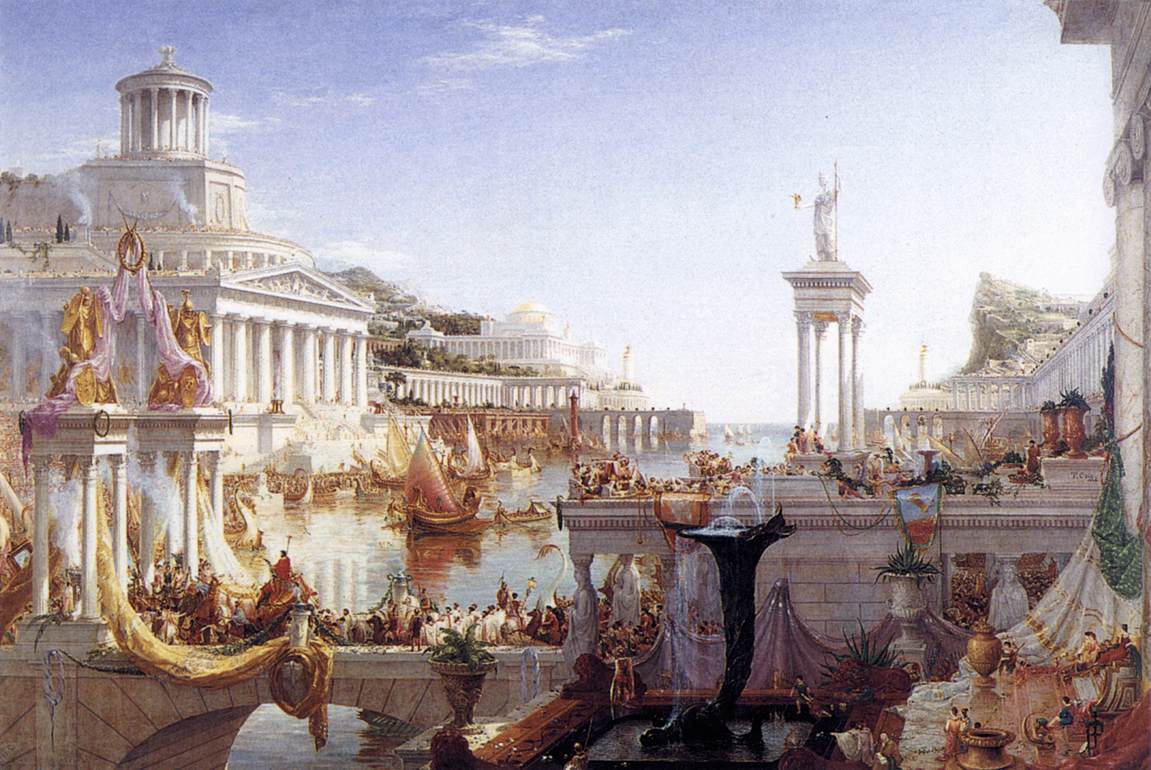
The painting "The Consummation of the Empire" by artist Thomas Cole is a masterpiece depicting the culmination of the Roman Empire. This work of art is one of the most important of the 19th century and is in the collection of the New York Museum of Art.
Thomas Cole's artistic style in this painting is Romanticism, which is characterized by the representation of nature in its most sublime state, the exaltation of emotion and passion, and the expression of individuality. The composition of the work is impressive, with the central figure of the Emperor being the focal point of the painting. The figure of the Emperor is surrounded by a crowd of people, representing the different social classes of the Roman Empire.
The use of color in the painting is impressive, with a palette of rich and vibrant colors that create a sense of movement and life in the work. The sky is painted in shades of orange and red, creating a dramatic and passionate atmosphere.
The story behind the painting is interesting as Thomas Cole was inspired by Edward Gibbon's "History of the Decline and Fall of the Roman Empire" to create this masterpiece. The painting shows the moment when the Emperor, surrounded by his court and his people, celebrates the culmination of the Roman Empire.
One of the little-known aspects of the painting is that it took Thomas Cole over two years to complete, and the work was commissioned by businessman and art collector Luman Reed. The work was displayed at Reed's New York home, where it became one of the most popular pieces in his collection.
In summary, "The Consummation of the Empire" by Thomas Cole is a masterpiece of Romanticism that represents the culmination of the Roman Empire. The composition, color, and art style are impressive, and the story behind the painting is fascinating. This work of art is one of the most important of the 19th century and remains one of the most popular pieces in the New York Museum of Art.