




Description
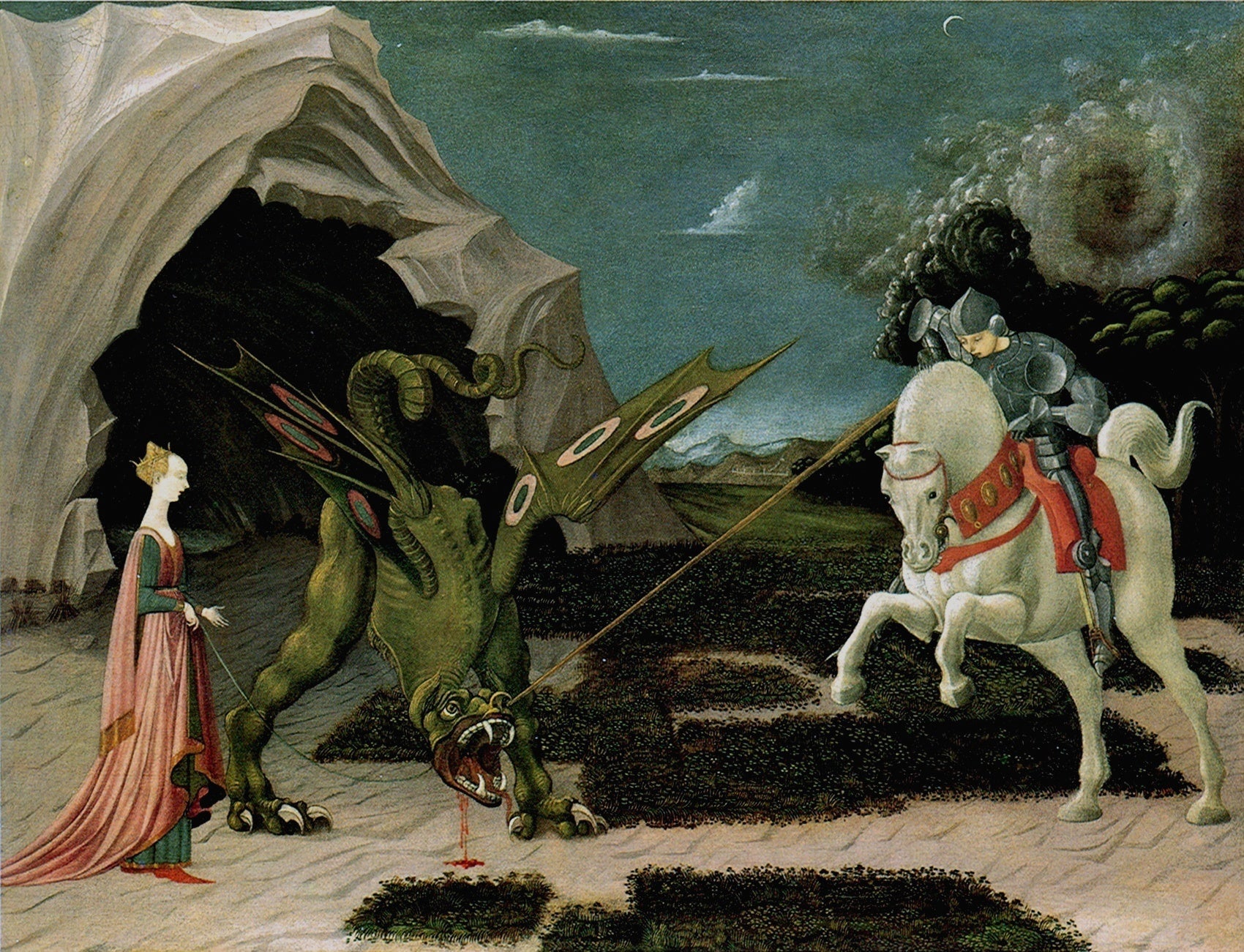
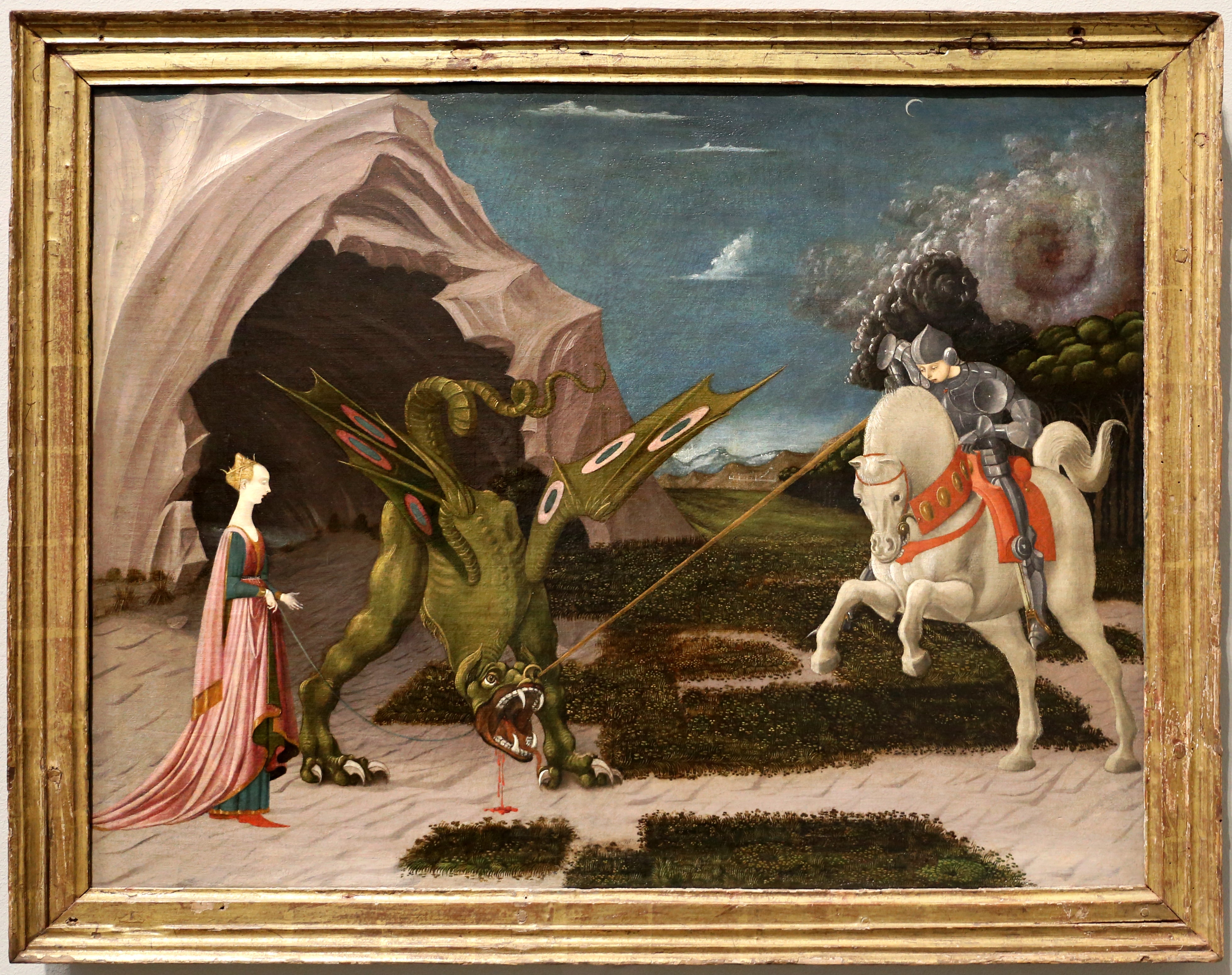
Saint George and the Dragon is an oil painting on panel created by the Italian artist Paolo Uccello in the 1470s. The work depicts the medieval legend of Saint George, a Christian knight who kills a dragon to save a princess and her people.
The painting, created between 1439-1440, is housed at the Jacquemart-André Museum in Paris. And later, and much more famously, at the National Gallery in London.
One of the most interesting aspects of this painting is the perspective technique used by Uccello. The artist was known for his obsession with perspective, and in this painting he applies it in a highly innovative way. He uses diagonal lines to create an effect of depth and perspective that draws the viewer’s gaze toward the background. In addition, the dragon’s figure extends along the vertical axis of the image, which heightens the sense of depth.
Another interesting aspect of the work is its use of color. Uccello uses a bright, saturated palette, with green, red, and gold tones that highlight the figures of Saint George and the dragon. The artist also uses the chiaroscuro technique to create contrasts of light and shadow that heighten the sense of drama and movement in the scene.
It is also interesting to note how the painting reflects the culture and religion of the period. The legend of Saint George was very popular in medieval Europe and was used as a symbol of the struggle against evil and the defense of the Christian faith. The image of Saint George as a strong and courageous hero fighting a monster was a common subject in the art and literature of the period.
Another interesting detail in Paolo Uccello’s painting Saint George and the Dragon is the way the artist depicts the knight’s armor and clothing. Saint George’s armor is extremely detailed, with a dragon-scale pattern engraved on the breastplate and a series of decorative medallions on the upper part of the helmet. Uccello also accurately depicts the different pieces of armor, including the gauntlets and the greaves on the knight’s legs.
This level of detail not only demonstrates Uccello’s technical skill, but also his interest in historical and cultural details. In the medieval period, armor was a fundamental part of a knight’s identity and protection, and its accurate depiction in the painting bears witness to the importance of armor in medieval society.
Moreover, the detail in Saint George’s clothing also reflects the fashion and culture of the period. The knight wears a silk tunic decorated with a geometric pattern, a popular fashion style in Renaissance Florence. The combination of Saint George’s armor and clothing shows how fashion and function came together in medieval culture.
Taken together, the depiction of armor and clothing in Saint George and the Dragon adds another layer of interest and complexity to this Renaissance masterpiece.
Finally, Saint George and the Dragon is a masterpiece of Italian Renaissance painting, notable for its innovative perspective technique, its use of color, and its reflection of the culture and religion of the period. The work remains one of the most iconic images of the legend of Saint George and continues to inspire artists and viewers alike.
Saint George and the Dragon ranks No. 34 on the list of famous paintings