
Description
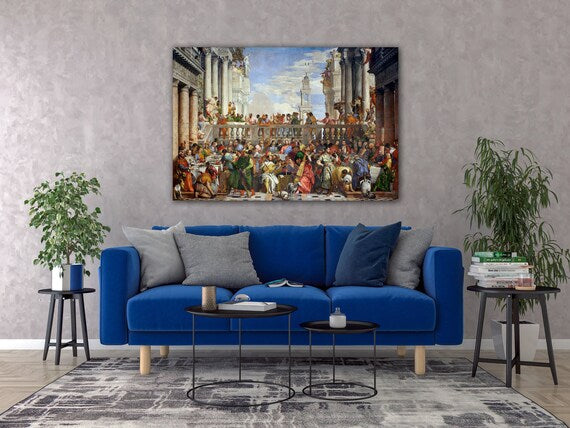
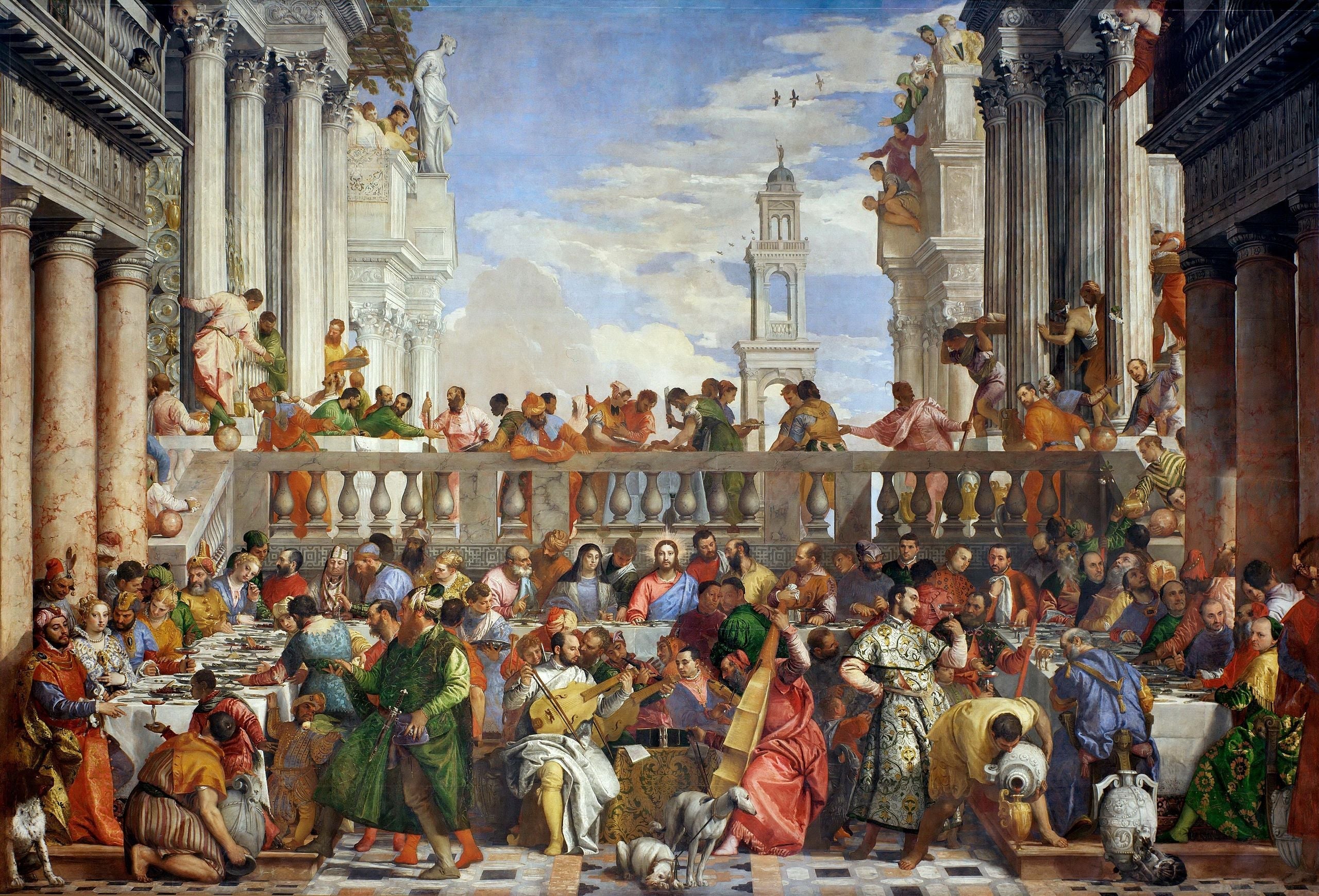
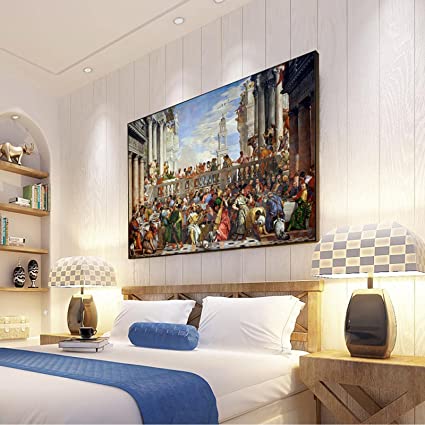
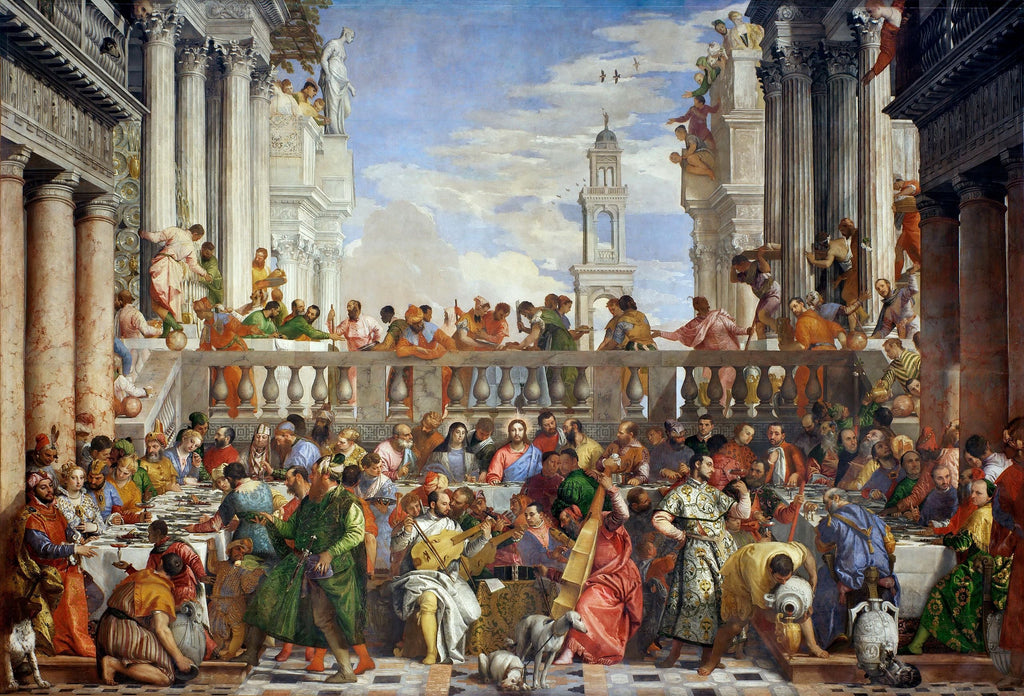
The masterpiece "The Wedding at Cana," painted by Paolo Veronese in 1563, stands as a formidable example of the splendor of Venetian Renaissance, where opulence and visual narrative intertwine in a masterful display of color, form, and symbolism. The work, which is currently housed in the Musée du Louvre in Paris, captures a biblical episode that recounts the first miracle of Jesus Christ, the transformation of water into wine, in the context of a wedding banquet. However, the original religious narrative is enriched by the complexity and scenic grandeur that Veronese manages to offer, transforming a religious event into a festive spectacle.
The composition is a marvel of spatial organization. Veronese plays with movement and direction, creating a sense of depth that invites the viewer to enter the animated crowd. The arrangement of the figures and the distribution of architectural elements contribute to a fluid narrative. The central table, laden with food and goblets, acts as a visual anchor, around which various characters gather, from nobility to servants, adding an air of inclusivity to the scene. The diversity of postures and facial expressions of the guests reflects a vibrant human interaction that goes beyond the simple representation of an event.
The use of color is another hallmark of the work. Veronese employs a rich and varied palette, with golden tones, deep blues, intense reds, and fresh greens that capture the eye and keep it captivated. The garments of the characters, elaborate and ostentatious, not only indicate their social status but also serve as a celebration of 16th-century Venetian culture. Each figure seems to breathe life thanks to Veronese's brilliant technique, which employs subtle contrasts and calculated lighting to give volume and substance to the faces and gestures of the attendees.
Among the characters, some are identifiable, such as the figure of Jesus, who is located in the center of the painting, visibly highlighted. Beside him, the Virgin Mary, portrayed as a maternal and significant figure, adds an emotional depth to the scene. However, Veronese also includes a wide range of anonymous figures that enrich the narrative and testify to the vibrant diversity of Venetian life. This inclusive approach paves the way for a celebration of community, of the banquet as a meeting space that transcends social barriers.
An interesting aspect of "The Wedding at Cana" is the controversy that surrounded its creation. Being a piece commissioned by a Benedictine monastery, the work was painted at a time when Veronese was already a well-known name in Venice. The richness of the painting and the dissonances with the stricter concepts of the religious symposium provoked criticisms that led the artist into a discussion with the Inquisition. This highlighted not only the religious power of the time but also Veronese's creative freedom, as he defended his work as an artistic expression of joy and the divine.
Every element of "The Wedding at Cana" is deliberate, from the abundance of food to the interactions among the attendees, everything is designed to immerse the viewer in a festive and spiritual reality. Veronese, with his unmatched technical skill and aesthetic sense, not only narrates an event from the life of Christ but also invites us to partake in the celebration of life itself, a testament to Renaissance art that still resonates in contemporary times. This work remains a monument to human creativity, the richness of shared experience, and the ability of art to transcend time.
The Wedding at Cana ranks no. 96 on the list ofpaintings famous
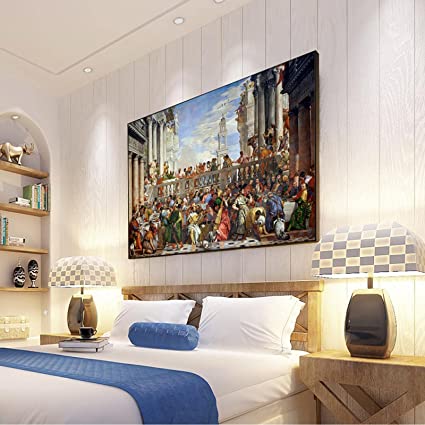
KUADROS ©, a famous painting on your wall.
Hand-made oil painting reproductions, with the quality of professional artists and the distinctive seal of KUADROS ©.
Reproduction service of paintings with a satisfaction guarantee. If you are not completely satisfied with the replica of your painting, we will refund 100% of your money.