










Description
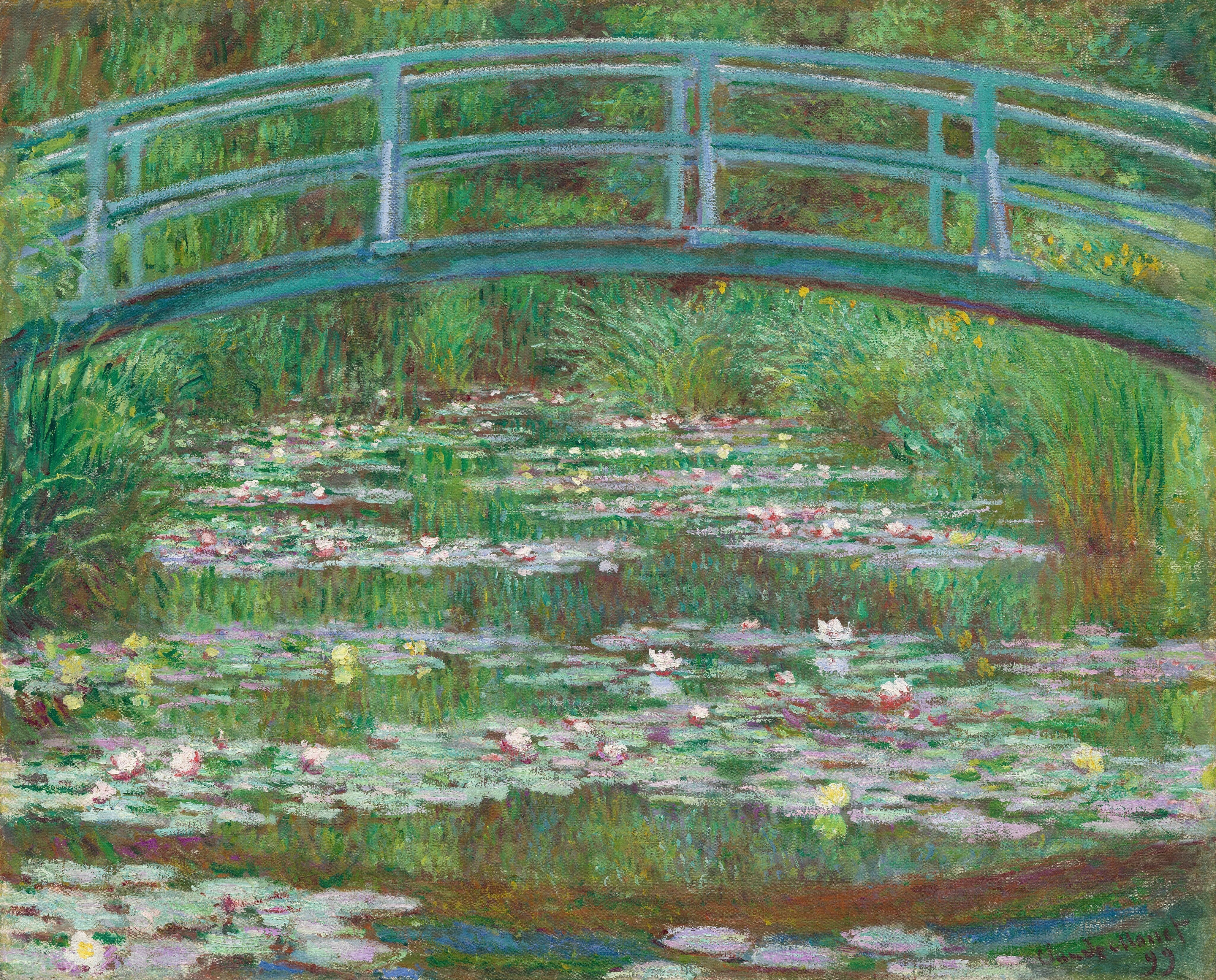
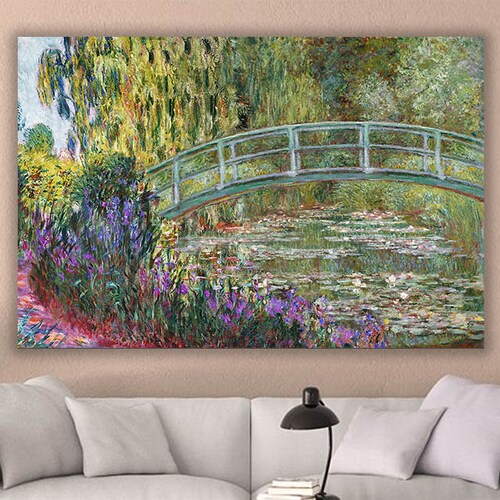
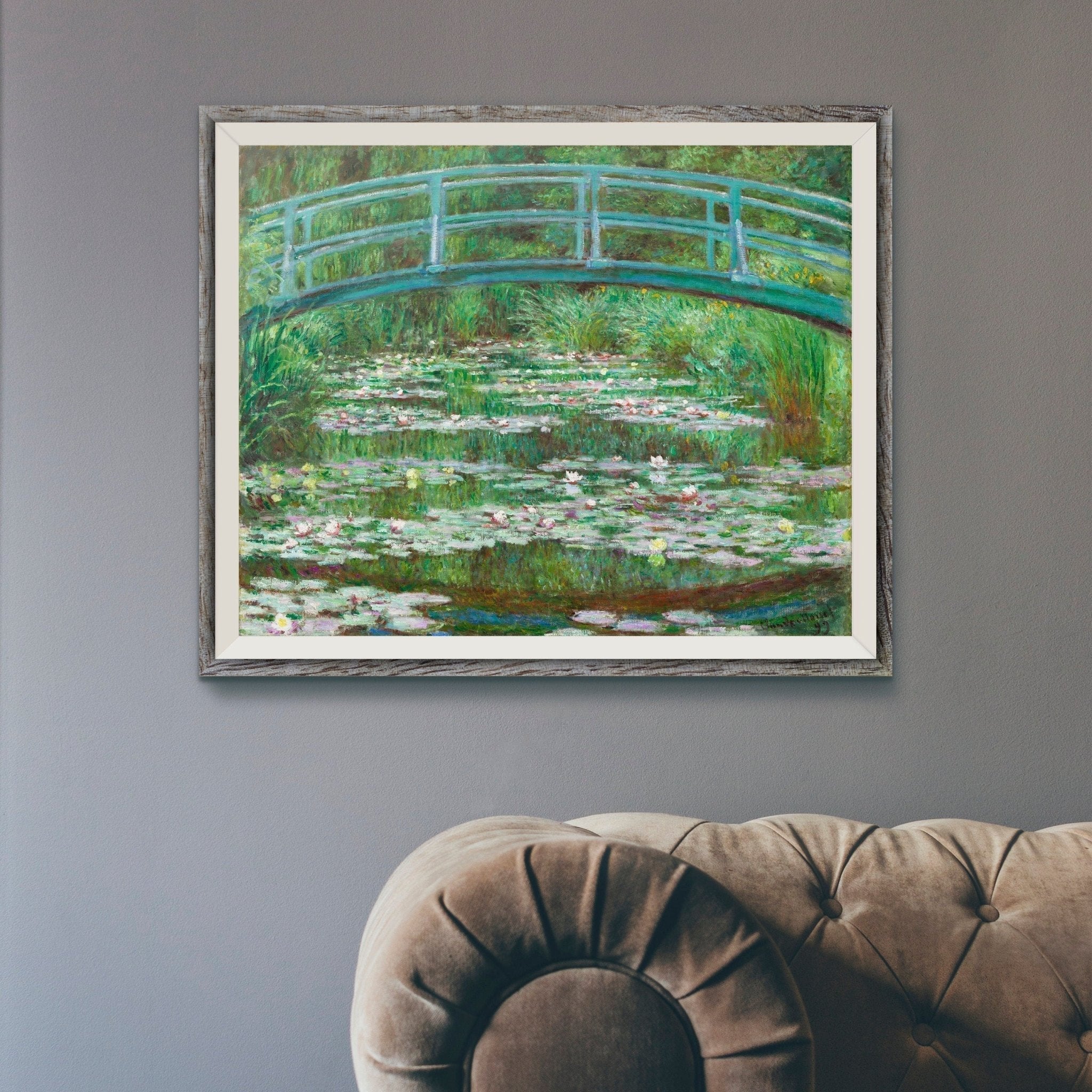
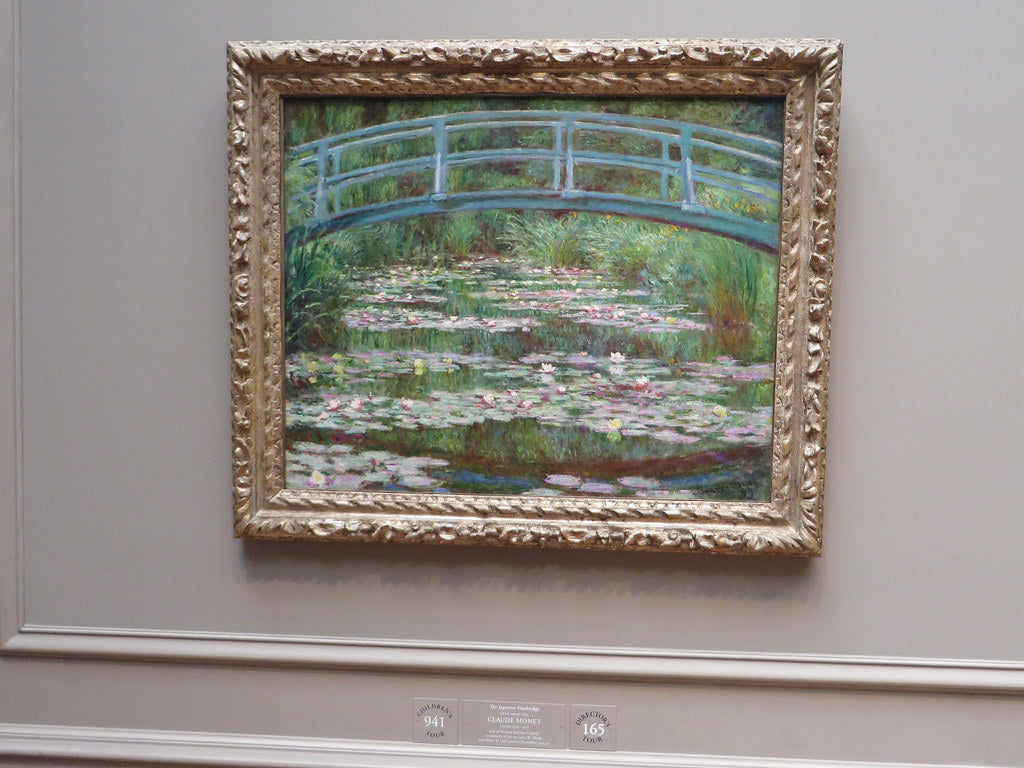
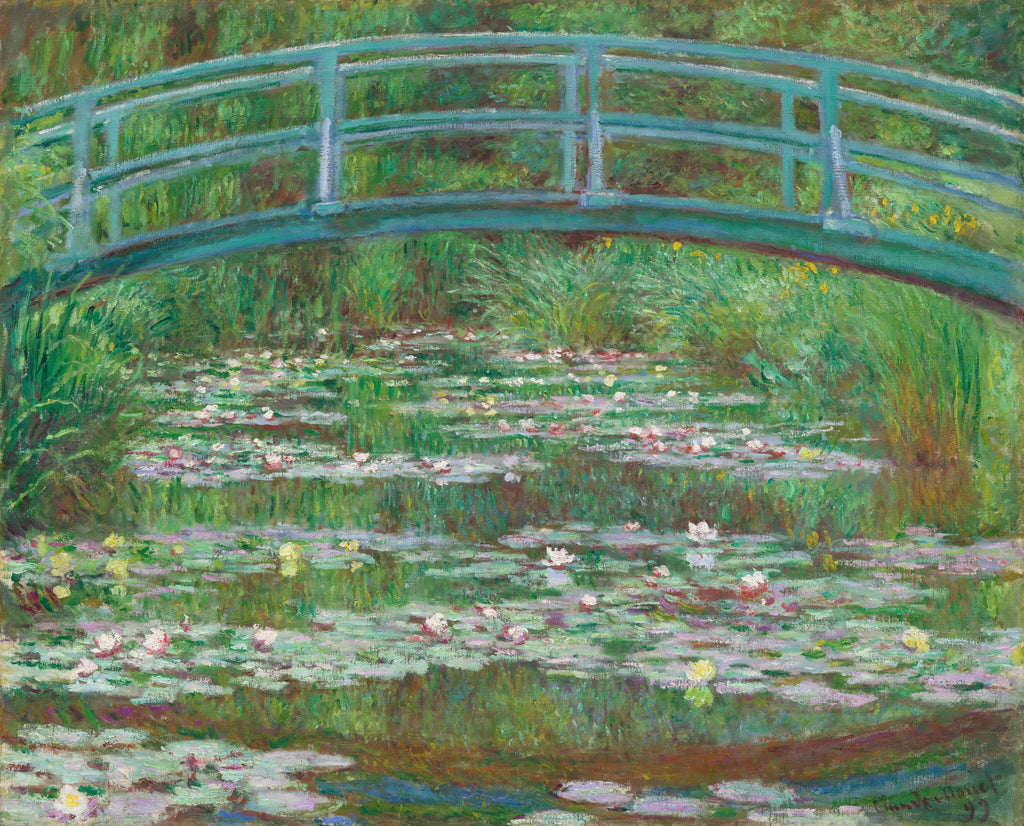
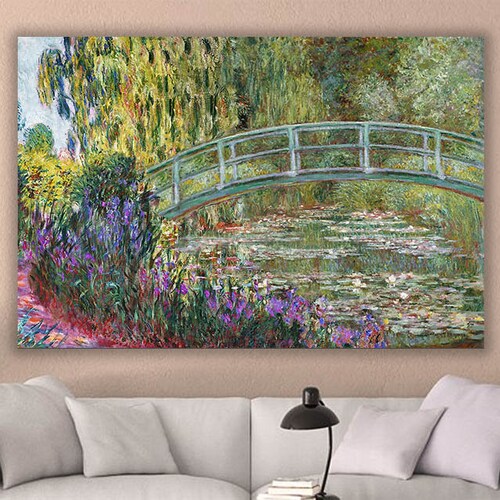
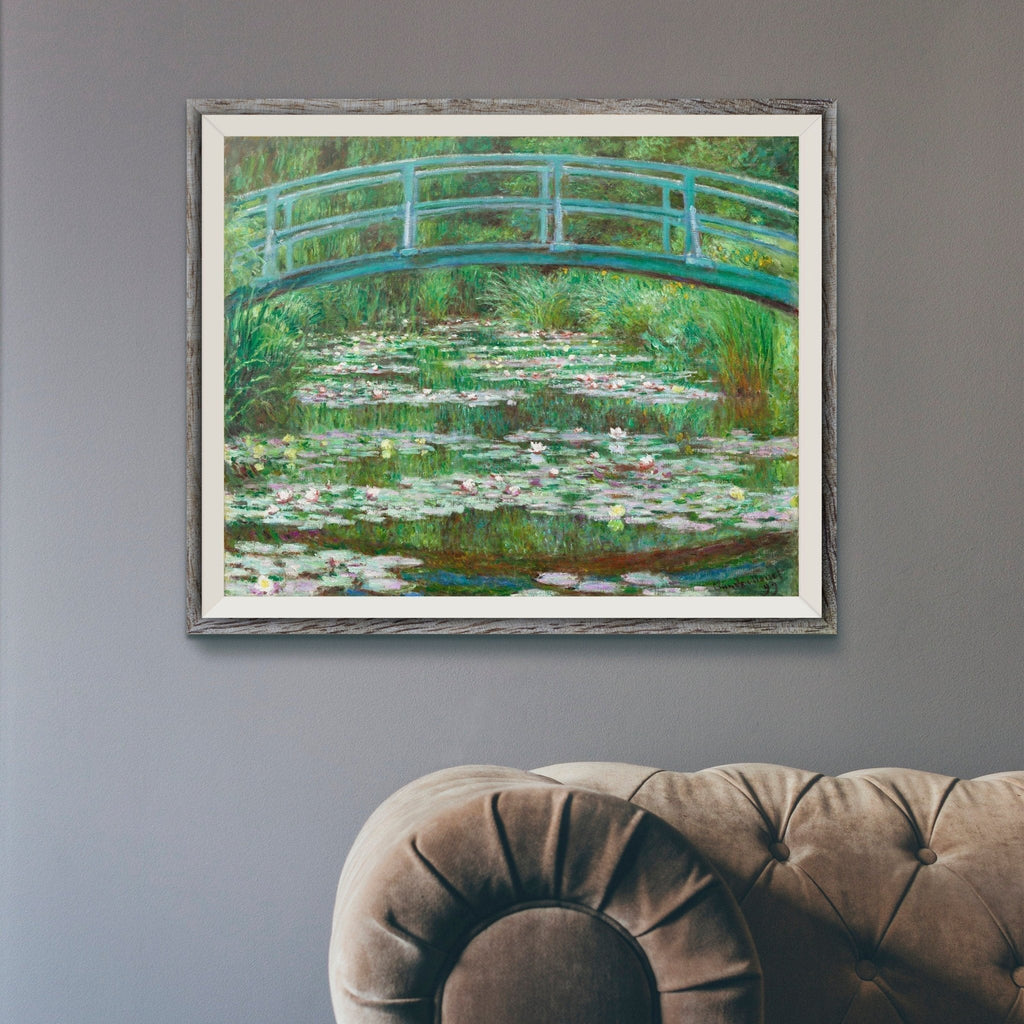
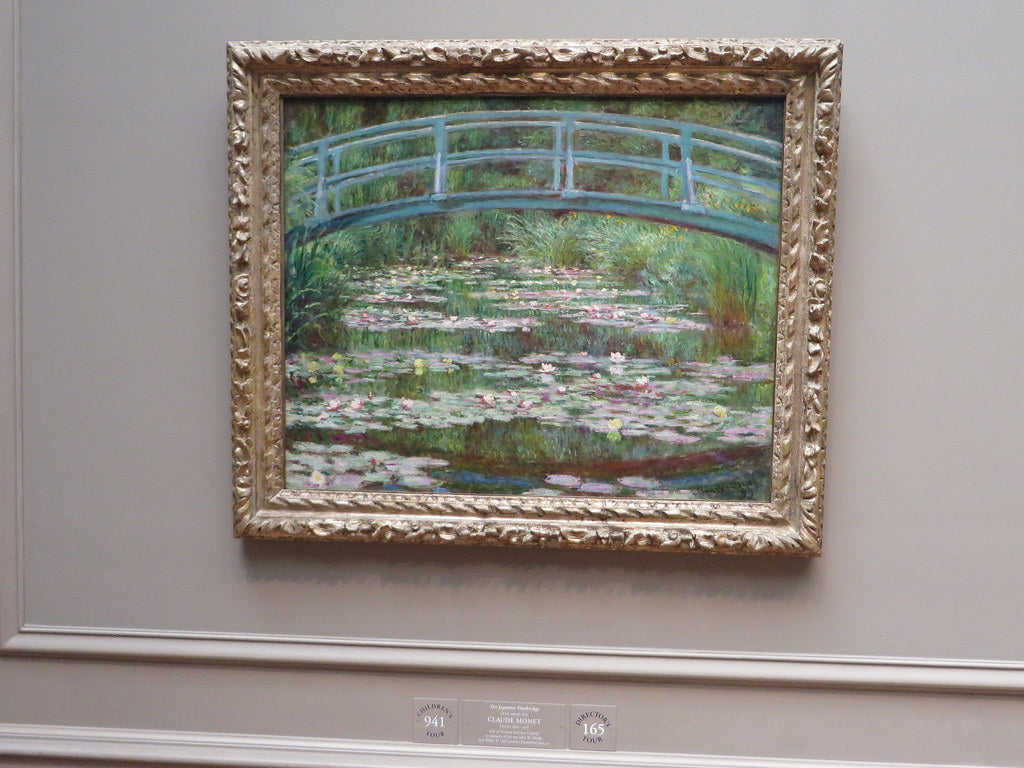
The Japanese Bridge is a series of paintings by the French Impressionist artist Claude Monet. The series comprises around 250 paintings, created between 1899 and 1926, depicting a Japanese bridge in the water garden at his home in Giverny, France.
Monet designed and built the landscape depicted in the paintings, from the bridge and the pond with its shape to the water lilies and other plantings.
What is fascinating about this series is the way Monet captures the light and colors of nature at different times of day and in different seasons. In each painting, the artist uses loose, vibrant brushstrokes to create a sense of movement and luminosity in the water and vegetation.
Monet also incorporates elements of Japanese culture into the series, such as the arched bridge and the use of color and composition. The influence of Japanese art on Monet’s work is evident in the vibrant colors and asymmetrical compositions of the paintings.
Another fascinating aspect of the series is that Monet used the water garden at his home in Giverny as his main source of inspiration during the final years of his life. The artist devoted himself to creating and maintaining the garden, planting flowers and exotic plants, and building a Japanese bridge that became the main subject of his series of paintings.
The series demonstrates the artist’s commitment to nature and his ability to capture light and color in his work.
The Japanese Bridge ranks No. 87 on the list of famous paintings