


Description
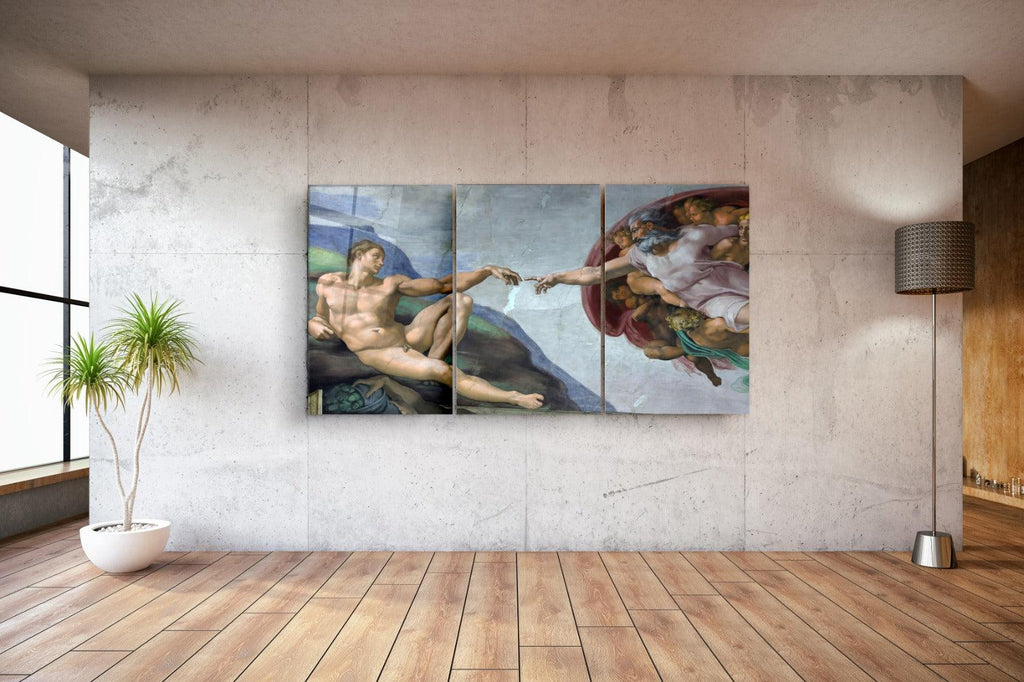
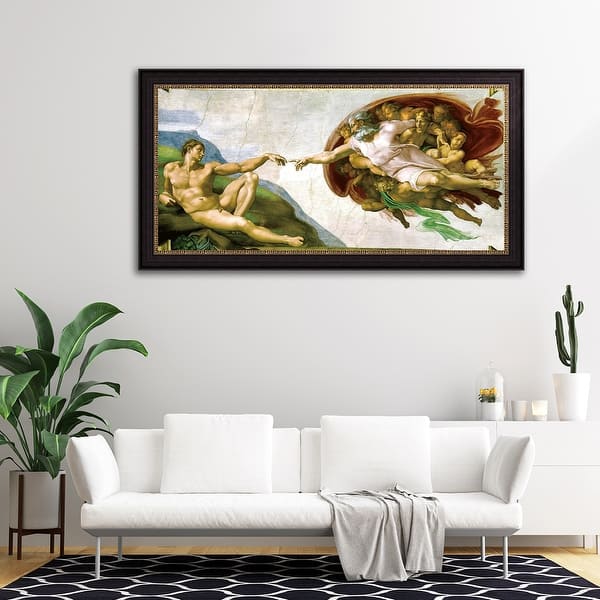
Michelangelo's The Creation of Adam is a masterpiece of the Renaissance and has been the subject of countless interpretations and analyses by art historians and theologians. It is also one of the most visited artworks in the world and has been reproduced in a wide range of media and cultural products.
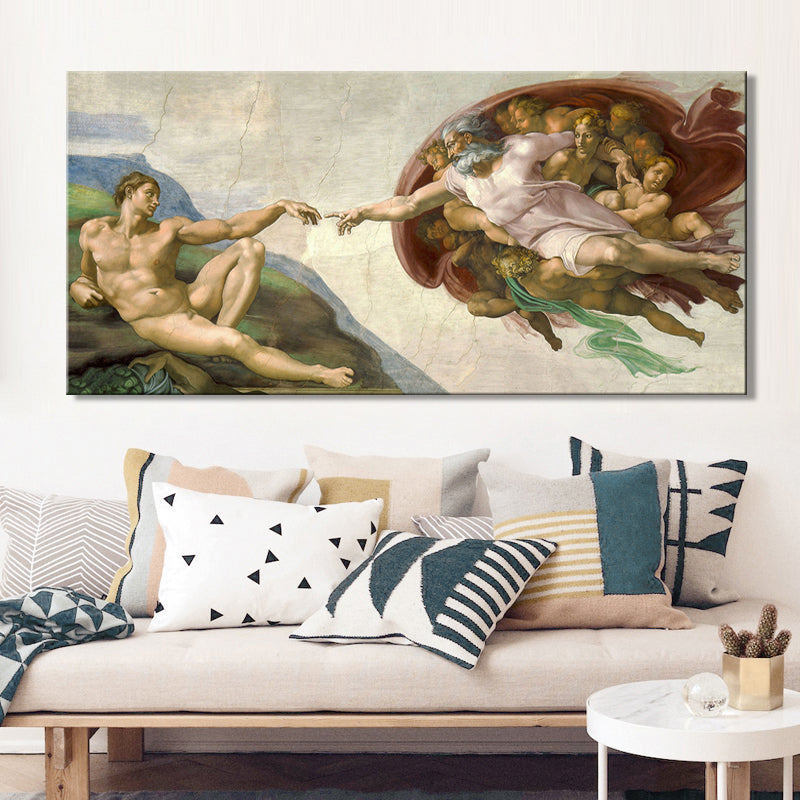
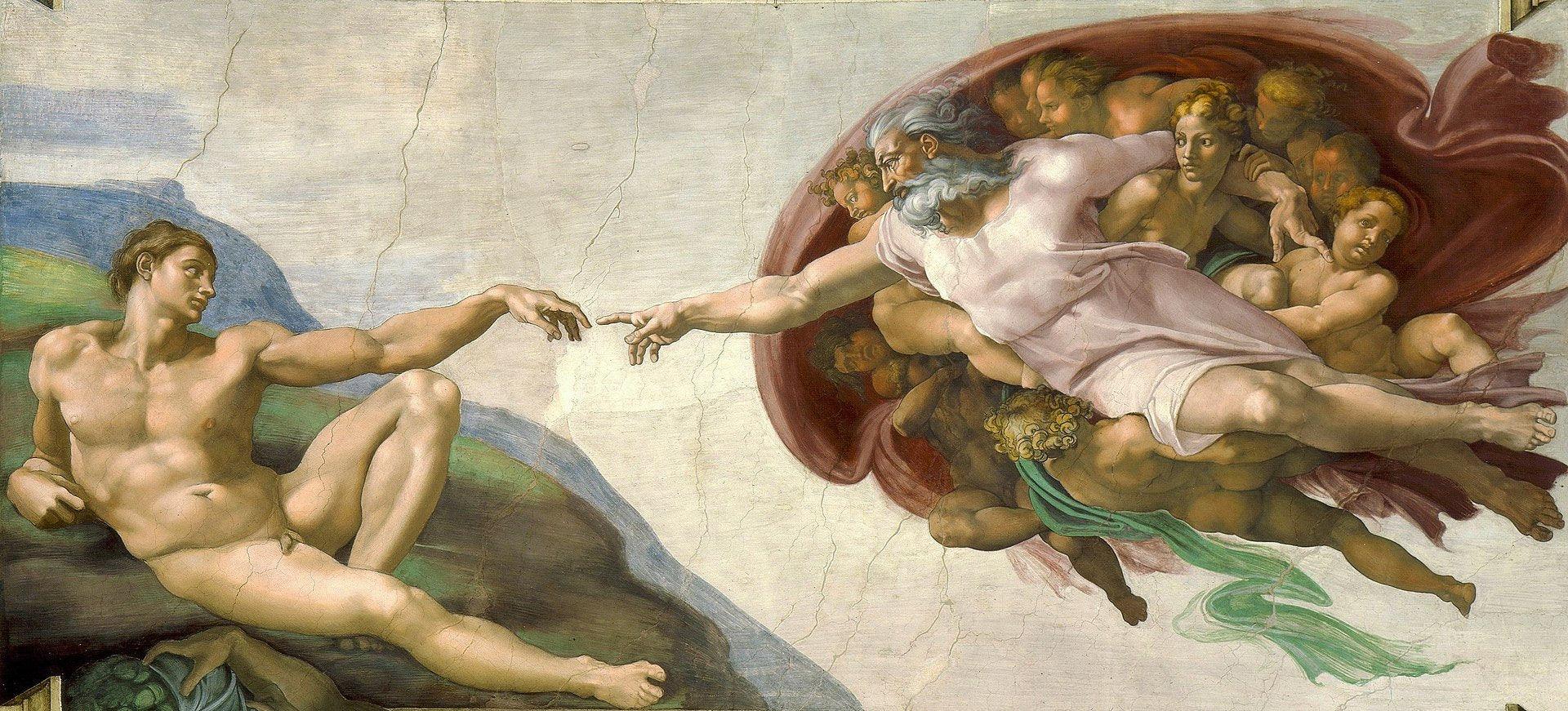
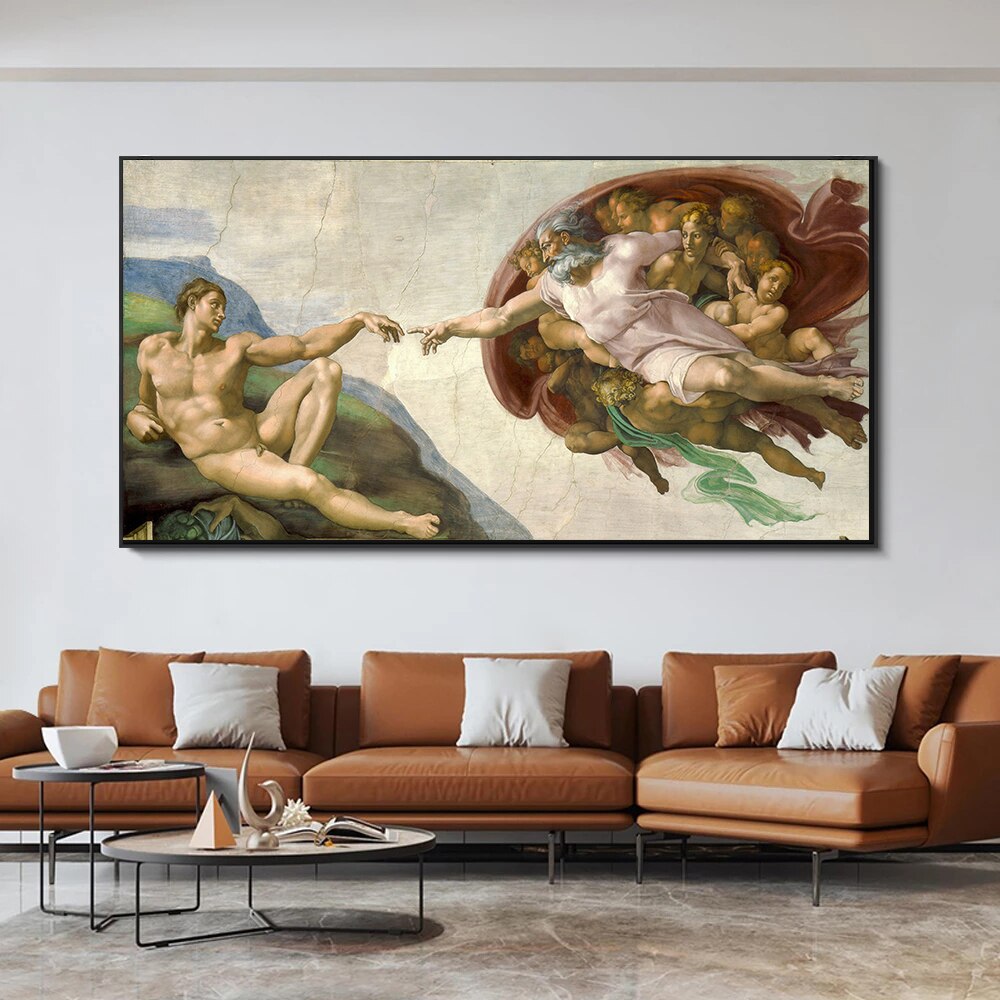
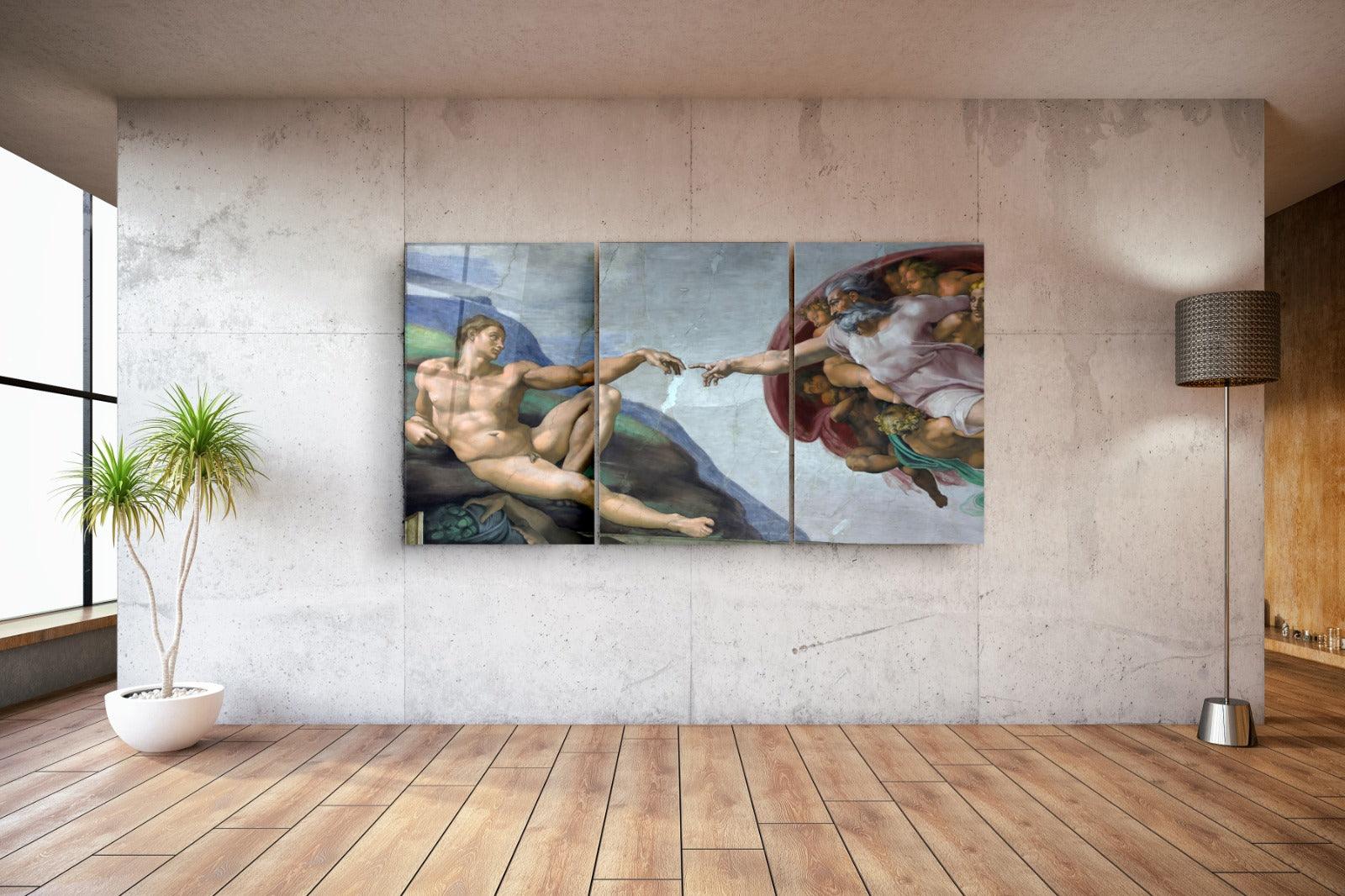
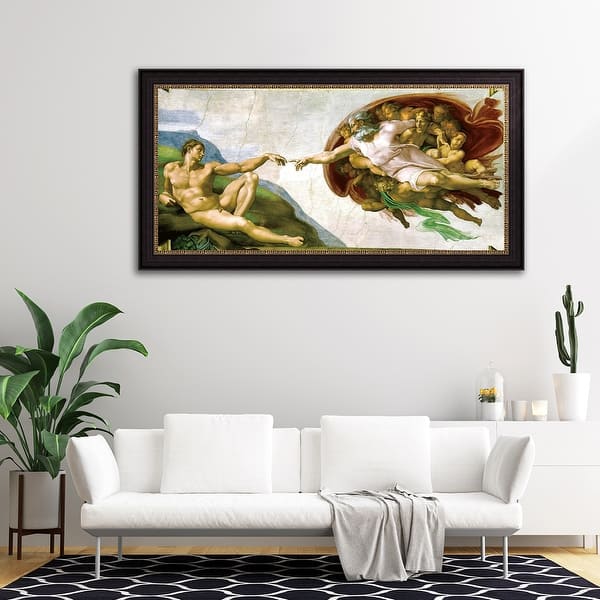
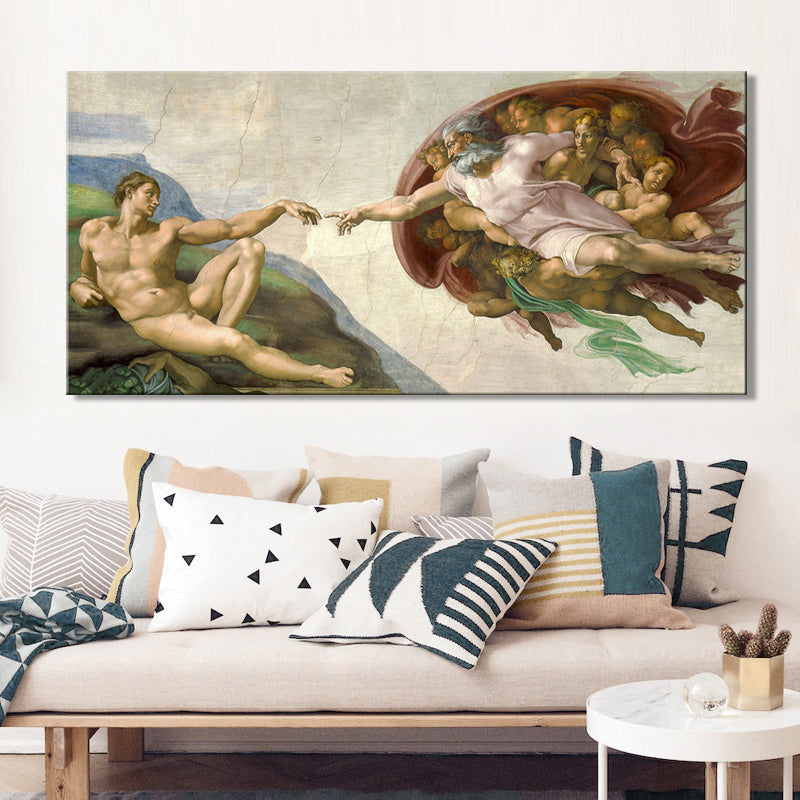
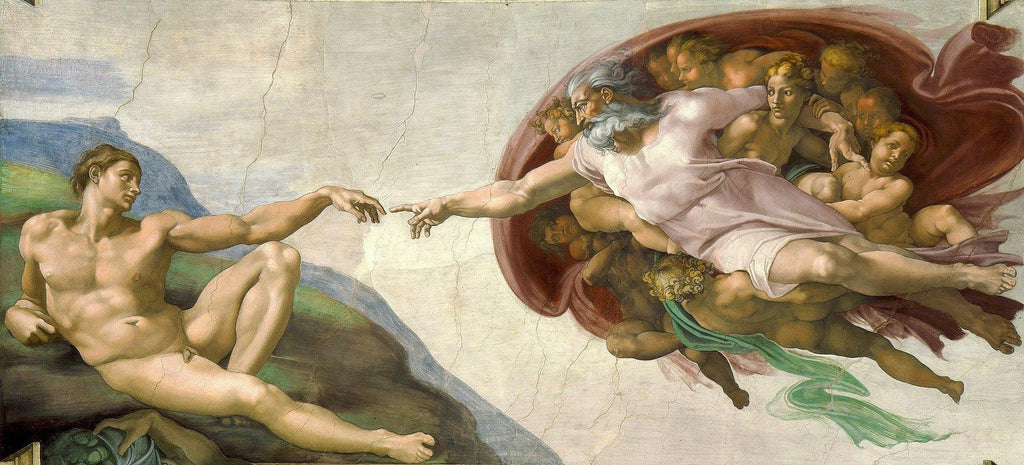
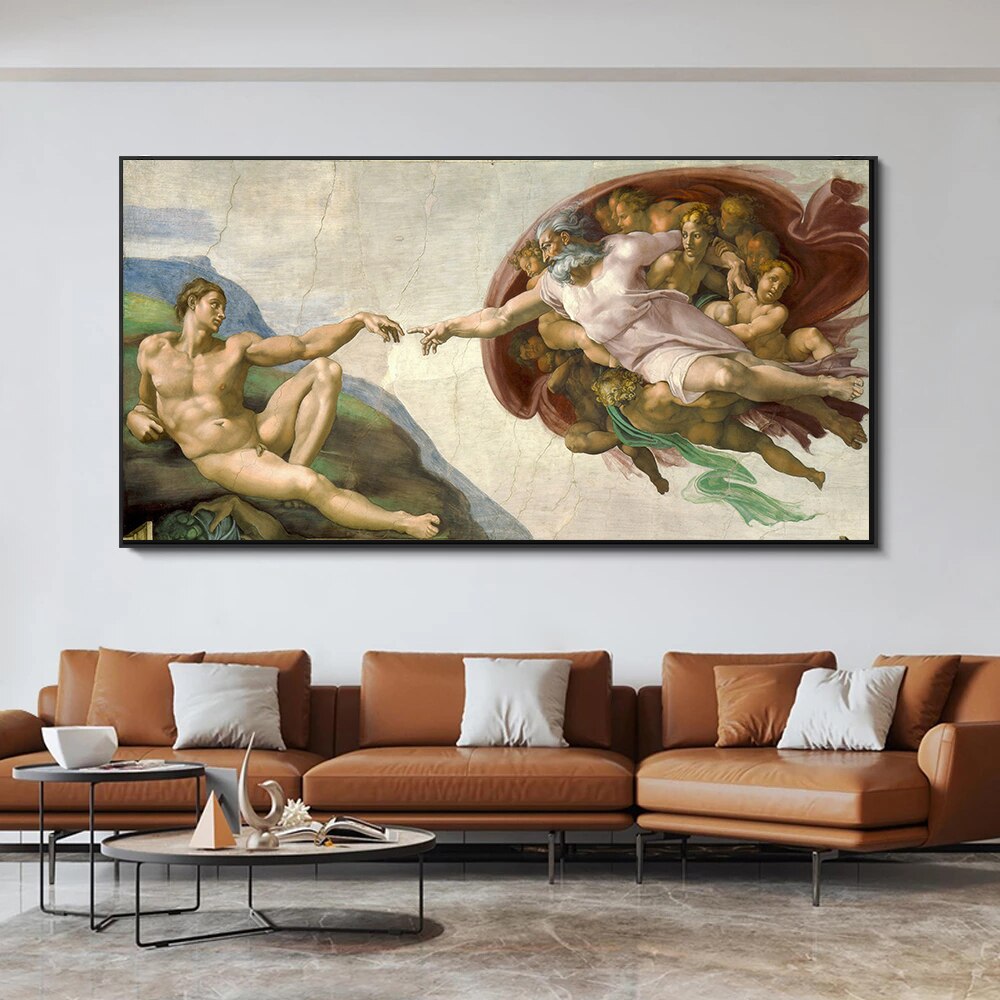
The painting portrays the biblical account of creation from the Book of Genesis, in which God breathes life into Adam. God is depicted as an elderly, white-bearded figure wrapped in a swirling cloak, while Adam, in the lower left, is shown completely nude. Scholars have noted that the shapes behind the figure of God form an anatomically accurate outline of the human brain, that the red drapery surrounding him is shaped like a human uterus, and that the green scarf is thought to represent a freshly cut umbilical cord.
One fascinating detail is that The Creation of Adam adorns the ceiling of the Sistine Chapel in the Vatican, part of a cycle of frescoes Michelangelo painted between 1508 and 1512. The work depicts one of the most celebrated moments in the story of creation, as God reaches out to touch Adam's finger and bring him to life.
Another notable aspect is that, despite being a painting, Michelangelo executed it using the fresco technique, applying pigment to wet lime plaster. This method allowed him to achieve exceptional luminosity and a striking sense of depth, while also ensuring the work's remarkable durability over time.
It has also been suggested that Michelangelo wove a hidden message about human anatomy into the composition. Some experts have observed that the form surrounding God recalls the shape of a human brain, while Adam's figure has been compared to a skeletal outline.
This theory remains a subject of debate among scholars, though some argue that Michelangelo, who was also an accomplished sculptor, possessed deep anatomical knowledge and may have woven these details into the work as a visual puzzle for observant viewers to uncover.
Whatever the case, The Creation of Adam remains one of the most iconic works in the history of art, celebrated for its beauty, technical mastery, and profound symbolic and theological meaning.
The Creation of Adam ranks No. 9 on our list of famous paintings