

Description
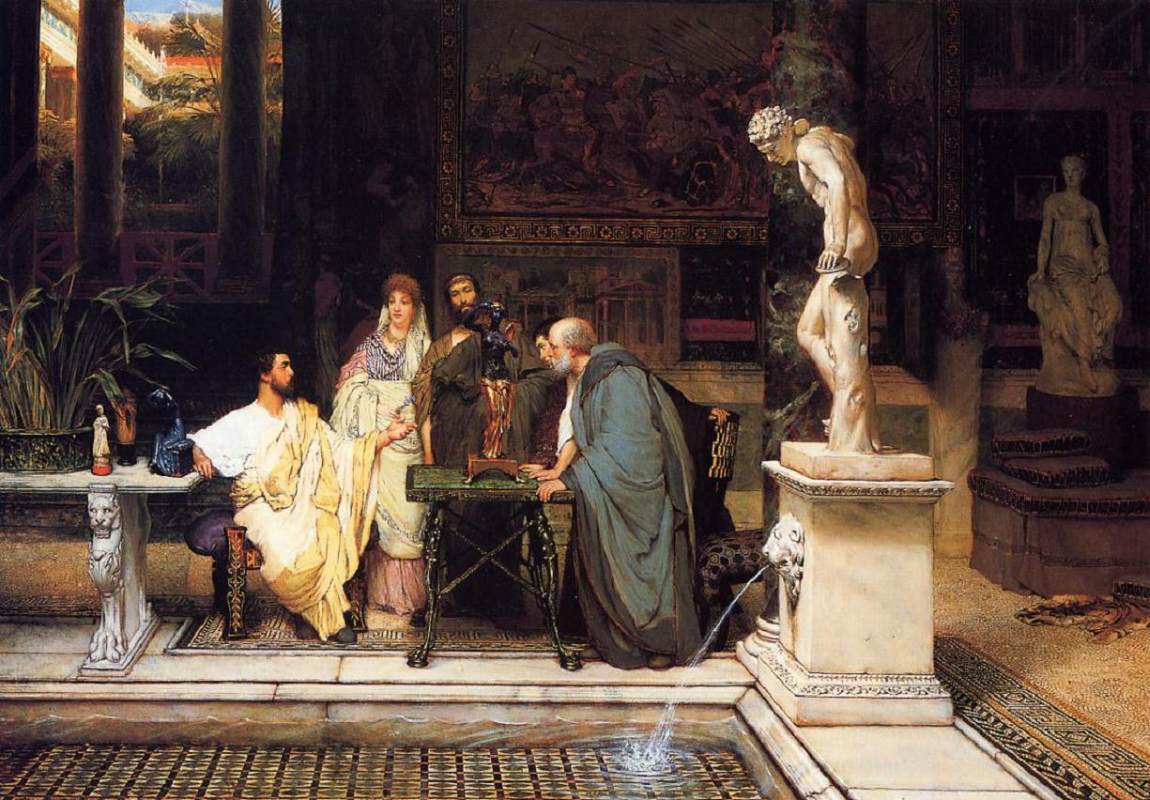
The painting shows four figures gathered in a sumptuous Roman-inspired interior among sculptures, columns, tapestries and decorative objects. On the left, a young man with a short beard and a white tunic sits beside a side table; behind him, a red-haired woman in a light-colored dress is part of the group. In the center, a bearded man stands wearing dark garments, while an older man draped in a grayish-blue mantle leans over a low table. On the right, a nude sculpture rises on a monumental pedestal, accompanied by another seated figure in the background. The fountain in the foreground, the long-leaved plant and the geometric flooring complete the scene.
The title, A Roman Art Lover, presents the composition as a gathering centered on the material culture of antiquity. Rather than illustrating a specific historical episode, the work evokes an affluent setting in which the contemplation of sculptures, mosaics and refined objects forms part of social life. In high-status Roman interiors, sculpture, architecture and mosaic were essential elements of the visual experience, while fountains added prestige, coolness and ornament. The presence of models associated with the Greek tradition also recalls the close relationship between the two artistic cultures.
The sculptures on pedestals serve as signs of learning and belonging to a privileged cultural milieu. The group of people is not isolated from them: they gather around the table and direct their attention toward a shared space for conversation and contemplation. The fountain introduces a counterpoint of movement to the stillness of the sculpted figures, while the mosaic reinforces the ideas of order, permanence, and wealth. Columns, tapestries, and open bays connect the interior with the vegetation outside and turn the architecture into a theatrical setting. The title thus takes on a collective meaning: it evokes an atmosphere of appreciation for art rather than identifying an individual character.
The horizontal composition distributes the visual weight between the central group and the vertical sculpture on the right. The large pedestal acts as an architectural axis, guiding the eye from the fountain toward the nude figure, while the dark columns and the openings in the background create depth. Black, brown, and ochre tones provide a warm, subdued foundation, enlivened by the whites of the tunics, the grayish blue of the mantle, and the green of the vegetation. The light falls chiefly on the figures and sculptures, leaving the background in shadow. The geometric bands of the floor and the strip of textile at the side introduce linear rhythms that bring order to the decorative abundance.
The work reflects Lawrence Alma-Tadema’s vision of classical antiquity: carefully constructed interiors, marble, mosaics, textiles, sculptures, and warm light that transforms historical evocation into pictorial spectacle. Here, the contemplation of art becomes a social scene; the people, artworks, and architecture all take part in the same theatre of luxury. The fountain and mosaic guide the eye towards the group, while the principal sculpture establishes a vertical presence that dominates the space. The subject lies not only in those contemplating art, but also in the way the entire interior organises that contemplation as a way of life.
Have questions about our oil painting reproductions? See our frequently asked questions.