


Description
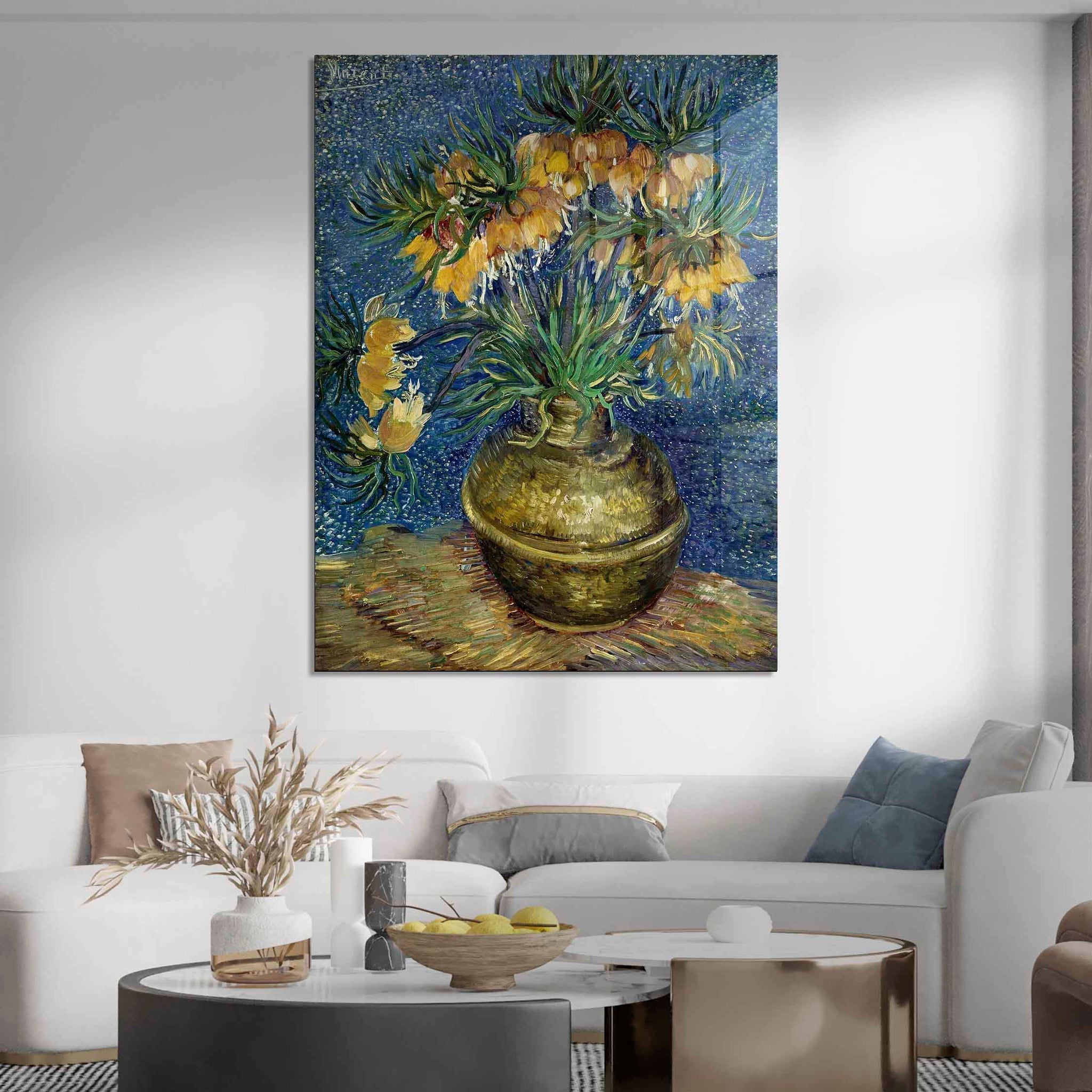
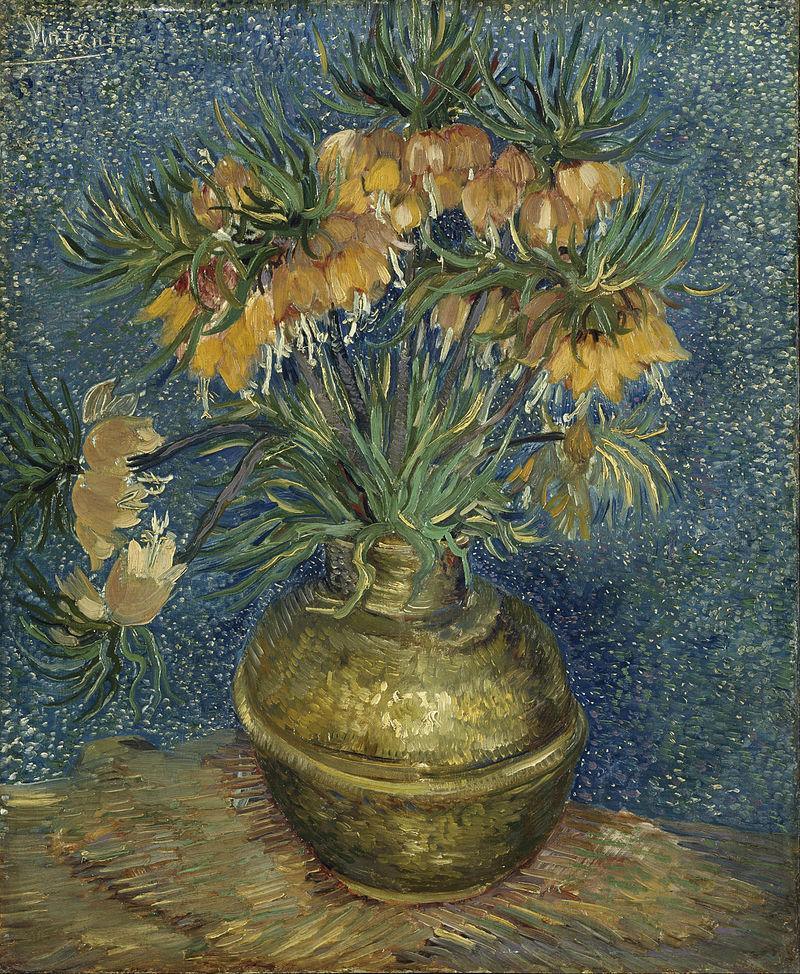
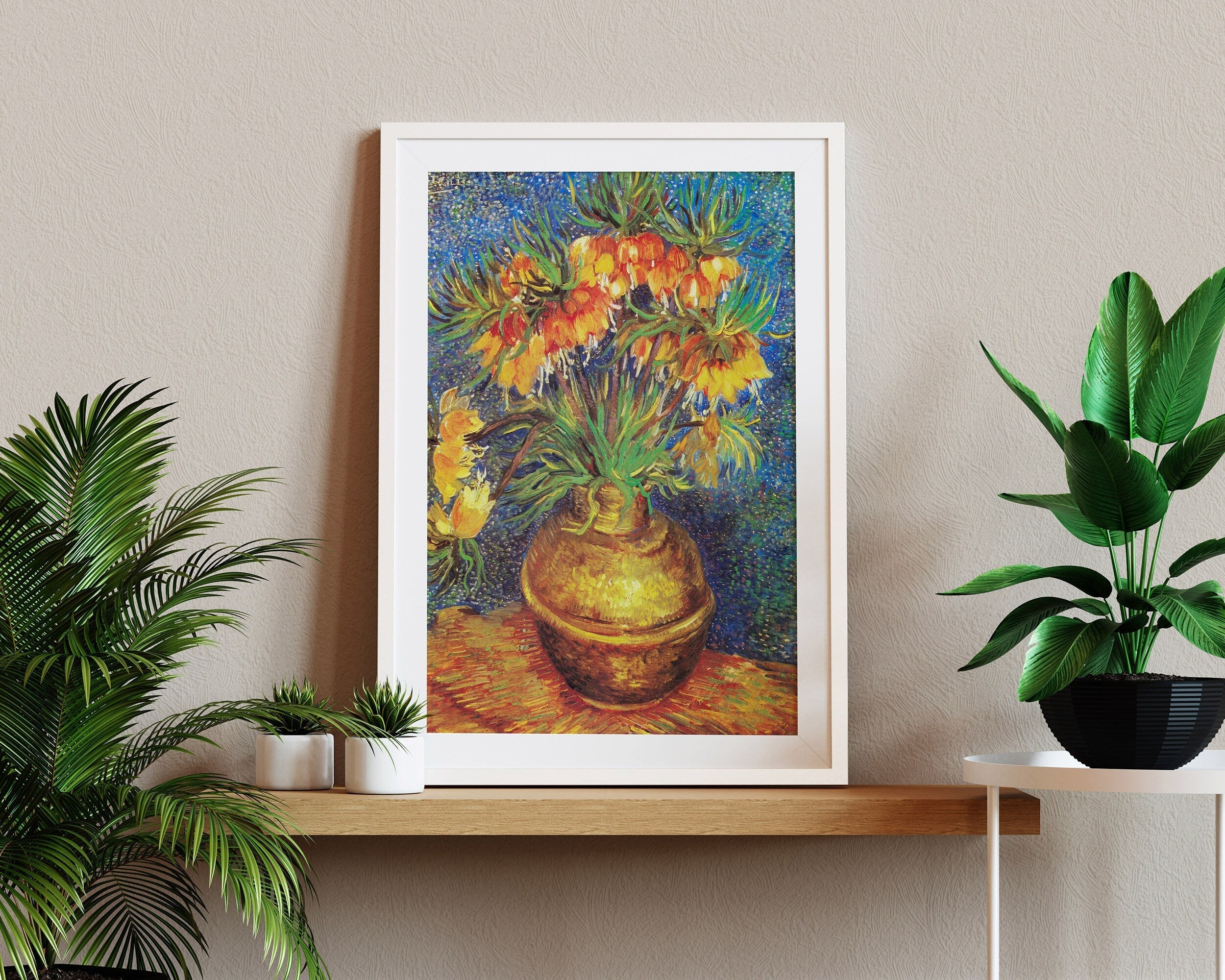
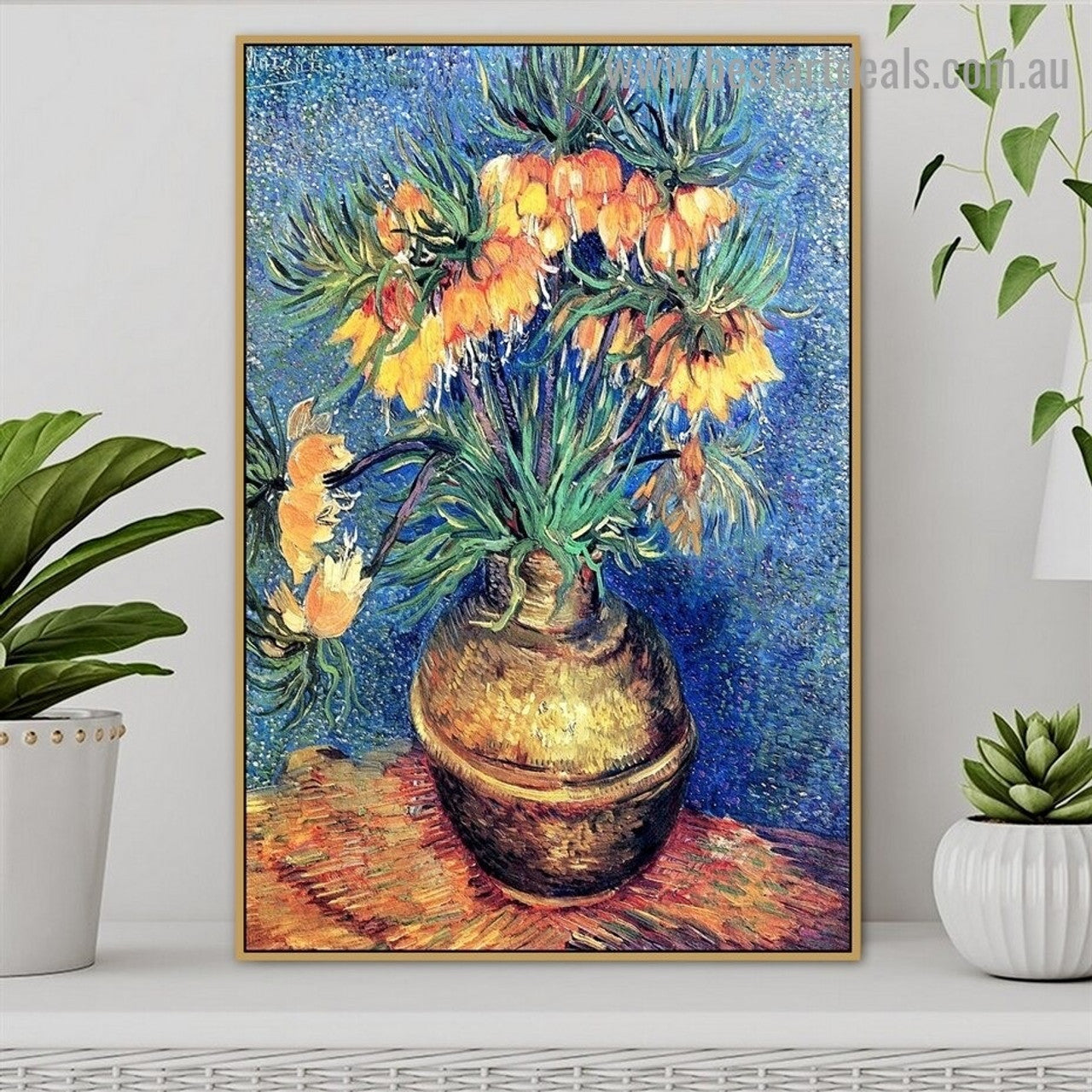
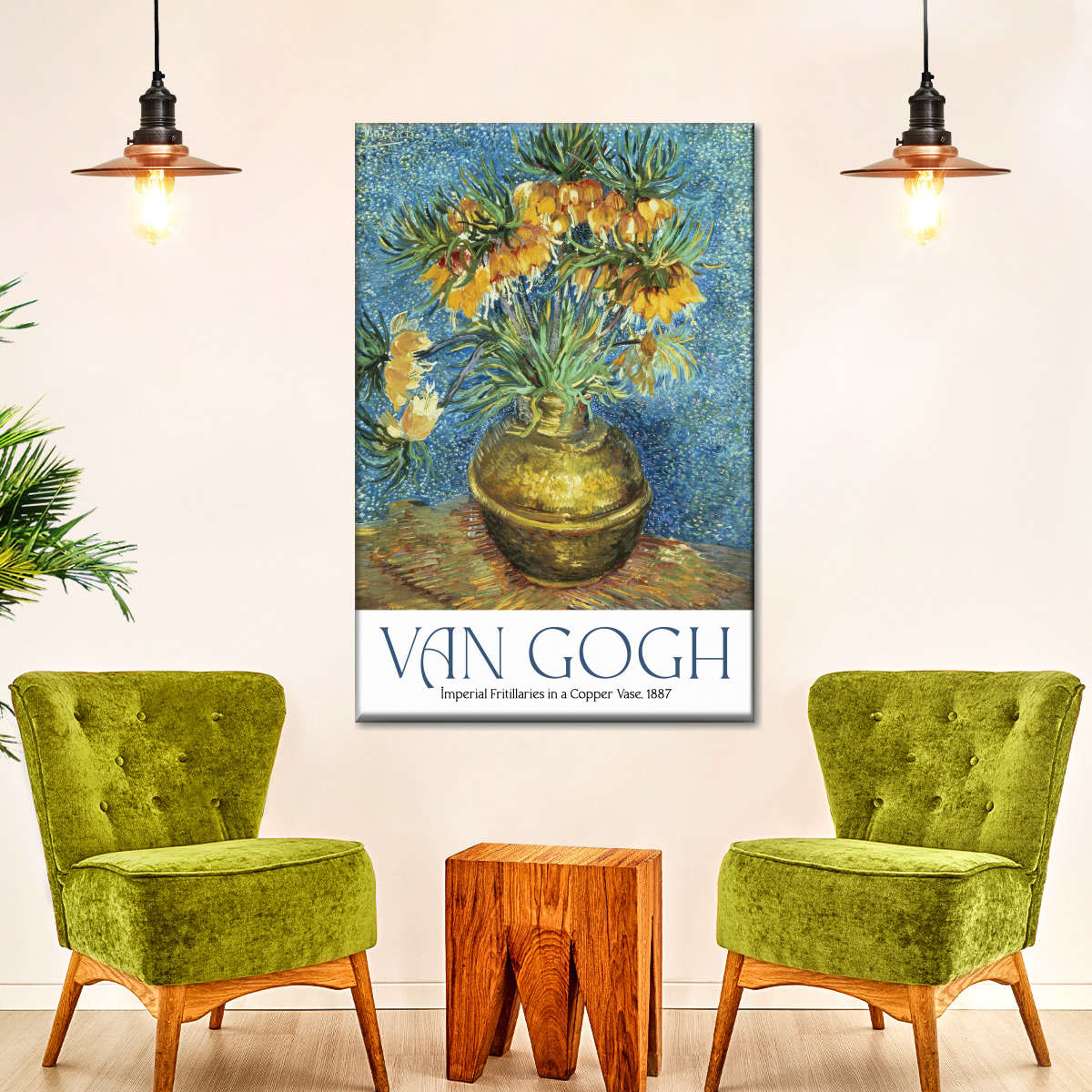
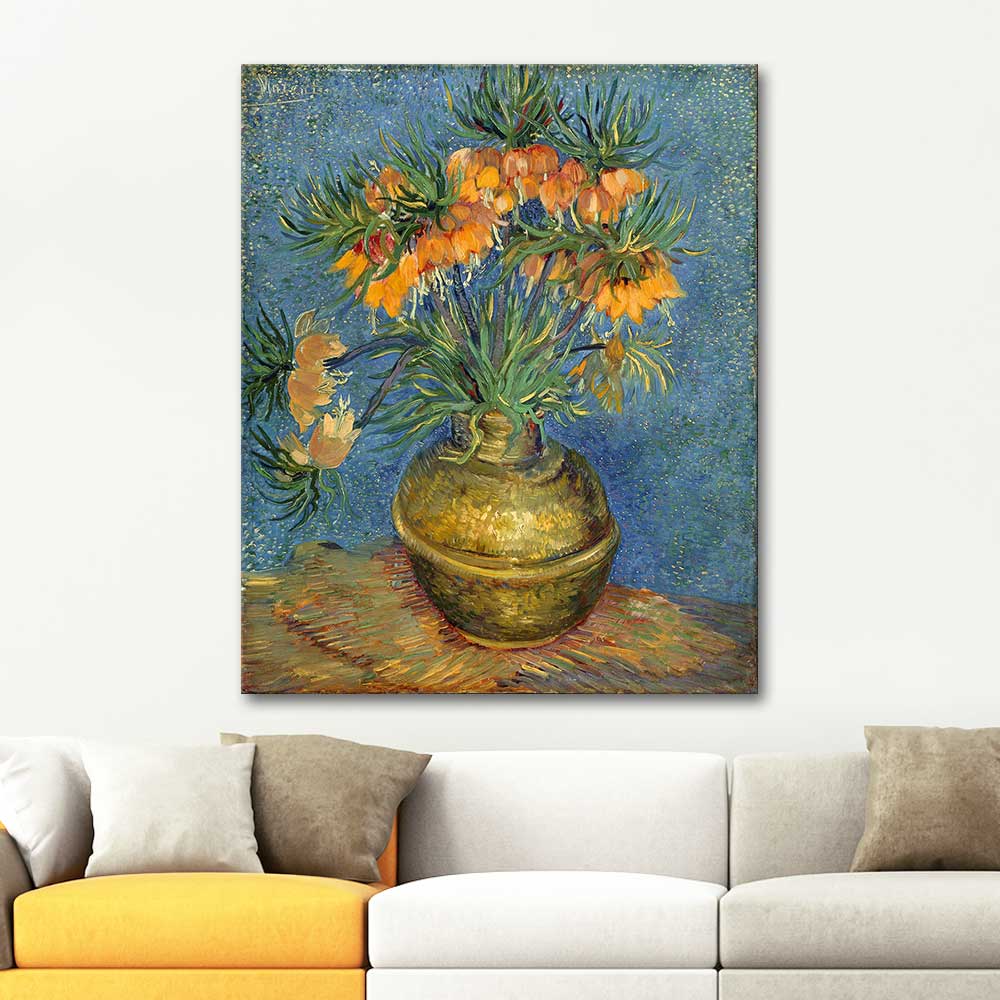
The painting shows a lush bouquet of yellow, golden and orange fritillaria arranged in a copper vase. The rounded vessel, with its narrow neck, occupies the lower center and holds a mass of green stems and long leaves that arch out to either side. The clusters of flowers hang at different heights, from the upper area down to the sides, creating an irregular yet balanced spread. Beneath the vase, horizontal and diagonal brushstrokes extend across a table, while a densely worked blue background envelops the entire scene and makes the arrangement stand out vividly.
As a floral still life, the work belongs to a tradition that turns everyday objects and flowers into a field of pictorial exploration. With their suspended, bell-shaped blooms, the fritillaria have a distinctive botanical presence: rather than forming a compact mass, they create a succession of small, downward rhythms. The vase supports and anchors the arrangement, establishing a relationship between the earthly and the expansive. Rather than recounting a historical or religious episode, the composition focuses on the interplay of nature, vessel, color and painted surface.
The flowers convey vitality and abundance through the repetition of their drooping forms, which seem to extend the movement of the stems and leaves. The copper-toned vase introduces a warm, weighty and stable counterbalance to the bouquet’s airy lightness. The blue background serves as a deep field of color: surrounding the yellows, oranges and ochres, it intensifies their luminosity and sets each cluster apart from the surrounding space. The symbolic reading remains tied to the still life’s own structure: growth, fullness and vegetal movement come together in a form contained by the vessel.
The composition is vertical and centered, but its contours are not rigid. The vase anchors the base as a compact core; from its neck, the leaves fan out in arcing lines that draw the eye toward the upper flowers and the side branches. The visible brushwork lends density to both the bouquet and the background, so the space feels not empty but vibrant and active. The table’s horizontal bands stabilize the vertical abundance, while the contrasts between deep blue and warm tones organize the main focal points. The painted surface thus becomes an essential part of the painting’s decorative energy.
In this work by Vincent van Gogh, the still life serves as a laboratory for color and brushwork. Intense contrasts, dynamic contours, and visible texture transform an everyday subject into a construction full of vitality. The bouquet’s radial spread is set against the vase’s compact form, and this tension sustains the entire image: the material seems anchored below while also rising toward the blue field. It is worth observing how each flower contributes to this upward rhythm and how the vessel brings the composition back to the plane of the table. That is where the painting’s power lies: in turning a simple floral arrangement into a vibrant architecture of color, weight, and movement.
Have questions about our oil painting reproductions? See our frequently asked questions.