

Description
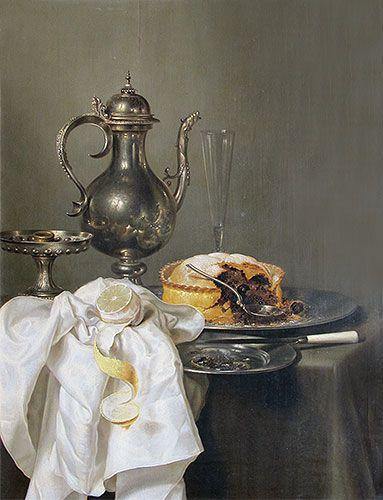
The painting Still Life with a Silver Ewer and a Pie, by Willem Claesz Heda, depicts a carefully arranged table in an intimate, quiet atmosphere. A large, ornamented metal ewer rises in the center-left, with a lid, curved handle and pouring spout, its surfaces catching the light. Beside it are a low cup and a slender glass. On the right, a pie with a golden crust rests on a light-colored plate and is partly covered with dark fruits. Lemon slices, the white cloth draped over the edge of the table and the dark trays complete a scene of restrained abundance, set against a gray-green background free of distracting elements.
As a still life, the work does not tell a figurative story; instead, it makes everyday objects the focus of close observation. The genre centers on food, vessels, textiles and utensils, and on how their material presence can shape a complete visual experience. In the Dutch tradition associated with Heda, the table becomes a space of precision and balance: each element offers an opportunity to study metal, glass, fabric and food, and their relationships under controlled lighting. Here, the ewer and tableware lend a note of refinement, while the pie and lemons keep the composition connected to the simple pleasures of a domestic table.
Meaning emerges from the dialogue between the enduring and the perishable. The silver and reflective vessels suggest value, care, and everyday luxury; by contrast, the cake, fruit, and lemon evoke the sensory and temporal nature of food. The solidity of the jug contrasts with the fragility of what is consumed, introducing a subtle reflection on the passage of time. The white cloth, draped and crumpled over the edge, lends movement and spontaneity to a carefully controlled arrangement. It also heightens the contrast between the fabric’s matte texture, the gleam of the metal, and the visual density of the dessert.
The vertical composition is organized in a stepped progression. The jug dominates the upper left and serves as a visual anchor, while the cake balances its weight in the center right. The narrow glass draws the eye into the background and establishes a relationship of height among the vessels. In the foreground, the cloth forms a diagonal volume that guides the viewer’s attention toward the lemon slices and then to the plate. Soft lighting is concentrated on the metallic reflections, the edges of the tableware, the cake’s golden surface, and the white folds. The palette of silver, greenish gray, white, pale yellow, toasted gold, and dark brown creates depth without resorting to jarring contrasts.
The work is consistent with the language of Dutch still life associated with Willem Claesz Heda: a sober composition, a restrained palette, and meticulous attention to materials and the effects of light. Its appeal lies in transforming a domestic table into a quiet study of presence, texture, and transience. The jug first draws the eye with its scale and reflections, but the cloth and cake then lead the viewer toward a more tactile, intimate experience. Along this journey, the objects cease to be mere accessories and give shape to a meditation on everyday luxury, sensory pleasure, and the passage of time.
Have questions about our oil painting reproductions? See our frequently asked questions.