

Description
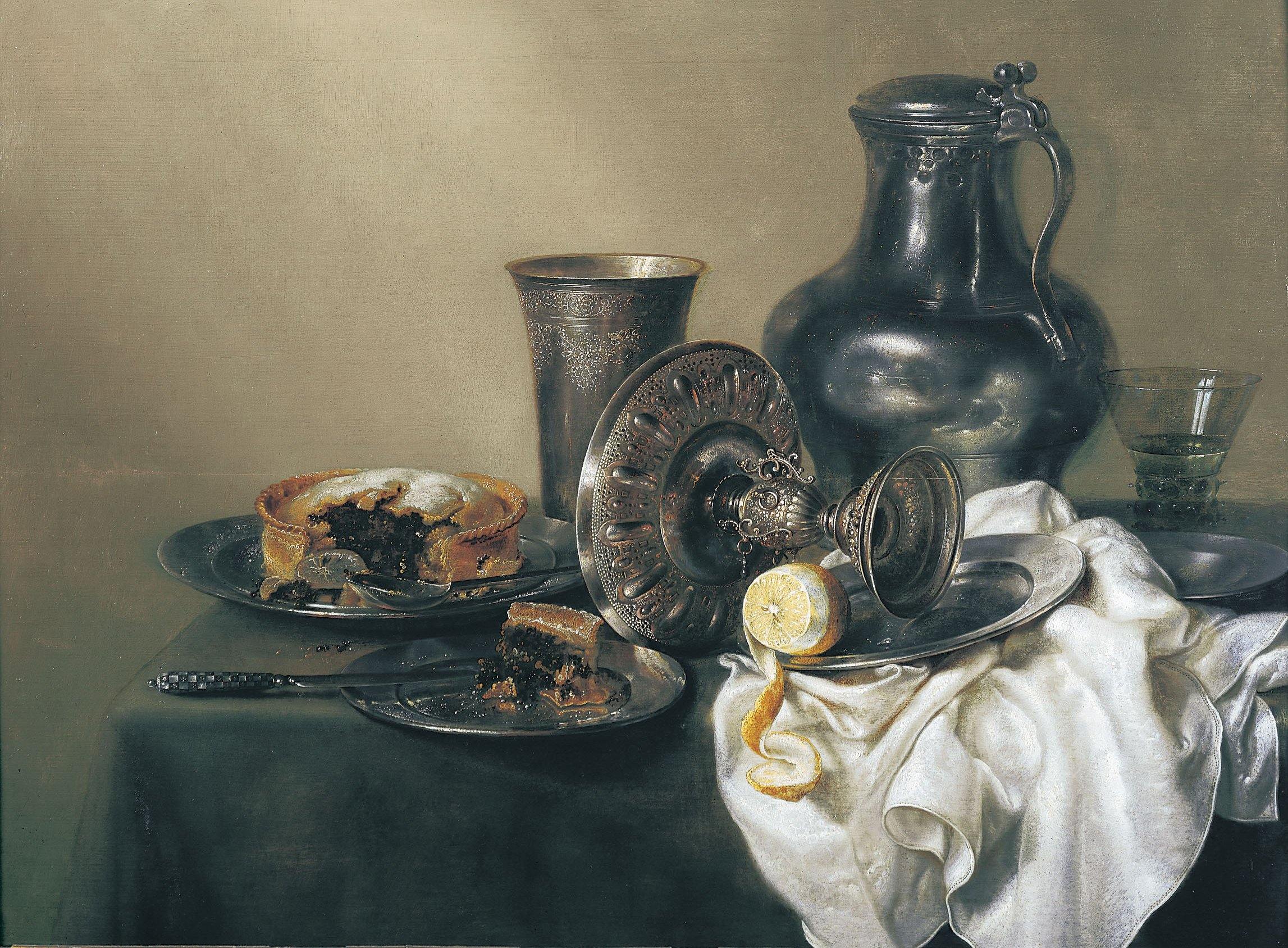
The painting shows a tabletop still life composed of everyday objects and food arranged in a carefully restrained balance. At the back stands a large dark metal jug beside a tall, ornamented vessel; in front, an overturned metal goblet introduces a diagonal that animates the composition. On the left, an open round pie reveals its filling, while a slice served on a small plate occupies the foreground. Half a lemon, its extended peel, a spoon, several plates and a transparent glass containing a dark liquid complete the scene. The white cloth falls from the right and gathers across the tabletop, surrounding crumbs and small leftovers that suggest a meal interrupted.
Still life is a genre devoted to the contemplation of inanimate objects, food and utensils brought together in a pictorial composition. There is no narrative episode or human figure here: attention is focused on the physical presence of things, on their differences in weight, sheen, texture and use. The work belongs to the tradition of Dutch tabletop still lifes associated with Willem Claesz Heda, renowned for their meticulous observation of vessels, tableware and food in subdued light. The domestic table thus becomes a space for quiet observation, where abundance is presented not as an exuberant spectacle but as an intimate and silent experience.
The objects invite a reading that goes beyond their practical function. The glasses and metal jug suggest domestic luxury, but also offer shifting surfaces on which the light fragments and fades. The cut tart, the portion already served, the opened lemon and the crumbs point to consumption and the passage of time: the table bears the traces of a recent activity. The rumpled cloth and the objects partially displaced add a sense of immediacy, as if the composition’s order coexisted with the natural disorder of everyday life. This contrast between abundance, use and stillness is one of the work’s most compelling tensions.
The horizontal composition is arranged through a succession of planes that leads the eye from the dominant jug in the background to the food and utensils in the foreground. The rounded forms of the tableware and tart contrast with the elongated line of the spoon and the broken folds of the cloth. Side lighting shapes the volumes without creating a glaring sheen: the metals reflect their surroundings dully, the glass introduces a restrained transparency, and the lemon adds a yellow accent among grayish greens, browns, blacks and silvers. The relatively uncluttered background allows the central grouping to retain its clarity, while the shadows and overlapping plates create depth without disrupting the overall stability.
This restrained, tonally subdued treatment is consistent with the tradition associated with Willem Claesz Heda, particularly in its attention to reflections on metal, glass, and polished surfaces. The painting transforms an apparently simple table into a quiet study of materials: each object participates in a network of contrasts between hardness and softness, shine and opacity, fullness and remnants. Note how the overturned goblet, the lemon, and the white cloth shape the foreground; here, the scene ceases to be a mere gathering of objects and becomes a visual meditation on use, abundance, and the transience of material pleasures.
Have questions about our oil painting reproductions? See our frequently asked questions.