

Description
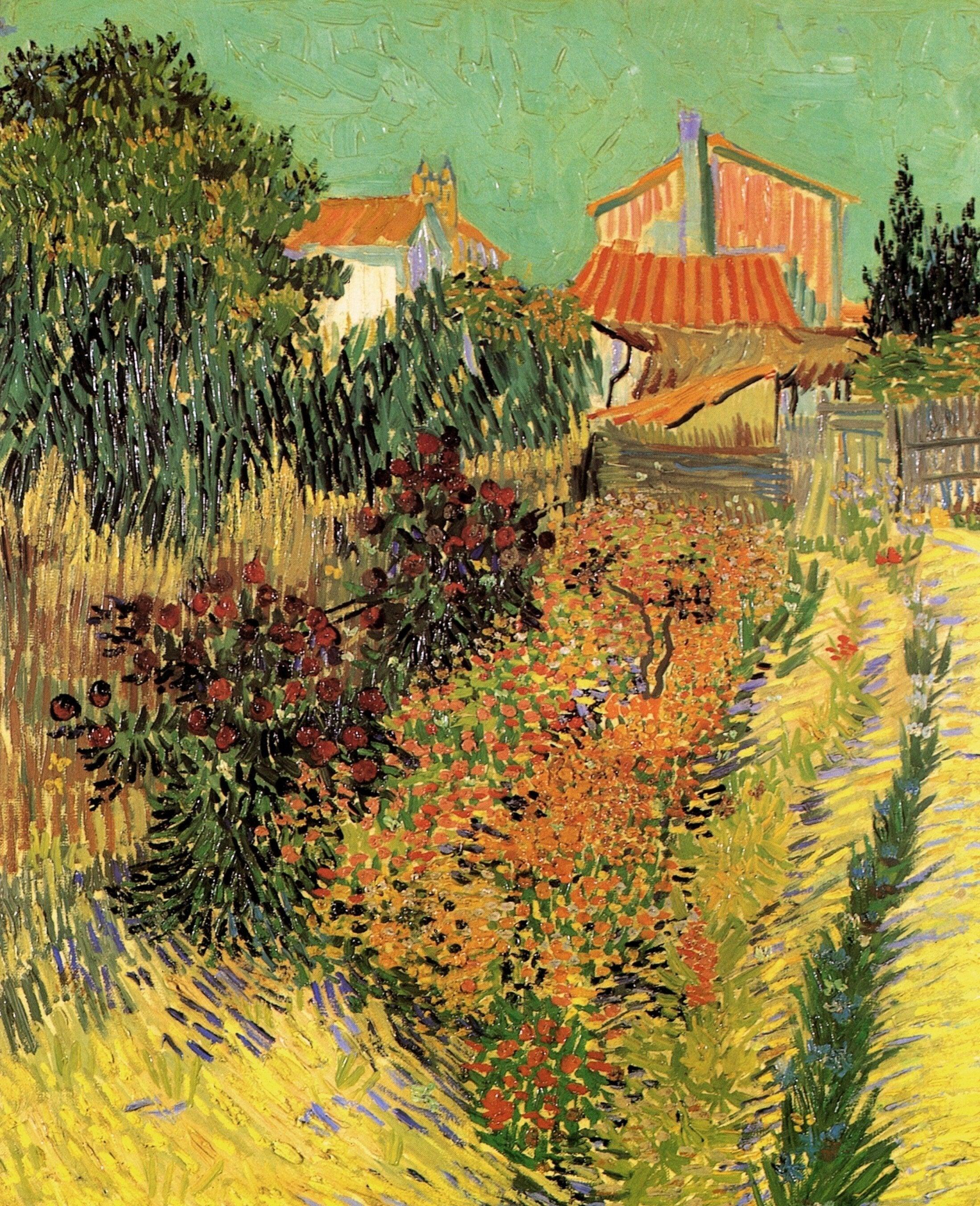
The painting shows a lush garden stretching from the foreground to several buildings with light-colored walls and reddish roofs in the distance. A flower-lined path begins in the lower part of the scene and leads the eye toward the architecture, while trees, shrubs, and tall plants form a dense frame on both sides. Red, orange, yellow, violet, blue, and white flowers cluster in large masses of color, as if the garden were advancing in waves over the path. On the right, a wooden structure accompanies the vegetation and adds a domestic note to the scene. Above it all opens a broad, vibrant blue-green sky.
The subject belongs to the realm of garden landscapes and the contemplation of everyday life. The house does not appear in isolation but is integrated into a leafy setting that envelops it and draws it into the experience of the garden. The path creates a simple route: from the immediate abundance of flowers toward the façades and roofs waiting in the distance. Thus, the work presents no narrative with characters or events, but rather a spatial experience in which nature and architecture coexist. In the context of Vincent van Gogh’s work, this kind of domestic subject takes on a particular intensity through the expressive transformation of the landscape.
The path gives the composition depth and draws the eye toward the living space. The abundance of flowers and foliage suggests vitality, fullness, and nature in expansive growth, while the buildings introduce a human dimension into this organic growth. The vegetation serves not merely as decoration: it also acts as a visual screen, partly concealing the buildings and making the house seem to emerge from the garden. The contrast between the built environment and the vegetation creates a gentle tension between order and spontaneity. The scene invites us to see the garden as a transitional place, between the shelter of the home and the open energy of the landscape.
The composition is arranged in deep, distinct layers. The foreground is filled with prominent flowers and leaves, the middle ground is defined by the path and masses of shrubs, and the background brings together rooftops, a tower, and the sky. This sequence creates depth without relying on rigid perspective: changes in scale, the direction of the path, and the interplay of colors guide the eye. The red and orange tones of the flowers and rooftops interact with the intense greens of the foliage, while yellows, violets, and blues add rhythmic accents. The visible, dynamic brushwork makes each group of plants an expressive unit; the forms seem to vibrate, and the sky extends this movement with horizontal, undulating strokes.
The work is consistent with traits widely associated with Vincent van Gogh: intense, contrasting color, energetic brushwork, and an interpretation of the landscape based more on visual rhythms than on neutral description. The architecture in the background provides stability, but the garden’s exuberance keeps the surface in constant motion. The interest of Garden Behind a House lies precisely in this transformation of a domestic motif into a landscape of expansive energy. It is worth observing how the path brings all the elements together: it begins among the flowers, passes through the vegetation, and ends by connecting the viewer’s gaze with the houses, making spatial depth the painting’s central subject as well.
Have questions about our oil painting reproductions? See our frequently asked questions.