


Description
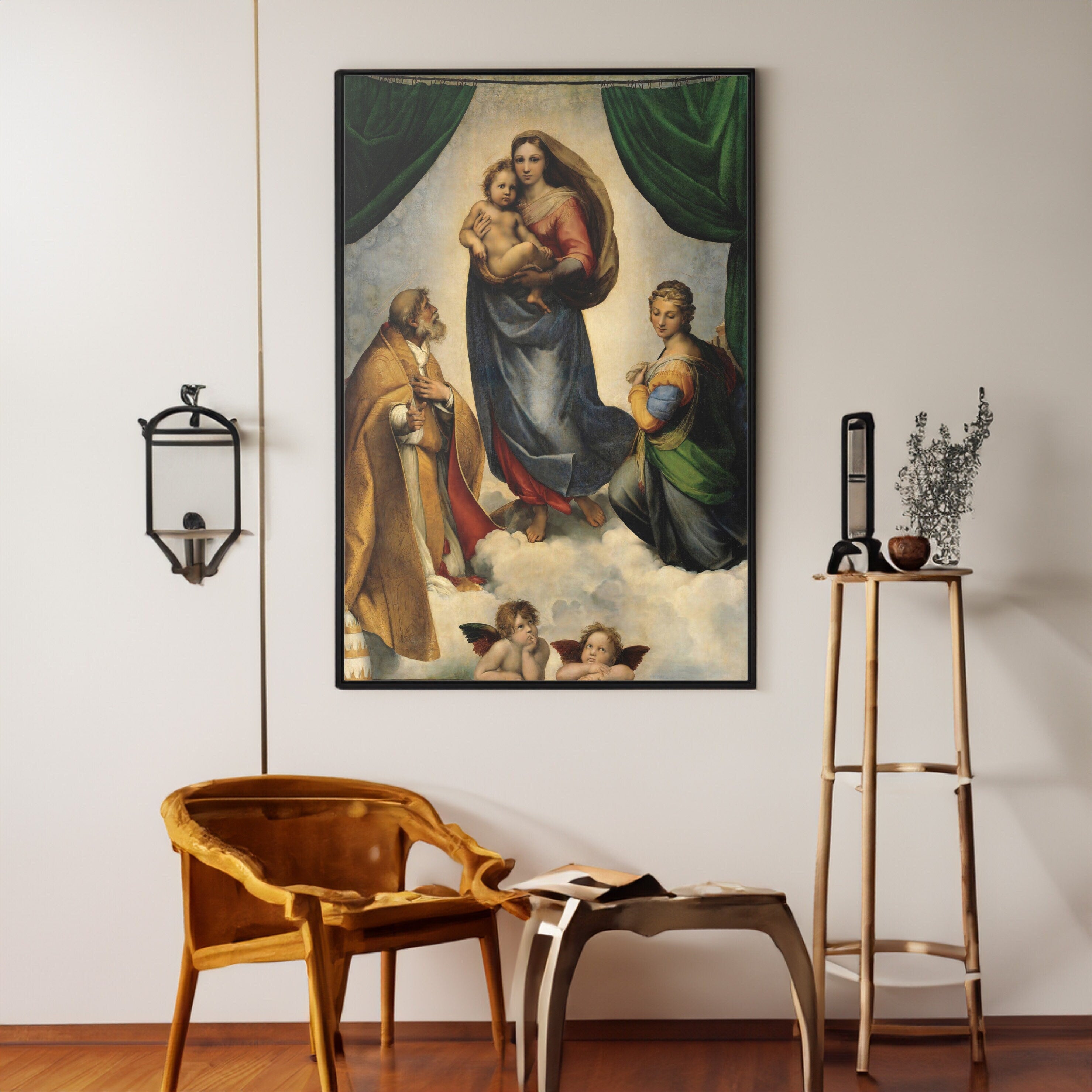
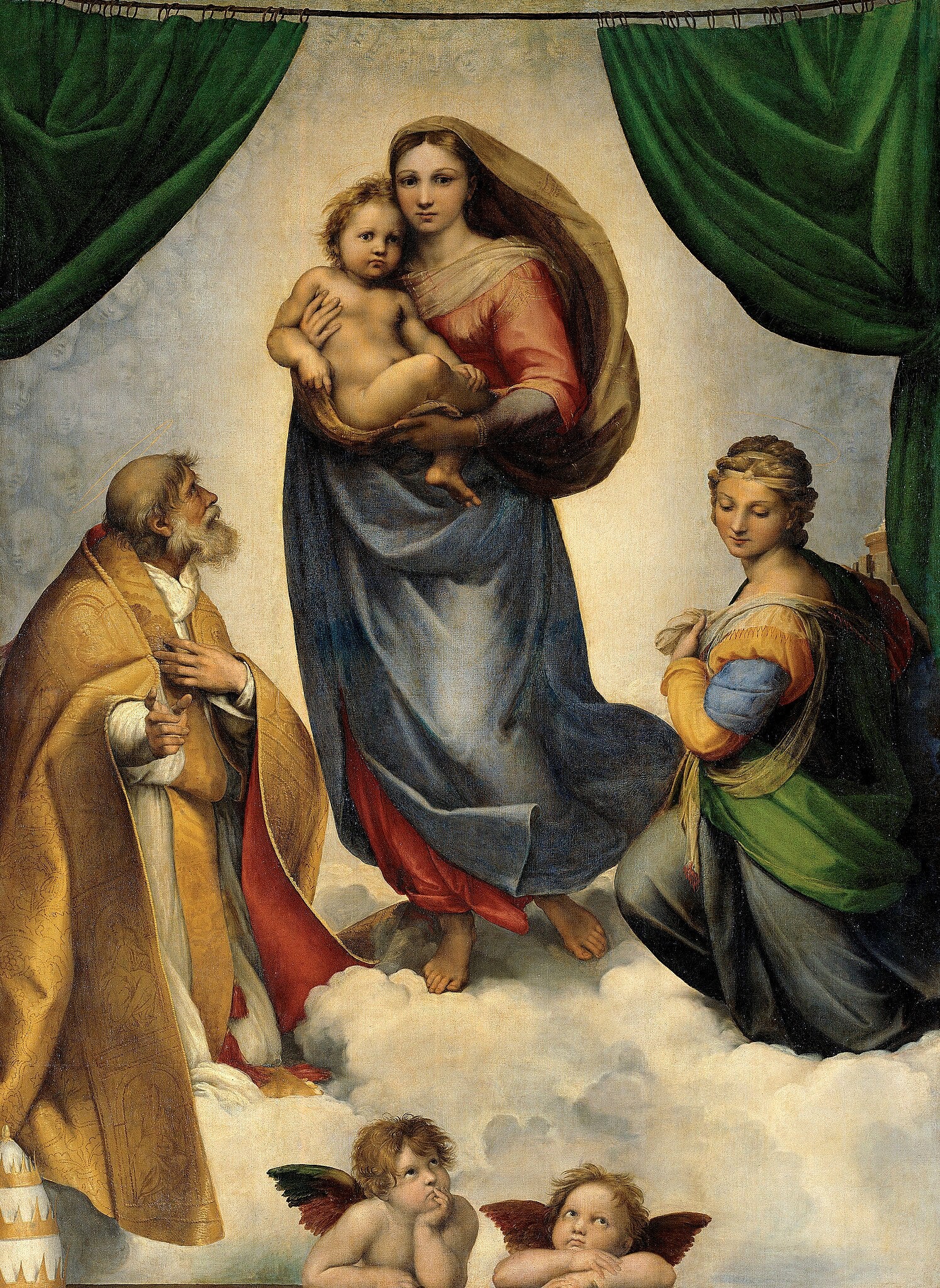
The Madonna Sixtina painting by Raphael is a masterpiece of Italian Renaissance that has captivated art lovers for centuries. This work was commissioned by Pope Julius II to decorate the Sistine Chapel in the Vatican, and it is considered one of the paintings most important works in the history of art.
Raphael's artistic style is characterized by his ability to create realistic and expressive human figures, and this can be clearly appreciated in the Madonna Sixtina. The composition of the painting is impressive, with the Virgin Mary seated on a throne surrounded by angels and saints. The figure of the Virgin is especially beautiful, with her serene face and sweet gaze.
Color is another highlighted aspect of the painting. Raphael used a palette of soft and delicate colors, which give the work a sense of tranquility and harmony. The pastel tones of the characters' dresses contrast with the dark background, creating an impressive visual effect.
The history of the painting is also fascinating. Raphael worked on the Madonna Sixtina for several years, and it is said that he finished it shortly before his death in 1520. The work was highly admired by his contemporaries and has been the subject of study and admiration by art historians ever since.
There are some lesser-known aspects of the painting that are also interesting. For example, it is believed that Raphael included his own portrait in the work, in the figure of the angel holding the book. Additionally, it is said that the figure of the child Jesus was inspired by Raphael's son, who died shortly after the painting was completed.
In summary, Raphael's Madonna Sixtina is an impressive work of art that combines technical skill, aesthetic beauty, and religious significance. This painting is a treasure of the Italian Renaissance and one of the most important works in the history of art.