

Description
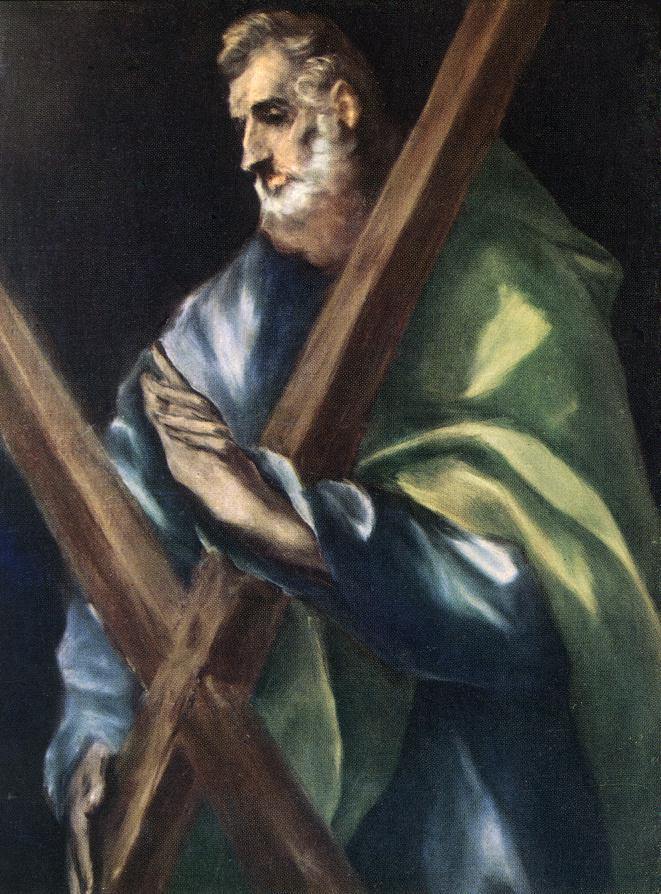
The image shows a bearded male figure in a very tight vertical frame. The sitter occupies the central and right areas of the composition, while several large wooden beams cross the foreground in different directions. One beam appears close to the visible hand, which rests on or grips the surface. The face, framed by dark or graying hair and a full beard, stands out against a background of deep darkness. The scene concentrates attention on the relationship between the body, the garments and the wooden structure, without secondary elements that distract the gaze.
The clothing consists of loose garments in dark blue, green and yellowish-green. These tones are modelled by the lighting, which leaves some areas in shadow and brings others forward with a warmer clarity. Blue dominates much of the torso and gives depth to the whole, while greens and yellows introduce restrained variations across the fabric. The wood, in muted browns and beige, establishes a material contrast with the textiles: its edges and planes read as firmer, heavier and more angular compared with the soft folds of the clothing.
The light is concentrated on the face, the beard, part of the chest and some fragments of the beams. This distribution produces an intense chiaroscuro, with a gradual transition between the visible areas and the black background. It is not uniform illumination; rather, it seems to open small highlights within the gloom. The man’s expression remains serious and restrained, although the exact gesture is not entirely legible. His gaze and posture direct attention to the encounter between the figure and the wooden elements, which occupy a decisive structural position within the painting.
In this painting by El Greco, the composition is built on very pronounced diagonals. The beams cross the frame and create a network of lines that contrasts with the verticality of the body and the more stable form of the head. That crossing of directions adds visual tension and makes the scene feel concentrated in a single instant of effort or contact, without being possible to determine the exact action depicted. The dark background functions as a reductive space: it removes locational references and focuses the reading on the figure, the wood and the shifts of light.
The visible surface brings together areas of brushwork and colour with varying density. In the garments, tones are arranged through broad, overlapping folds; in the wood, the colours become earthier and more compact. The visible hand introduces a concrete human scale within the structure of large elements, and the face acts as a resting point among the diagonals. The restrained palette avoids bright contrasts and encourages a solemn, silent and concentrated atmosphere. Each element seems to have weight: the beard, the fabrics, the arms and the beams are presented with a marked physical presence.
The identity of the figure and the exact nature of the structure cannot be determined with certainty from this isolated image. For that reason, it is useful to consider the work through its visible relationships: a figure that remains close to large wooden forms, a hand that establishes contact and lighting that partially separates the body from the darkness. The scene does not offer a broad narrative space, but an intensely focused fragment built around material, gesture and contrast.
This grouping may suggest a situation of bearing, resistance or introspection, although that interpretation remains open. The wood seems to function simultaneously as a physical object and a visual barrier: it occupies the foreground, interrupts the continuity of the body and forces the eye to traverse the image along diagonals. The hand, small compared with the beams, can prompt reflection on the relationship between human scale and that which is supported or confronted. The face, partially illuminated, introduces a more intimate dimension against the solidity of the materials. Without asserting a specific intent, the composition invites consideration of how darkness, weight and contact organize the emotional tension of the scene. It also leaves room for each viewer to determine whether they perceive devotion, effort, repose or simply a figure paused beside a wooden structure.
On closer inspection, the visible hand, the bluish folds of the garment and the wooden diagonals crossing the foreground stand out in particular.
Do you have questions about our oil-painting reproductions? See our frequently asked questions.