


Description
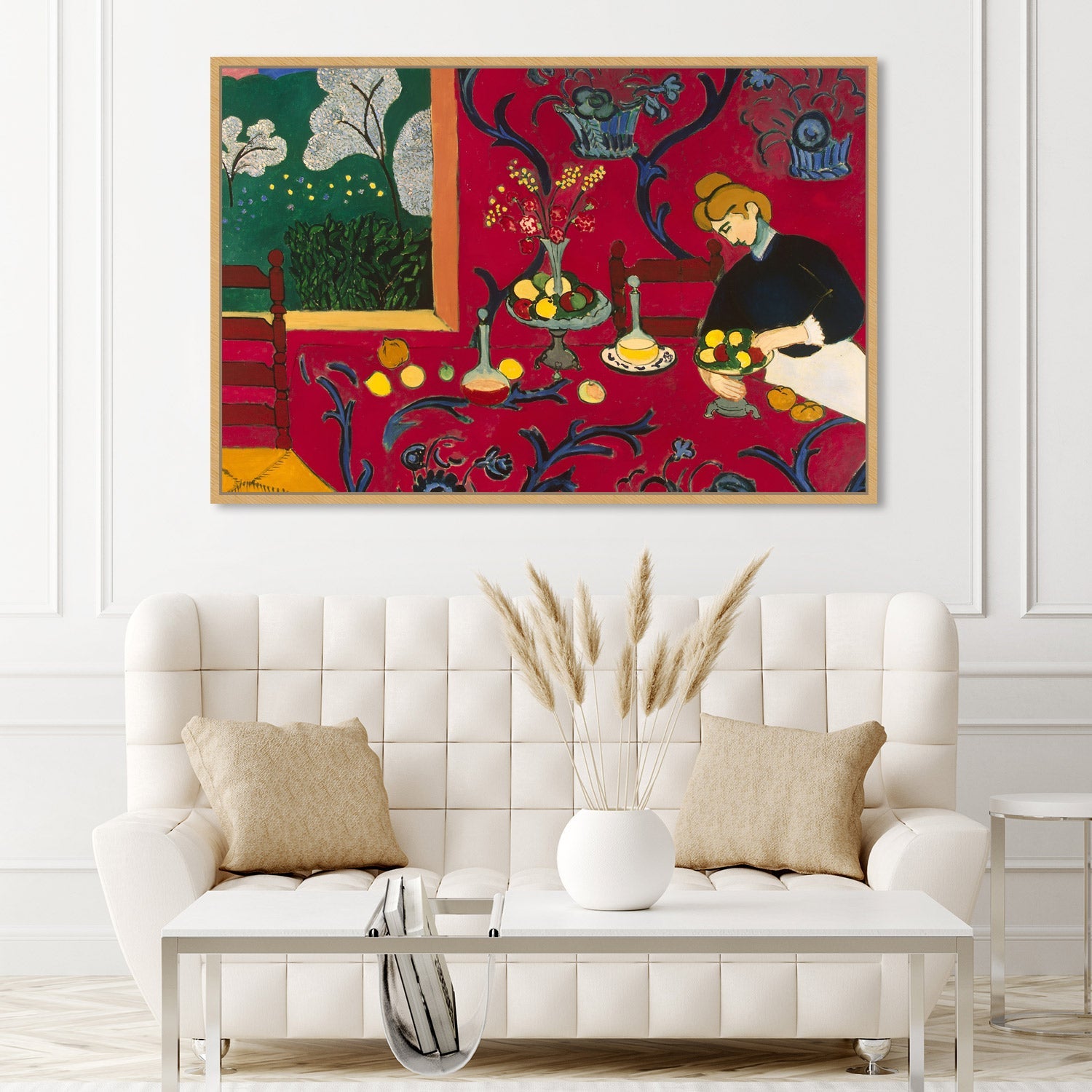
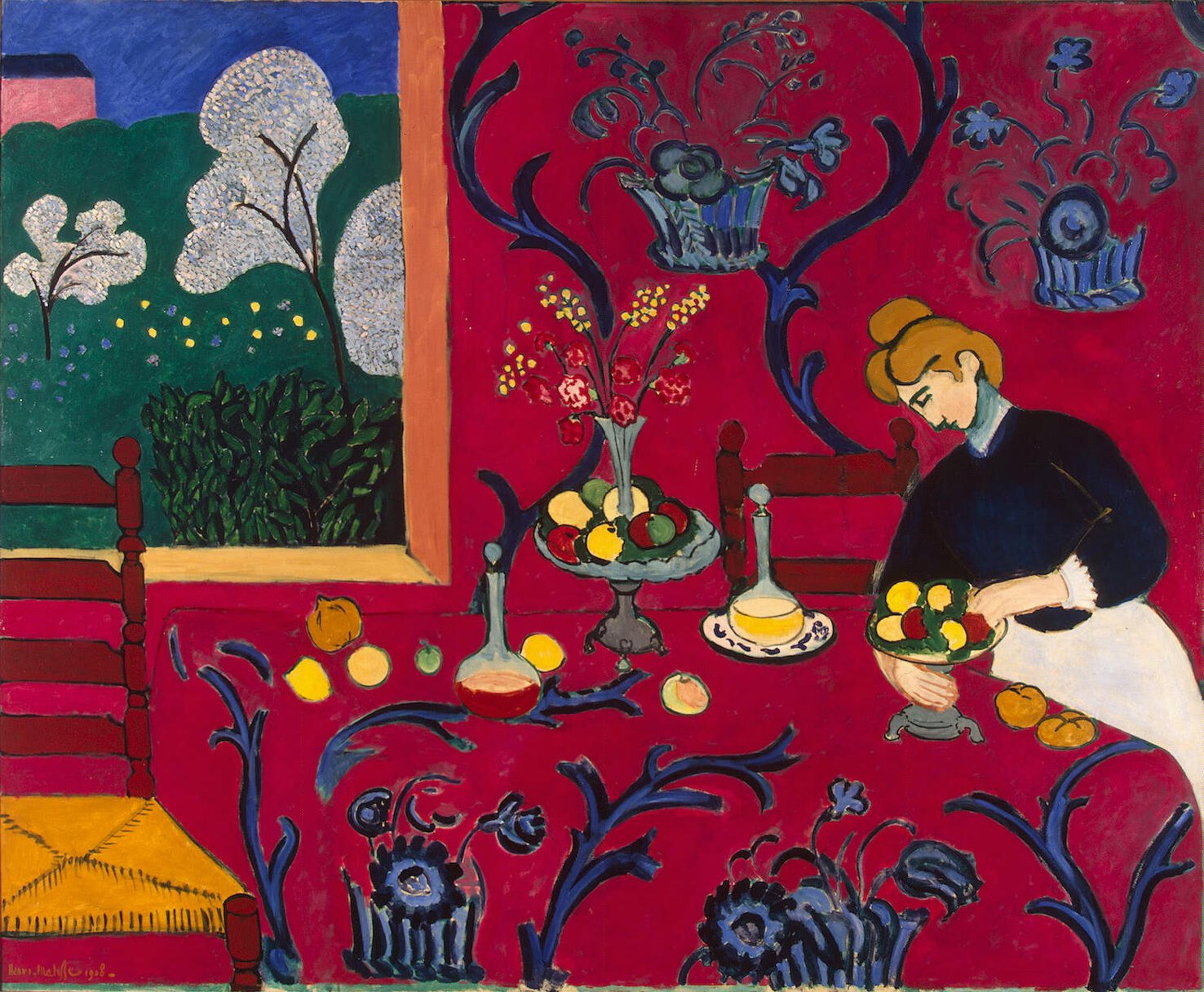
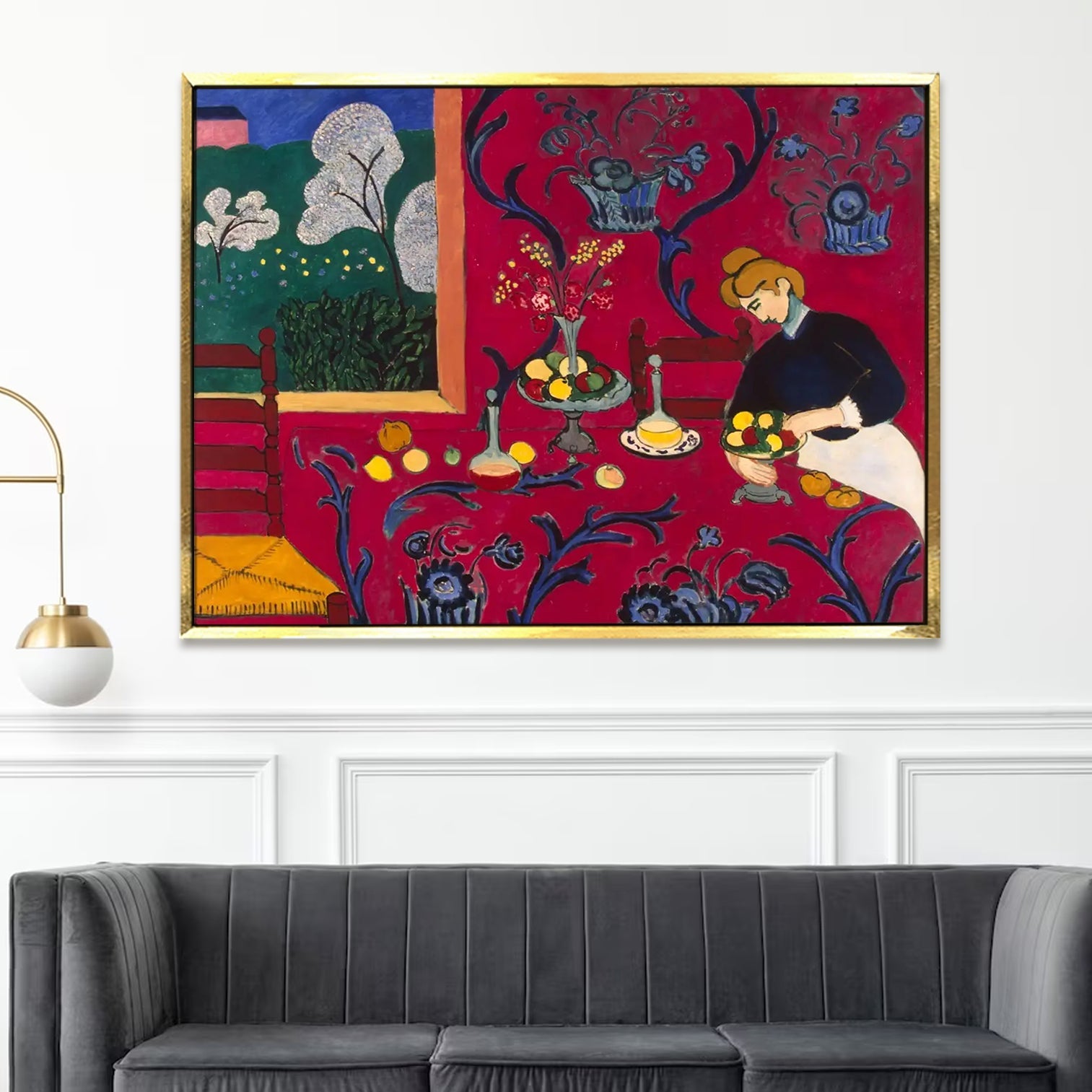
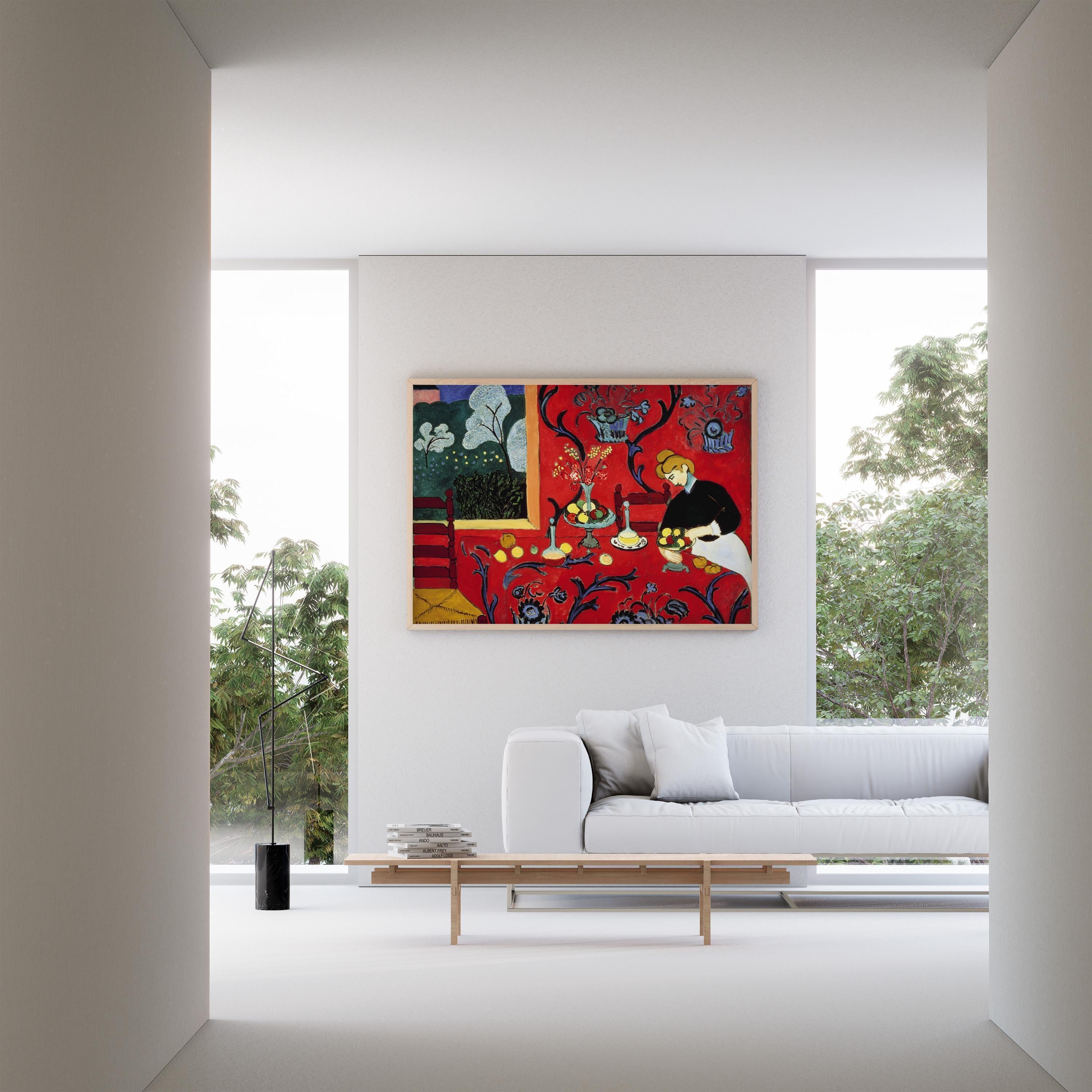
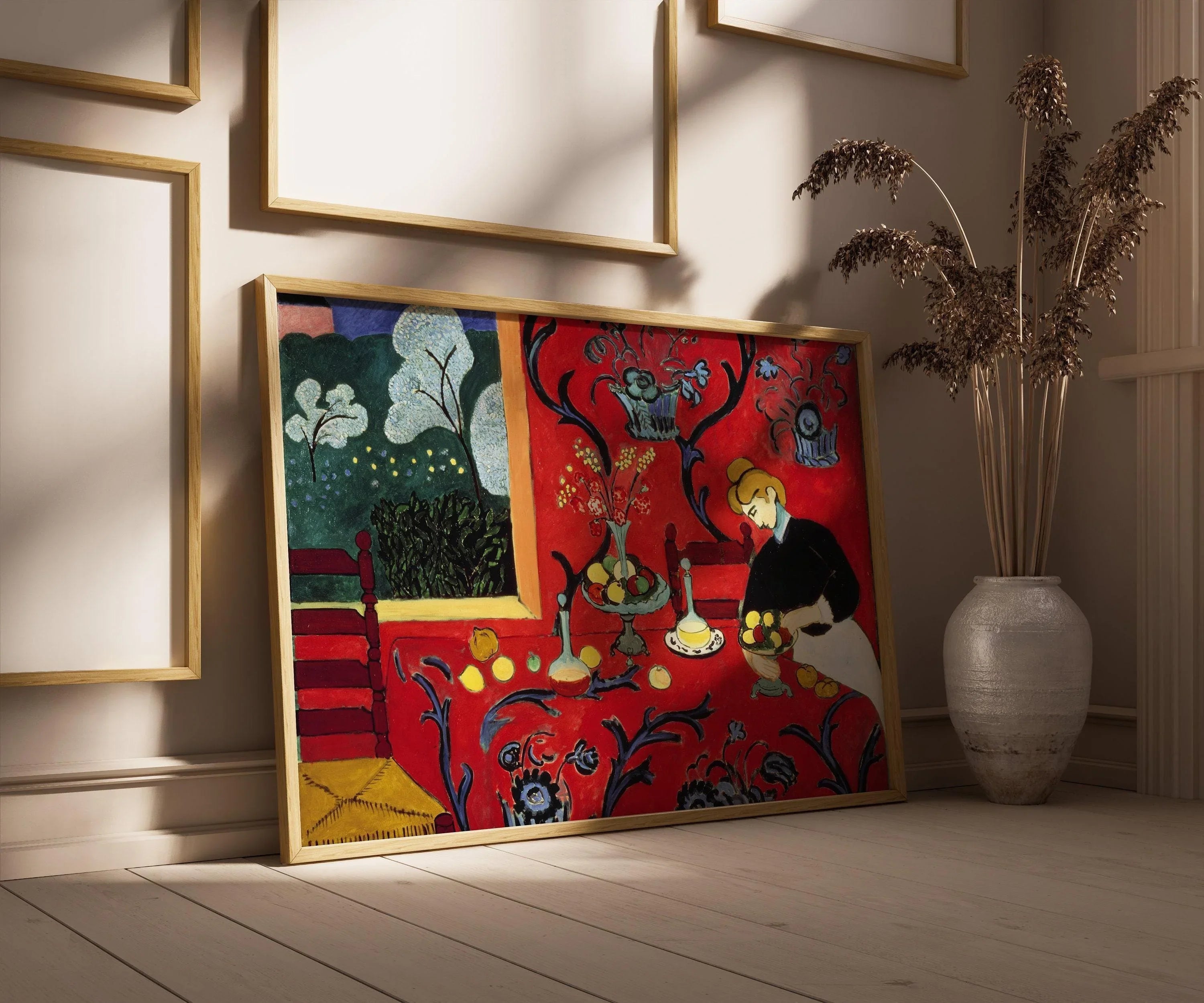
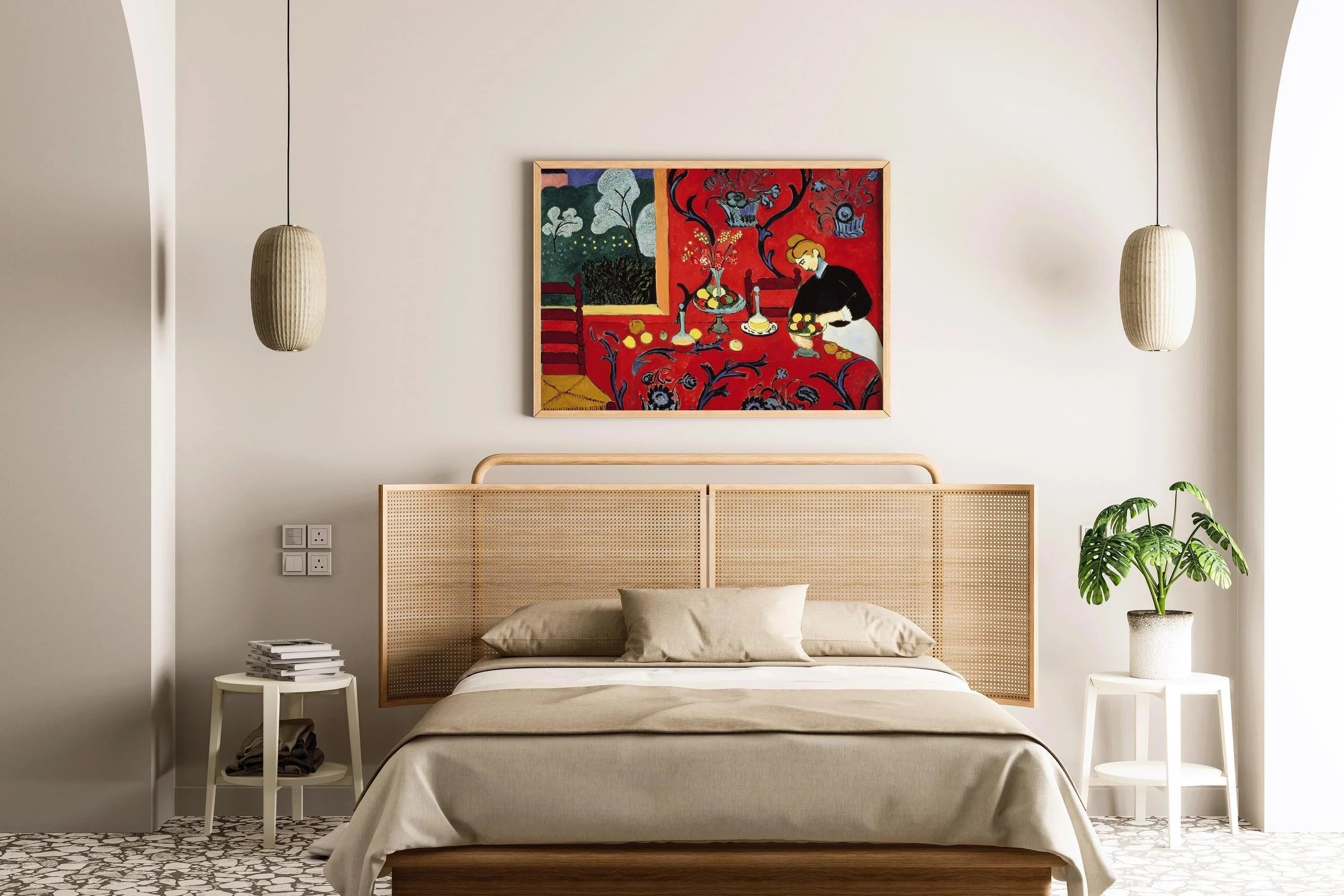
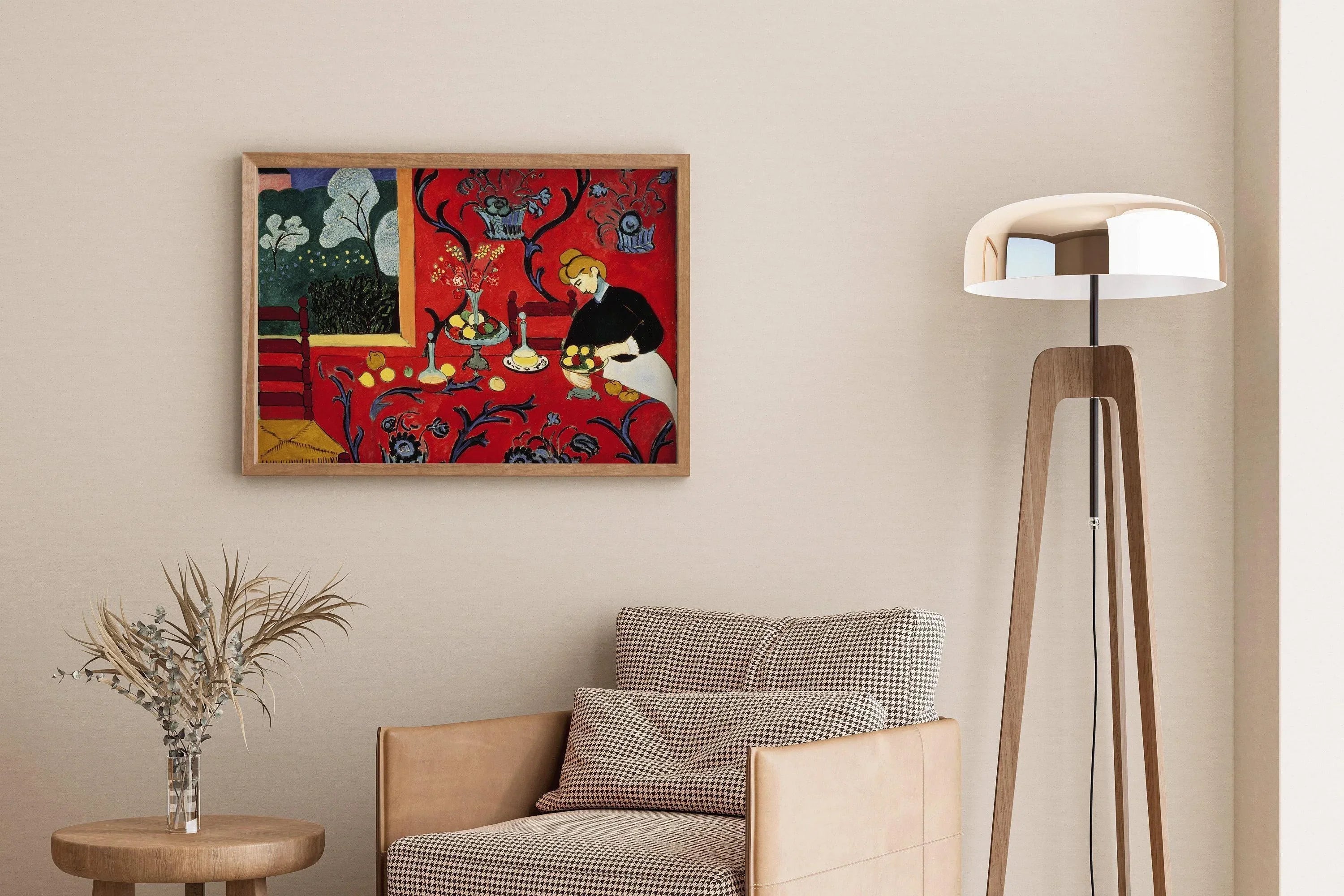
Harmony in Red (1908) by Henri Matisse is considered a masterpiece of the Fauvism and early modernism movements.
When one confronts this work of art, they experience something more than the contemplation of a domestic interior: they delve into a radical declaration of pictorial freedom. This work —oil on canvas measuring 180 × 221 cm, preserved today in the Hermitage Museum— encapsulates like few others the boldness with which Matisse reformulated color, turning it not into a simple descriptive vehicle, but into the very essence of the image. His absolute, expansive, almost defiant red dominates the scene like a vibrant field where objects seem to float rather than rest on a table.
The female figure, leaning as she arranges a fruit bowl, brings a note of stillness within this chromatic whirlwind. It is not a psychological portrait; it is rather a rhythmic element that dialogues with the decorative curves that repeat both in the fabric covering the table and in the background. Matisse deliberately eliminates traditional depth: the blue motifs that branch out over the red continue uninterrupted from the tablecloth to the wall, creating a continuous, almost textile space that nullifies the division between figure and environment. It is in this apparent simplicity where one of the most discussed subtleties resides: the painting seems poised to abandon the genre of the domestic interior to become a living tapestry.
And yet, amidst this sought flatness, the open window bursts in as a luminous exception. The exterior landscape —with its speckled white trees and deep blue sky— introduces a visual counterpoint that recalls Matisse's fascination with pure colors and Mediterranean atmospheres, even before his work reached the full splendor he would develop years later in Nice. This contrast between interior and exterior, between ornament and nature, is one of the less obvious charms of painting: the window does not provide traditional perspective, but rather another plane of color, as if it were a second painting embedded in the first.
A curious historical fact accompanies this work: originally conceived as a blue interior, Matisse decided to transform the composition into a burst of red during the creative process. This decision, which might seem impulsive, reveals his constant search for an emotional harmony rather than a literal one. The red, far from being a whim, becomes the true narrative protagonist, unifying the scene and conveying that expansive feeling of exuberance that the artist considered essential for visual happiness.
Harmony in Red has often been compared to a medieval tapestry or the decorative logic of Islamic art, influences that Matisse deeply admired. And although the work does not describe a specific moment or an explicit narrative, its strength lies precisely in that alliance between form, color, and visual pleasure. It is a Fauvist manifesto brought to maturity: reality is transformed to give way to a more intense, freer, more human version.
Original work: 180 × 221 cm
Artist: Henri Matisse (1869–1954)
Year: 1908
KUADROS ©, a famous painting on your wall.
Hand-made oil painting reproductions, with the quality of professional artists and the distinctive seal of KUADROS ©.
Art reproduction service with a satisfaction guarantee. If you are not completely satisfied with the replica of your painting, we will refund 100% of your money.