Abstract art, with its ability to evoke deep emotions and challenge traditional perceptions, has transformed the way we understand and experience art. This style, which may seem chaotic at first glance, carries a depth and meaning that invite reflection and personal interpretation. In this article, we will explore the secrets hidden behind abstract forms and their emotional impact.
The Silent Revolution of Abstract Art
The Origin of Abstract Art: Early Manifestations

Abstract art emerged at the beginning of the 20th century as a response to the need to break with the norms established by figurative art. Artists sought a new form of expression that did not depend on literal representation. One of the pioneers, Wassily Kandinsky, promoted the idea that art should reflect an inner reality rather than visual reality. This movement was influenced by music, in which the abstraction of sound becomes a pure emotional experience.
In this context, the Reina Sofía Museum has been a beacon for many contemporary artists seeking to continue innovating in this style. For those interested in learning more about this institution, the article Reina Sofía Museum: Innovation and Artistic Revolution offers a deep insight into its impact on modern art.
Contrast with Realism: A Paradigm Shift
Abstract art represents a radical shift from realism. While realism focuses on capturing the appearance of the world, abstract art seeks to express the essence beyond what is visible. This approach allows artists to explore concepts such as time, space, and emotion without the constraints of traditional representation. However, this paradigm shift has also brought certain challenges, such as the need to persuade an audience accustomed to a faithful representation of reality.
An example of this contrast can be seen in the evolution of urban art. In 2026, this form of art has embraced abstract elements to communicate social and cultural messages, a topic explored in detail in Urban Art in 2026: Evolution and New Frontiers.
Fundamental Principles of Abstract Art
Shapes and Colors: The Language of Abstraction
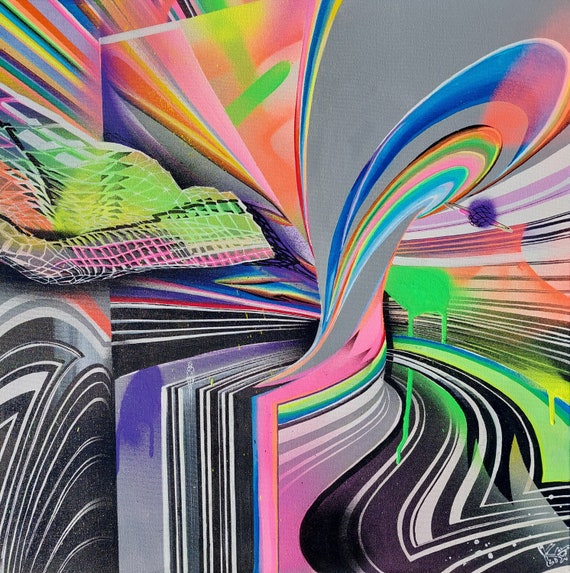
In abstract art, shapes and colors are the primary elements for conveying meaning. Unlike figurative art, where composition and technique focus on the represented object, abstract art uses color and shape as a language in itself. Colors can evoke specific emotions, while shapes can suggest movement or stability. For example, wavy lines can convey serenity, while vibrant colors can evoke energy and passion.
To create an effective abstract painting, artists must understand how these elements interact. Experimenting with different combinations of colors and shapes can lead to unexpected discoveries and the creation of works that resonate deeply with the viewer.
The Artist’s Freedom: Creation Without Limits
Abstract art offers the artist unparalleled freedom. Without the need to adhere to recognizable forms, creators can explore intrinsic concepts and personal emotions. This freedom is reflected in the diversity of styles within abstract art, from geometric to gestural. However, this same freedom can also present a challenge: the absence of defined limits can lead to visual overload or a loss of focus in the work.
To overcome these obstacles, it is crucial for artists to stay true to their personal vision and find a balance between experimentation and thematic coherence. In this way, they can create works that are not only visually striking, but also emotionally resonant.
Emotions and States of Being: The Impact of Abstract Art
Abstract art has the unique ability to evoke a wide range of emotions and states of being in those who contemplate it. Unlike more traditional forms of art, where the narrative is often explicit, abstract art invites the viewer to interpret the work through their own experiences and feelings. This subjectivity allows for a deeper, more personal connection between the art and the observer.
Some abstract works can induce feelings of peace and tranquility, while others can awaken a sense of chaos or inner conflict. This is largely due to the way colors and shapes are used by the artist. For example, soft tones and flowing lines can calm the viewer, while bold contrasts and angular forms can create a sense of tension or dynamism.
In this sense, abstract art acts as a mirror of our inner world, reflecting emotions that are often difficult to articulate with words. It is this ability to resonate emotionally that has led abstract art to be valued not only as an artistic expression, but also as a tool for emotional and psychological understanding.
Pioneers of Abstract Art: Innovators and Visionaries

Throughout history, several artists have been recognized as the pioneers of abstract art, each bringing their unique and revolutionary vision to the movement. One of the most influential was Wassily Kandinsky, who is considered one of the first to create fully abstract works. Kandinsky firmly believed that art should express the artist’s inner spirituality and that colors and shapes could communicate emotions in a way that words could not.
Another important visionary was Piet Mondrian, whose geometric style and use of primary colors laid the foundations for what would later be known as geometric abstract art. His focus on simplicity and balance has influenced countless artists and designers over the years.

These innovators, along with others such as Kazimir Malevich and Jackson Pollock, not only redefined the boundaries of what could be considered art, but also opened up new possibilities for artistic expression. Their legacy continues to inspire new generations of artists who seek to challenge conventions and explore the evocative power of abstraction.
Cultural and Social Influences in Abstract Art
Between Wars: The Historical Context
Abstract art emerged in a tumultuous period full of social and political change. Between the two world wars, artists sought new forms of expression that reflected the complexity of their time. World War I left a deep mark, challenging traditional notions of beauty and representation. The avant-garde movements were fueled by this desire for rupture, creating fertile ground for the development of abstract art.
An example of how the historical context influenced abstract art is the work of artists such as Wassily Kandinsky, who sought to capture internal emotions rather than external scenes. His works are a testament to how social turmoil can be channeled through new artistic forms. To delve deeper into the influence of history on art, you can read the article on The Renaissance: The Silent Cry of Art.
Influence of Music and Philosophy
Music and philosophy played a crucial role in the formation of abstract art. Many abstract artists were deeply influenced by classical music and jazz, which offered them a sonic parallel to the visual forms they explored. Kandinsky, for example, believed that painting should aspire to the condition of music, an art freed from literal representation.
In the philosophical realm, existentialism and nihilism challenged artists to consider their role in an increasingly fragmented world. The ideas of thinkers such as Nietzsche and Kierkegaard resonated deeply, driving artists to explore subjectivity and abstraction. This symbiosis between art, music, and philosophy is a recurring theme that continues to inspire contemporary creators.
For a broader view of abstraction's impact on other forms of art, explore the article on Urban Art in 2026: Evolution and New Frontiers.
Techniques and Materials in Abstract Art
The Role of Technological Innovation

Technology has been a significant catalyst in the evolution of abstract art. With the arrival of synthetic materials and digital technologies, artists have been able to explore new textures and visual effects. Graphic design programs make it possible to create complex works that would have been impossible to produce before.
An example of the impact of technology is the use of 3D printers to create abstract sculptures, blurring the lines between visual art and technology. This has opened a new world of possibilities for artists, who can now experiment and combine disciplines. To learn more about how technology influences contemporary art, see the article on Museo Reina Sofía: Innovation and Artistic Revolution.
Textures and Surfaces: Experimentation with Media
Experimentation with textures and surfaces is characteristic of abstract art. Artists use a variety of media, from oil paint to acrylic, to explore the interaction between color and texture. Layers of paint, the use of mixed materials, and tearing techniques are just some of the strategies used to add depth and dynamism to works.
In the context of abstract painting, the use of textures can transform a work, adding a tactile element that enriches the visual experience. This practice also offers artists the freedom to challenge established artistic norms, pushing the boundaries of what is considered possible in visual art.
The Abstract Art Market: Valuation and Popularity
The abstract art market has seen a notable increase in recent years, both in terms of popularity and economic value. Contemporary art auctions show growing interest in abstract pieces, which often fetch high prices. This is partly due to the perception of abstract art as a safe investment, since many works have increased in value over time.
The popularity of abstract art is also reflected in the collections of the world's most prestigious museums. Institutions such as the Museum of Modern Art (MoMA) exhibit masterpieces of abstraction, attracting art lovers and collectors alike. This interest not only keeps demand alive, but also encourages the continued production of new abstract works.
Contemporary Abstract Art: Emerging Trends
Contemporary abstract art continues to evolve, with emerging trends that reflect the diversity of cultural influences and current technological advances. One of the most notable trends is the rise of abstract digital art, where tools such as artificial intelligence and augmented reality allow artists to explore new dimensions of creativity.
In addition, there is a growing tendency to incorporate sustainability elements into artistic production. Contemporary artists are increasingly interested in using recycled materials and eco-friendly techniques to create their abstract works, thus promoting a more conscious approach to the environmental impact of art.
Finally, the interaction between abstract art and other disciplines is also becoming more common. From collaborations with musicians and architects to projects that combine art and science, contemporary abstract art is breaking barriers and redefining what it means to be an artist in the 21st century.
Iconic Spaces: Museums that Celebrate the Abstract
Abstract art has found a special home in various museums around the world. These iconic spaces not only safeguard masterpieces, but also offer an immersive experience that connects the viewer with the essence of the abstract. From Kandinsky's bold forms to Pollock's daring compositions, museums have created an eternal bond between the artwork and the observer.
International Museums: Visiting Abstract Art
International museums are true meccas of abstract art. The Museum of Modern Art (MoMA) in New York, for example, houses one of the most comprehensive collections in the world. Its walls tell stories of artistic evolution, and each work is a testament to the experimental spirit of the 20th and 21st centuries. Crossing the Atlantic, the Reina Sofía Museum in Madrid stands out not only for its innovative architecture, but also for its palpable artistic revolution in every room.
Temporary Exhibitions: Unmissable Events
The temporary exhibitions are a unique opportunity to discover new perspectives on abstract art. These events often highlight emerging artists and never-before-seen works, allowing the public to connect with innovative pieces. For example, the exhibition "Colors of Silence" at the Guggenheim offers a tour of Georgia O'Keeffe's work, inviting viewers to experience the serenity of her landscapes through color and form.
The Legacy of Abstract Art in Visual Culture
Abstract art has not only left its mark on galleries, but has also permeated deeply into contemporary visual culture. Its influence extends across multiple disciplines, from graphic design to architecture and film. Abstract art's ability to convey emotions in a non-figurative way makes it a powerful tool for creative expression.
Impact on Design and Architecture
Contemporary design has adopted abstract principles to create spaces that are both functional and artistically captivating. In architecture, the use of geometric forms and vibrant colors is not only aesthetic, but also influences how spaces are perceived and used by people. One example of this is the incorporation of abstract elements into sustainable architecture projects, where the design is not only visually appealing, but also environmentally friendly.
Abstract Art as an Influence on Modern Visual Media
Modern visual media, such as film and advertising, have integrated abstract art to create impactful narratives and captivate audiences. Abstract art's ability to evoke emotions through forms and colors makes it a valuable resource for telling stories in innovative and profound ways. This visual approach resonates in today's digital age, where creativity is the key to standing out in a world saturated with images.
KUADROS and Abstract Art: Reproductions That Inspire
In the world of art reproductions, KUADROS stands out for offering high-quality replicas that capture the essence of abstract art. Each painting is a unique work, created using traditional techniques that ensure authenticity and detail in every brushstroke. These reproductions not only beautify spaces, but also inspire those who contemplate them every day.
The Quality of Reproductions: A Look at the Details
Quality is a fundamental pillar in the art reproductions of KUADROS. Each replica goes through a careful production process, which includes the selection of the finest materials and the dedication of experienced artists who understand the importance of every detail. This meticulous attention ensures that each work faithfully reflects the spirit of the original, making abstract art accessible to everyone.
Customization and Exclusivity: Unique Works for the Home
One of the main attractions of KUADROS reproductions is the possibility of customization. Customers can choose dimensions, styles, and even certain details, ensuring that each piece fits perfectly into their environment and personal preferences. This exclusivity transforms not only the space where it is displayed, but also the emotional experience of those who live in it. By integrating these works into the home, an environment is created that reflects personality and a passion for art.