
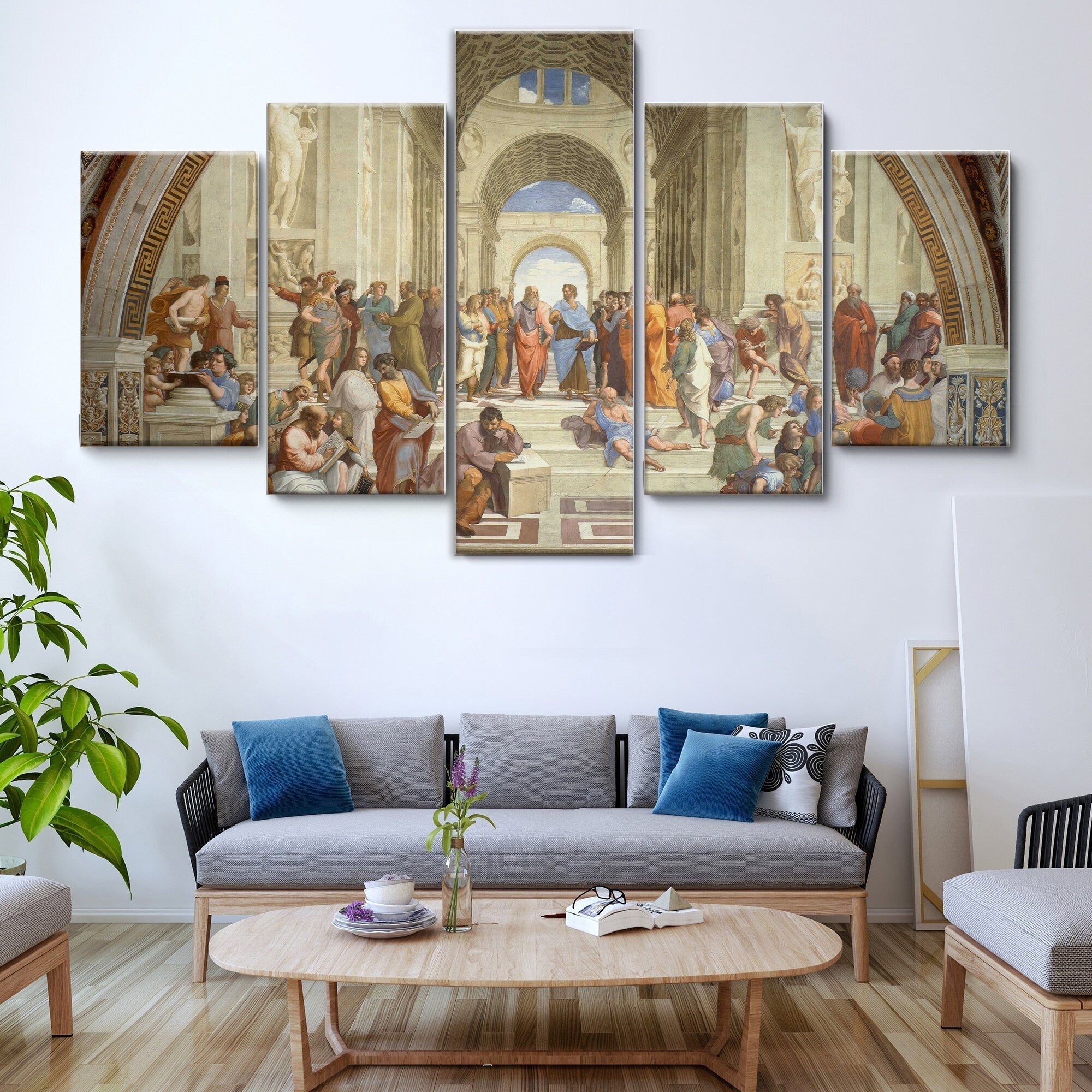
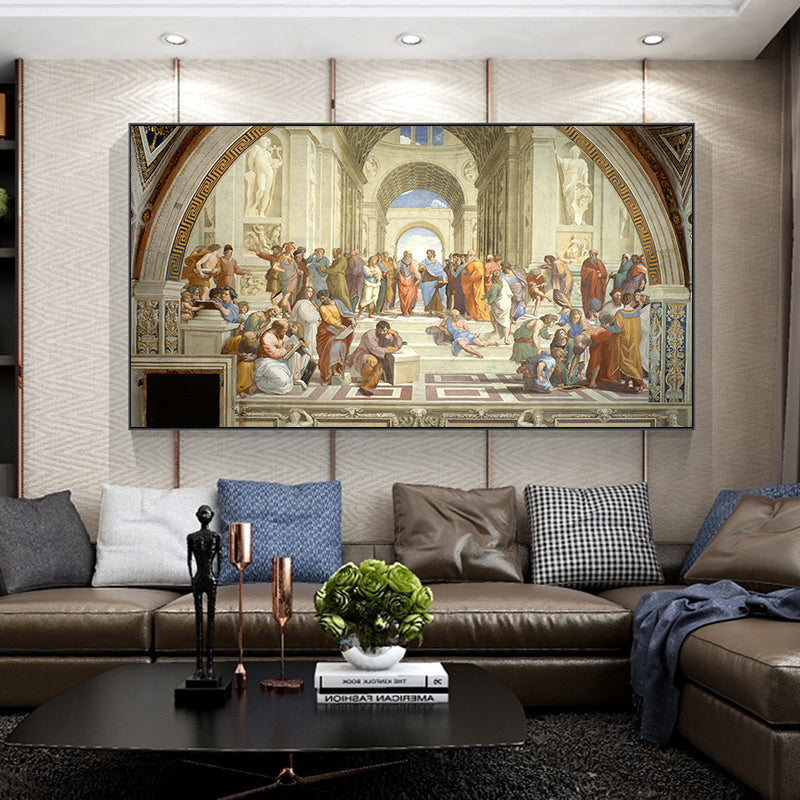
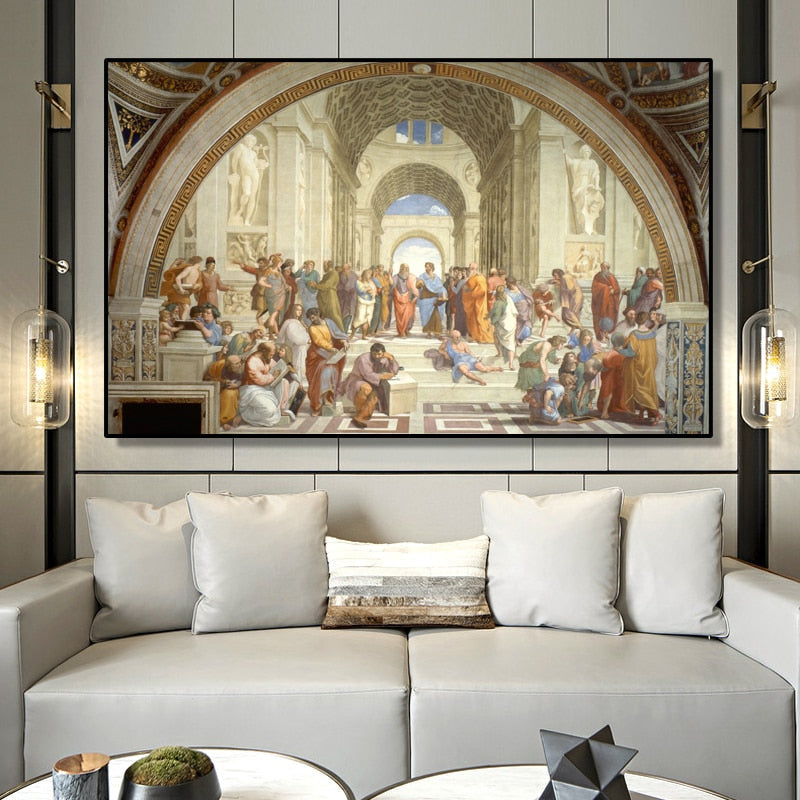
Description
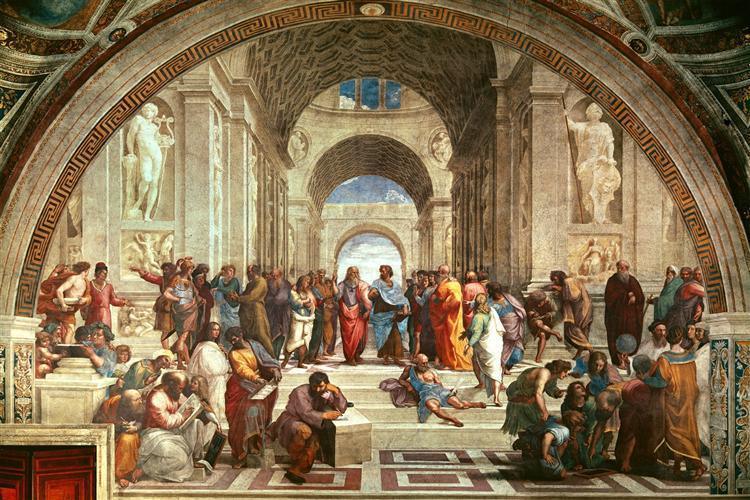
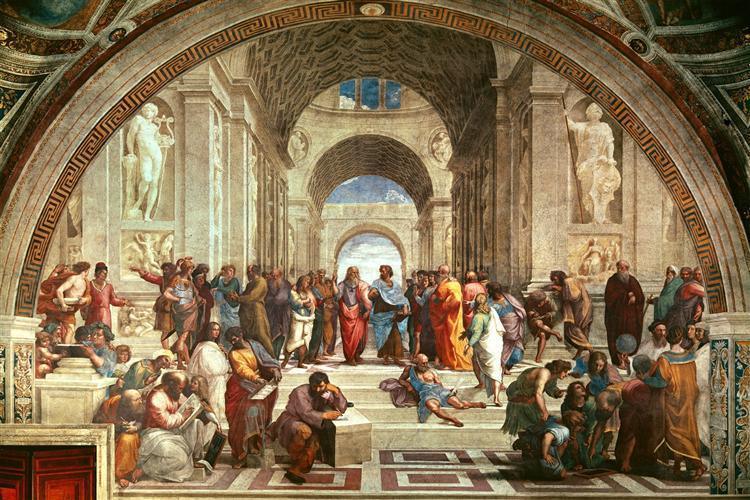
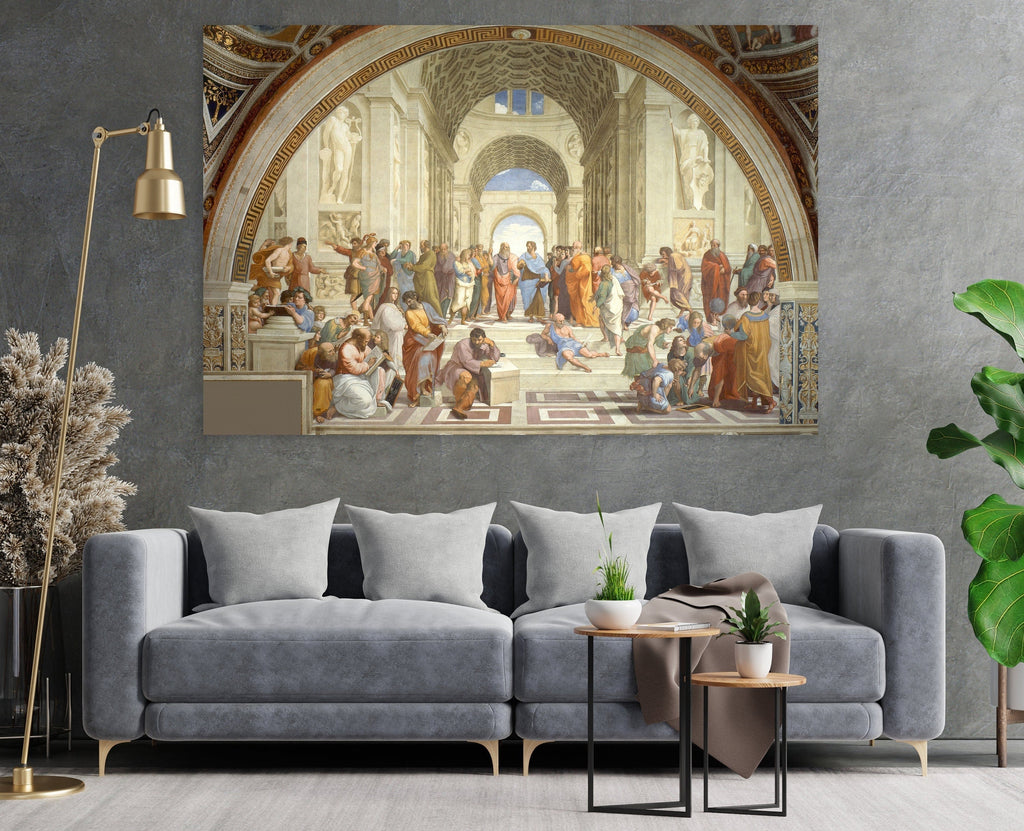
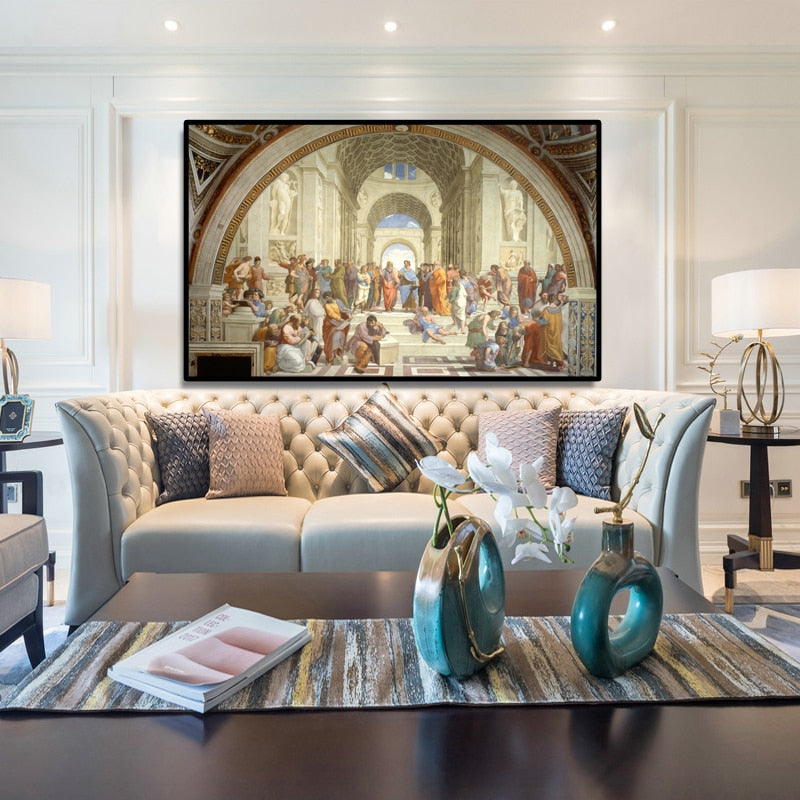
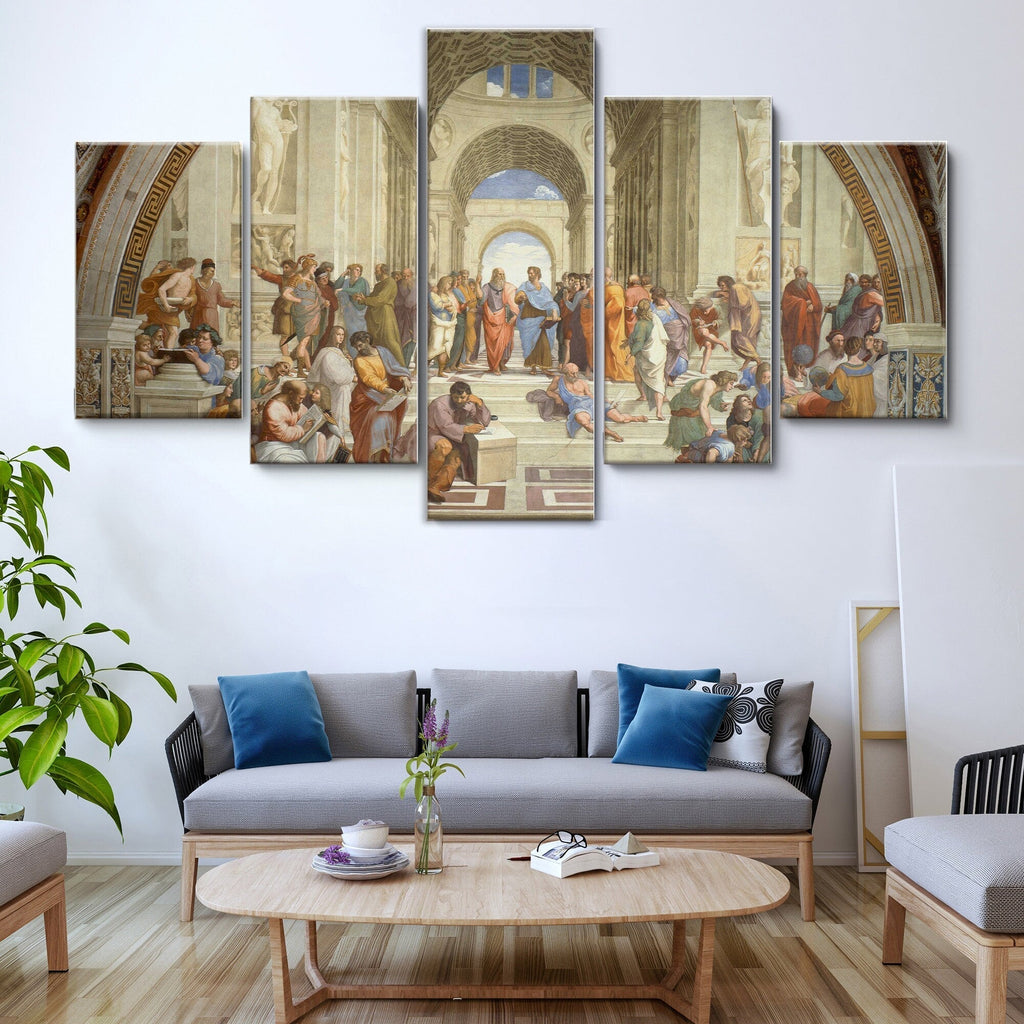
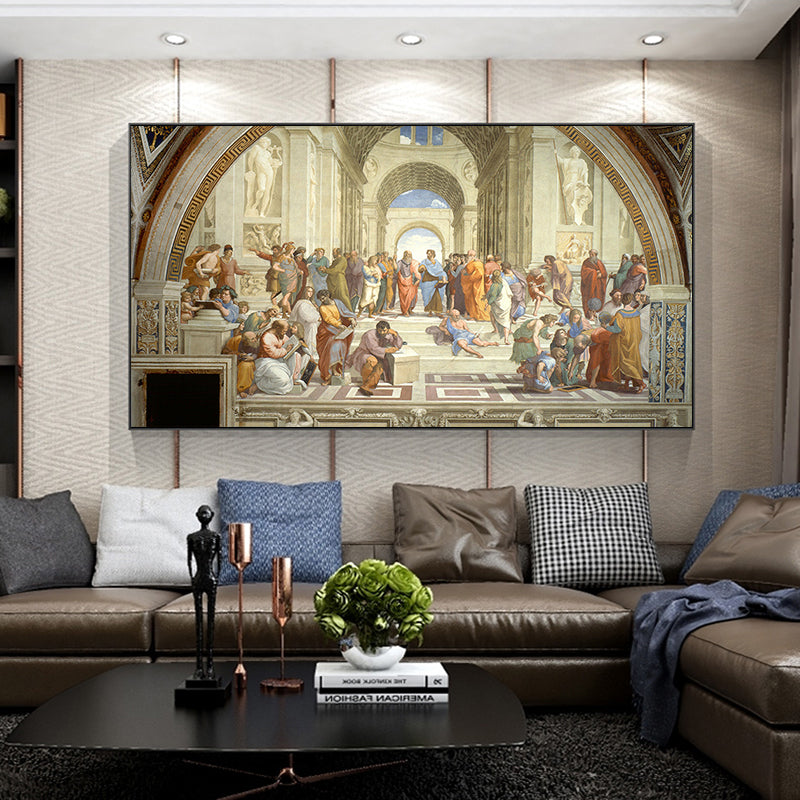
The painting The School of Athens is one of the most famous works by the Italian Renaissance painter Raphael and is located in the Stanza della Segnatura of the Apostolic Palace in Vatican City.
Sometime between 1509 and 1511, Raphael was commissioned to paint frescoes to decorate the rooms of the Stanze di Raffaello in the Apostolic Palace of the Vatican. There were four frescoes, each representing a branch of knowledge: poetry, philosophy, theology and law. This particular painting represents philosophy.
What is interesting about this work is its complexity and symbolic meaning. The painting depicts the greatest philosophers, scientists and mathematicians of ancient Greece gathered in an imagined space that symbolizes Plato’s Academy in Athens.
Raphael employs classical architecture and ornamental detail to create a sense of depth in the painting and to signify the value and importance of philosophy and knowledge in Renaissance culture. Each figure in the painting represents a specific thinker and has a gesture or pose that symbolizes his contribution to the history of Western thought.
Another interesting fact about this work is that the figure at the center of the painting, positioned in the foreground with his right hand extended, is a depiction of Plato, while the figure beside him, with his left hand extended, is his disciple Aristotle. These two figures represent the two primary currents of thought in ancient Greece—Platonic idealism and Aristotelian empiricism—which remain subjects of debate and study in philosophy today.
The painting “The School of Athens” is regarded as one of the masterpieces of the Renaissance and has inspired other artists and thinkers over the centuries. Moreover, its legacy endures in popular culture, where it has been referenced in books, films, television series and video games.
Another interesting detail about the painting "The School of Athens" is that Raphael is believed to have included self-portraits of himself and other famous artists of the time within the work. In particular, the figure at the right-hand corner of the painting, with a beard and hat, is thought to be a self-portrait of Raphael, while the central figure holding a stylus and paper is interpreted as a depiction of his great rival, Michelangelo.
Furthermore, the work has been subject to various interpretations and symbolisms over the years. Some critics have suggested that the painting represents the ideal of universal truth and knowledge, while others have read it as an allegory of the conflict between reason and faith.
The painting has also been used to inspire and symbolize political and social movements. In the 19th century, Romantic artists and writers employed it to symbolize freedom of thought and creativity, while in the 20th century the image of Plato and Aristotle has been used as a symbol of philosophy and education in struggles for civil rights and equality.
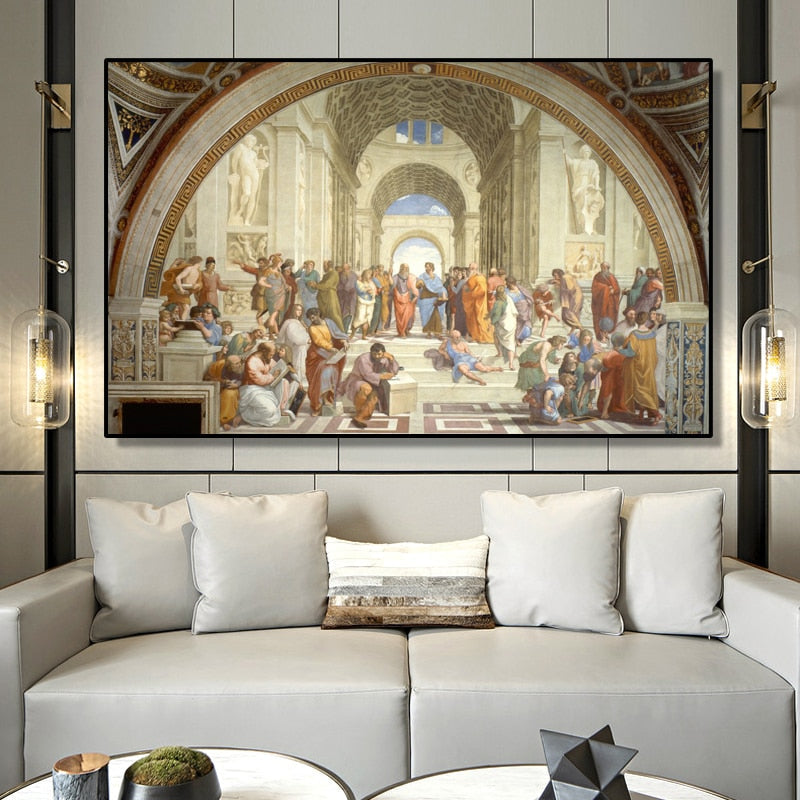
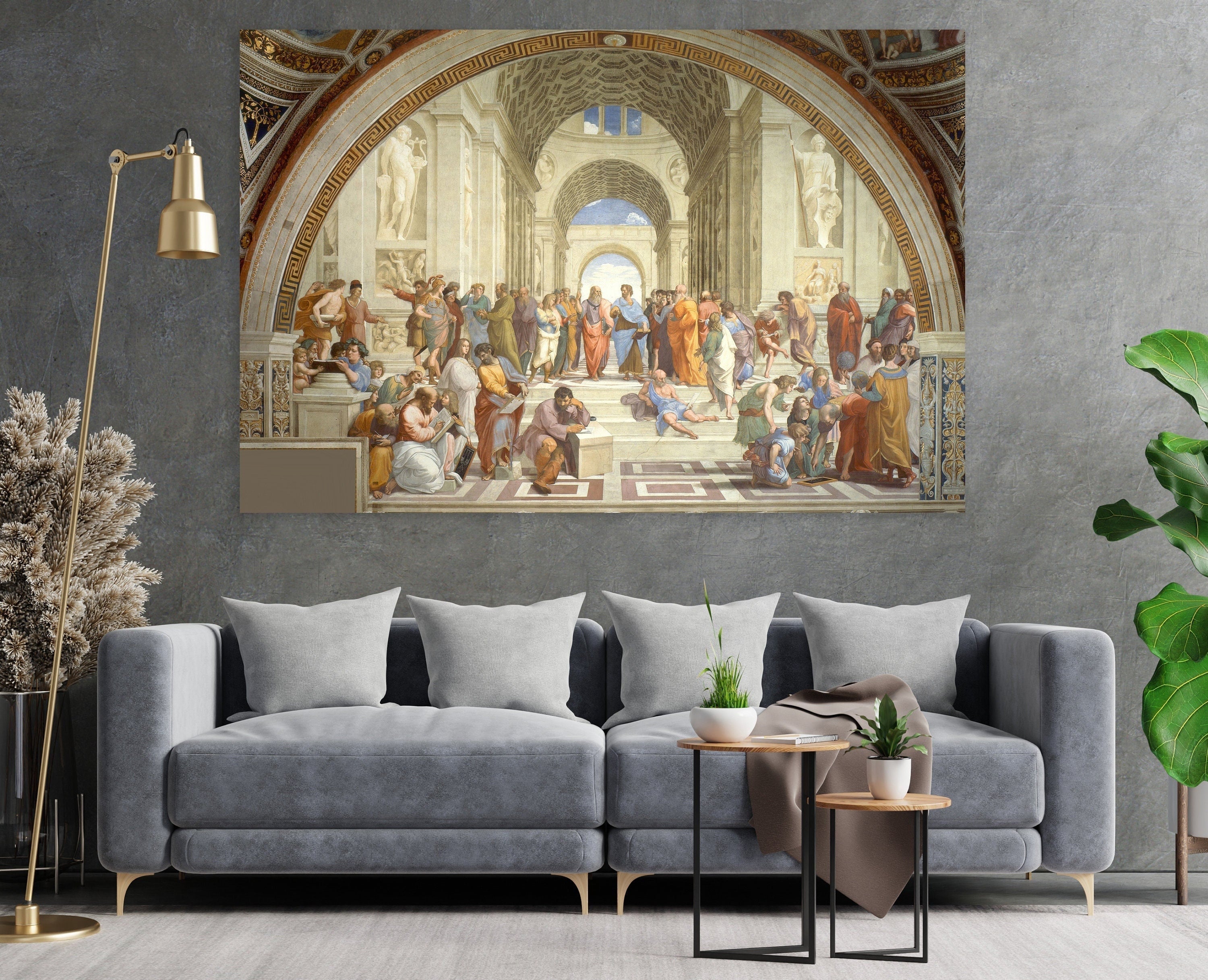
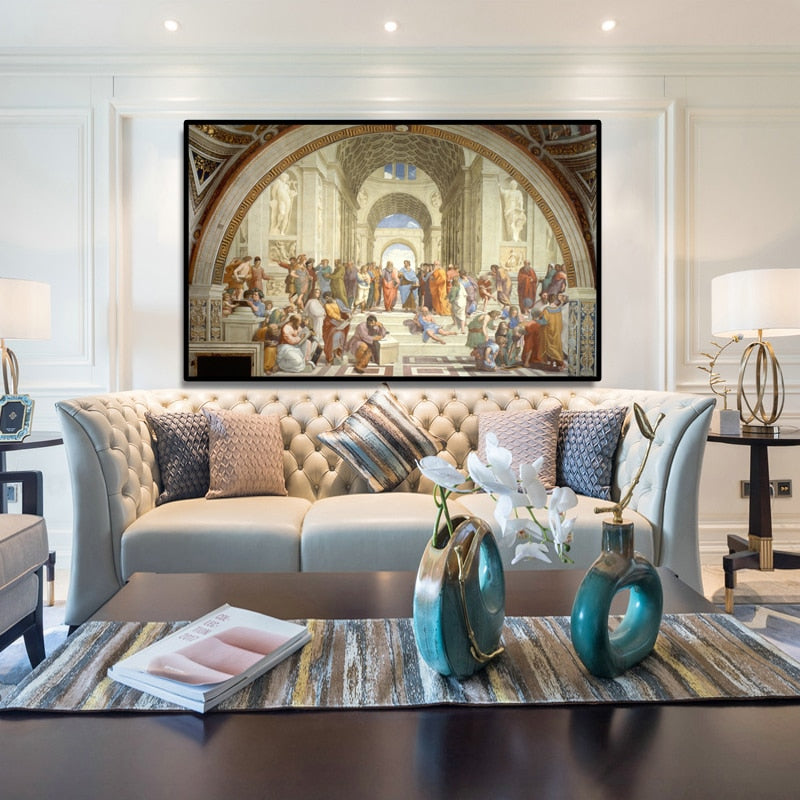
Because the original painting is a fresco and has no visible edges, this reproduction includes the figures of the school as painted by Raphael together with the architectural surroundings from the photograph to form the composition. At KUADROS we find the decorative details of the building itself exquisitely beautiful, and for that reason we have decided to include them in the reproduction.
The School of Athens ranks No. 99 on the list of famous paintings