



Description
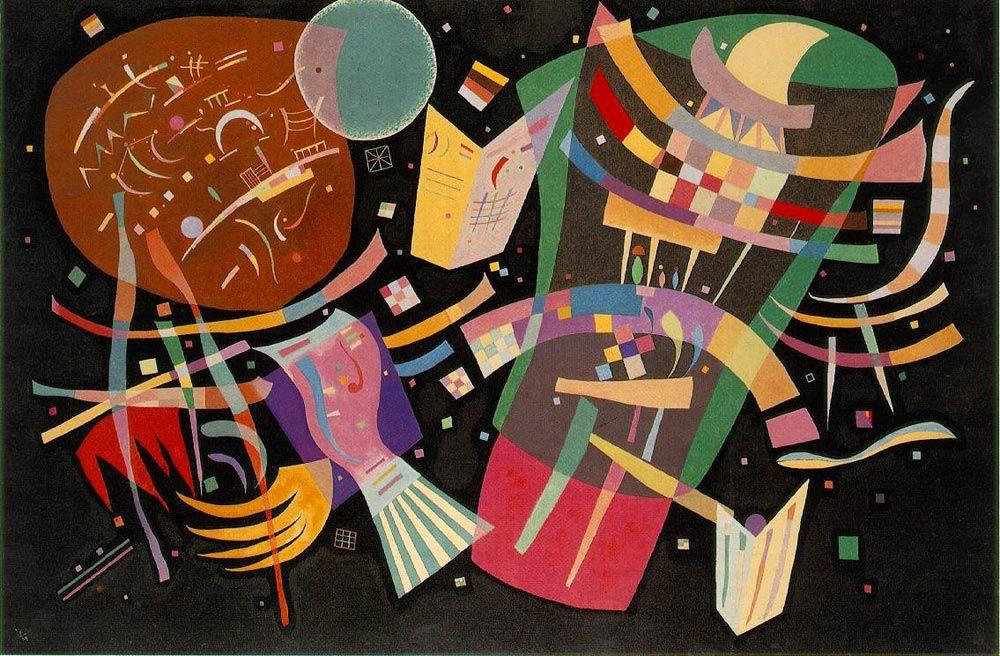
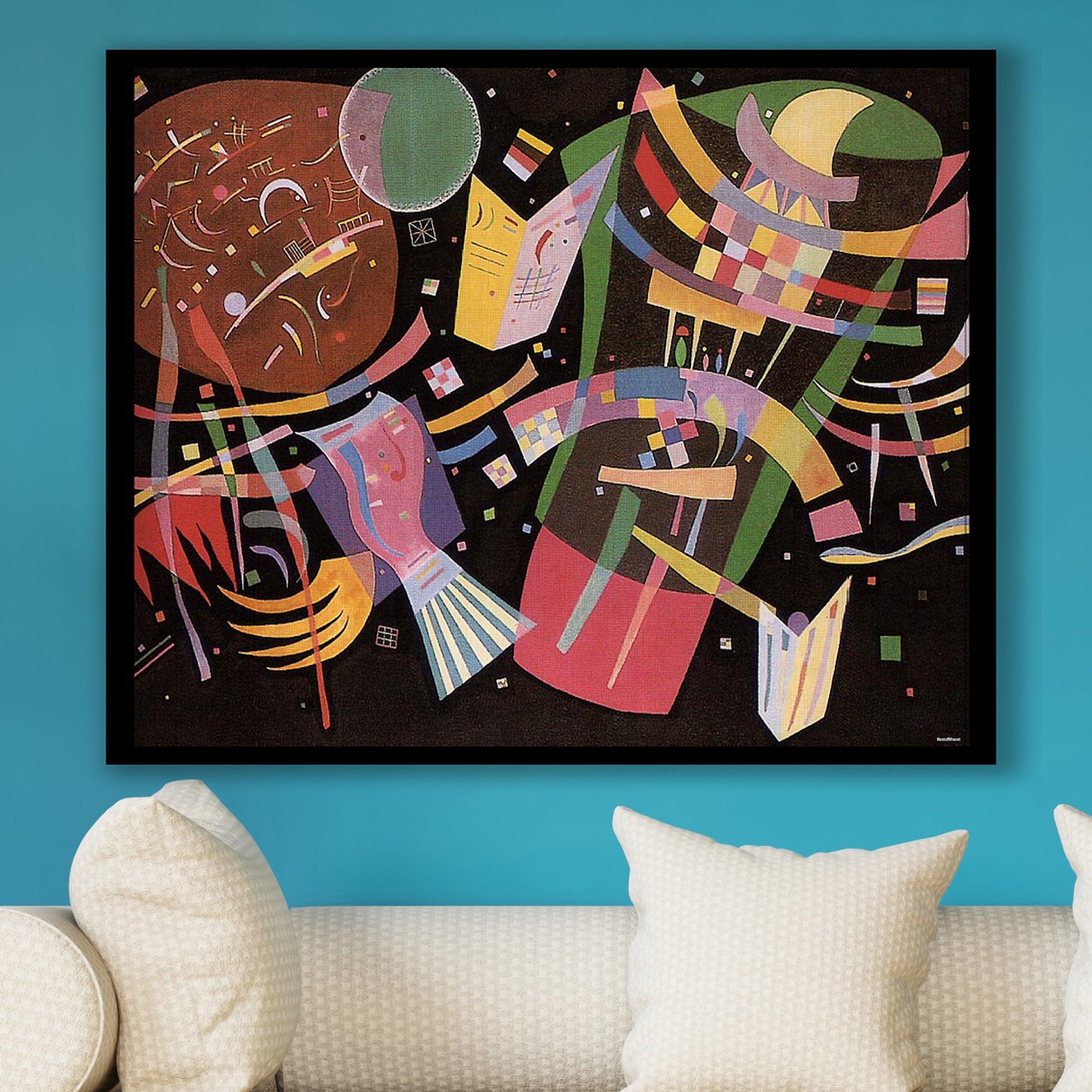
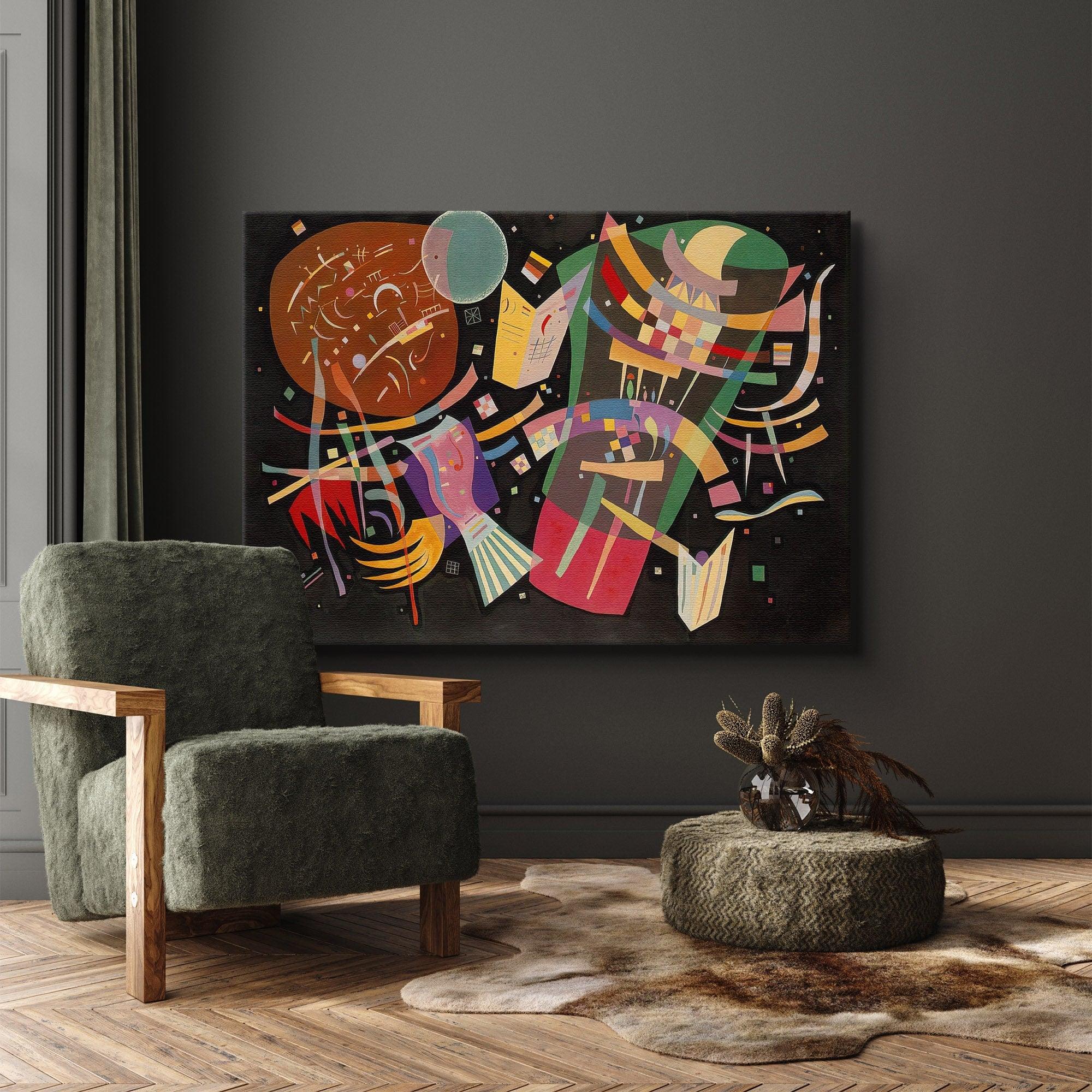
The painting presents an abstract field of great intensity, built on a black background that makes a network of geometric shapes, curves and multicolored bands stand out. A large reddish-brown oval dominates the upper-left area, traversed by arcs, undulating lines and small geometric marks. A teal circle appears nearby, while the upper-right section brings together curved bands, rectangular blocks and a yellow semicircular shape integrated into a green and brown structure. From the center, a broad arc of colors crosses the composition toward the lower right, creating a visual connection between the different focal points.
The title Composition X places the work within the realm of abstraction, where the painting does not develop a narrative scene or depict people, objects or a recognizable landscape. Its content is shaped by relationships between color, line, rhythm and spatial balance. In this context, the work is naturally associated with Wassily Kandinsky’s artistic explorations, widely recognized for granting forms and colors expressive autonomy. The viewer’s gaze does not follow a story, but instead traces a visual path between concentrations of energy, dark pauses and scattered bursts of color.
The black background functions as a space of contrast and depth from which the shapes emerge. The arcs and curved bands introduce continuity and movement, while the squares, diamonds and small rectangles serve as rhythmic counterpoints to the larger structures. The variety of reds, yellows, greens, blues, pinks and violets prevents the composition from becoming static: each color intensifies the presence of those beside it and contributes to a sense of constant vibration. The geometric marks within the oval and the linear patterns at the center enrich the surface with an almost musical cadence.
Formally, the work is organized around a dynamic balance. The visual weight of the upper-left oval is answered by the complex, arched structure on the right, while diagonals and curves guide the eye toward the lower area. There, a jagged red and black form, a brown, green, and red polygonal structure, and a tilted violet and pink figure ending in a fan of blue, cream, and green bands appear. These forms do not stand apart as isolated elements: their lines extend, interrupt, or cross the rhythms around them. The alternation between large areas of color and small floating marks keeps the entire surface active.
In relation to Wassily Kandinsky’s artistic language, Composition X can be read as a construction in which geometry and biomorphic motifs become independent of figurative representation. The tension between the dark field and vivid colors transforms the work into an experience of visual rhythm, with areas of expansion, intersections, and pauses that call for attentive viewing. First, take in the multicolored arc crossing the center, then return to the upper-left oval: this path reveals how the composition brings together highly diverse fragments in a single, energetic, carefully balanced structure.
Have questions about our oil painting reproductions? See our frequently asked questions.