



Description
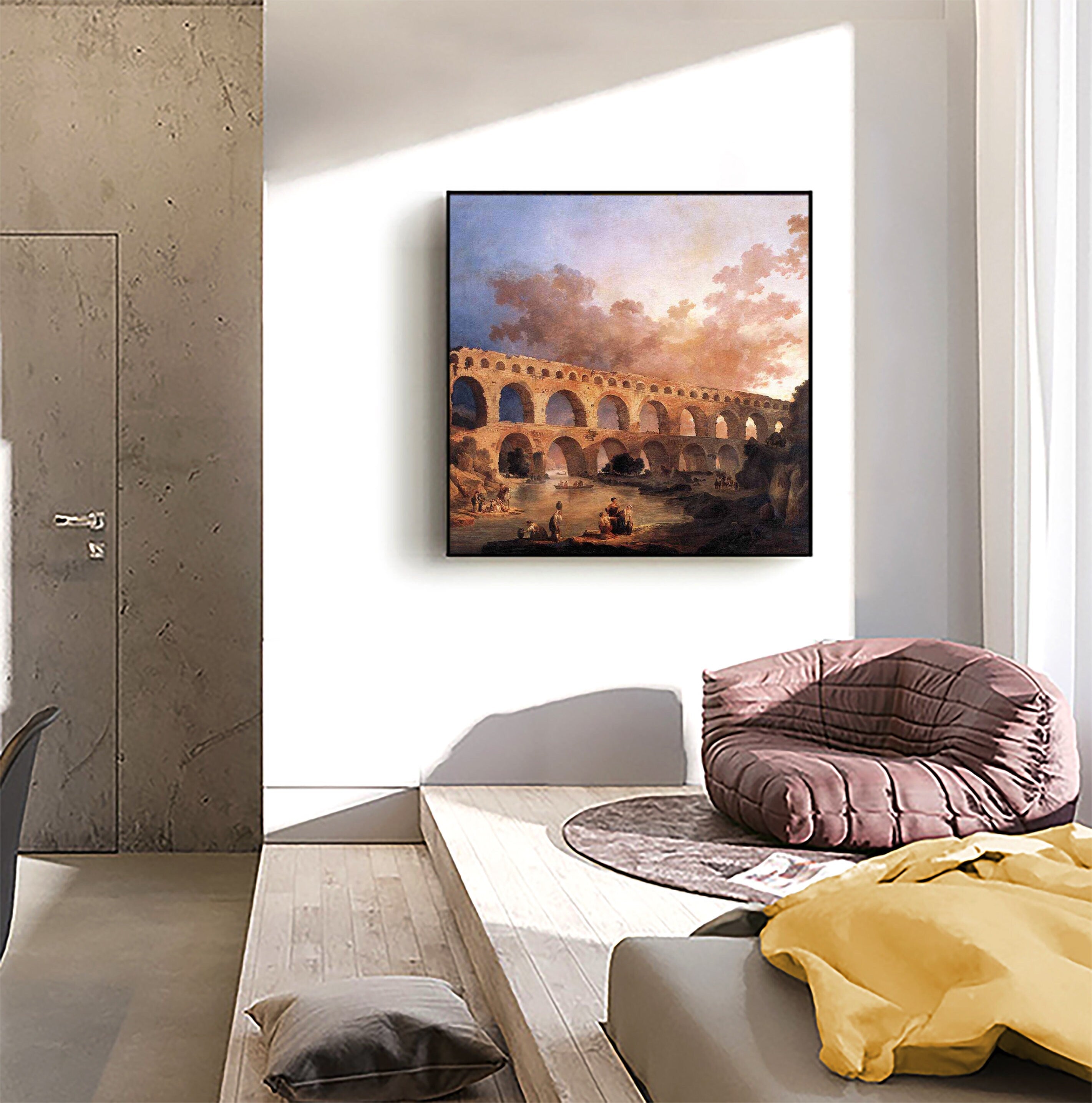
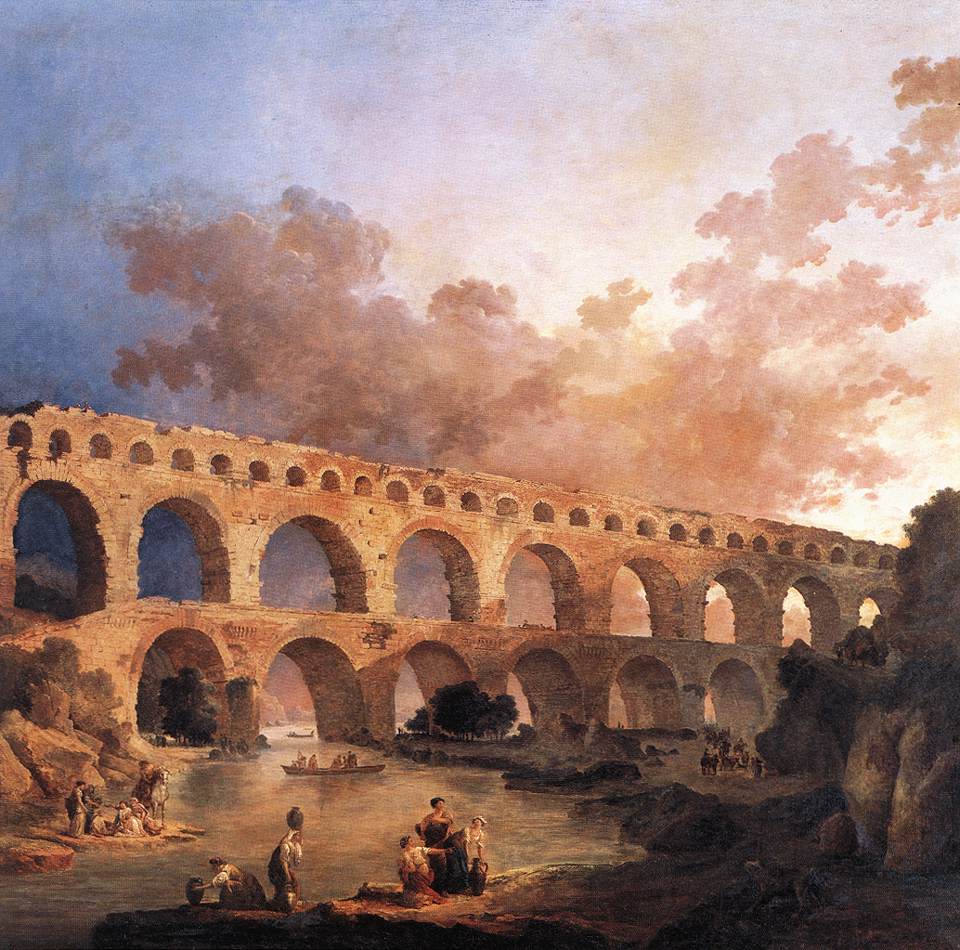
The Pont du Gard is a work by the French artist Hubert Robert, created in 1787. The painting depicts the famous Roman aqueduct of the same name, which was built in the 1st century in the Nîmes region of southern France.
An interesting fact about this painting is that Hubert Robert was known as the “painter of ruins” because of his fondness for depicting ruined urban landscapes and ancient monuments. In this case, the depiction of the Roman aqueduct reflects the artist’s fascination with classical antiquity and Roman architecture.
Another interesting fact is that the Pont du Gard aqueduct is one of France’s most important Roman monuments and one of the best-preserved in the world. Standing 48 meters high and stretching 275 meters long, it was built to carry water to the city of Nîmes and remains an impressive example of the skill and ingenuity of the ancient Romans in constructing public works.
In addition, Robert’s painting shows a group of human figures in the foreground, adding interest and a sense of scale to the work. Overall, Hubert Robert’s painting The Pont du Gard is a beautiful representation of the art of the Neoclassical period and a celebration of the architectural and cultural heritage of ancient Rome.
Over the centuries, this ancient structure has attracted not only tourists but also literary figures and artists, including Hubert Robert. Perhaps the most popular painting of the Pont du Gard is the one Robert painted in 1787.
The Pont du Gard ranks No. 94 on the list of famous paintings