

Description
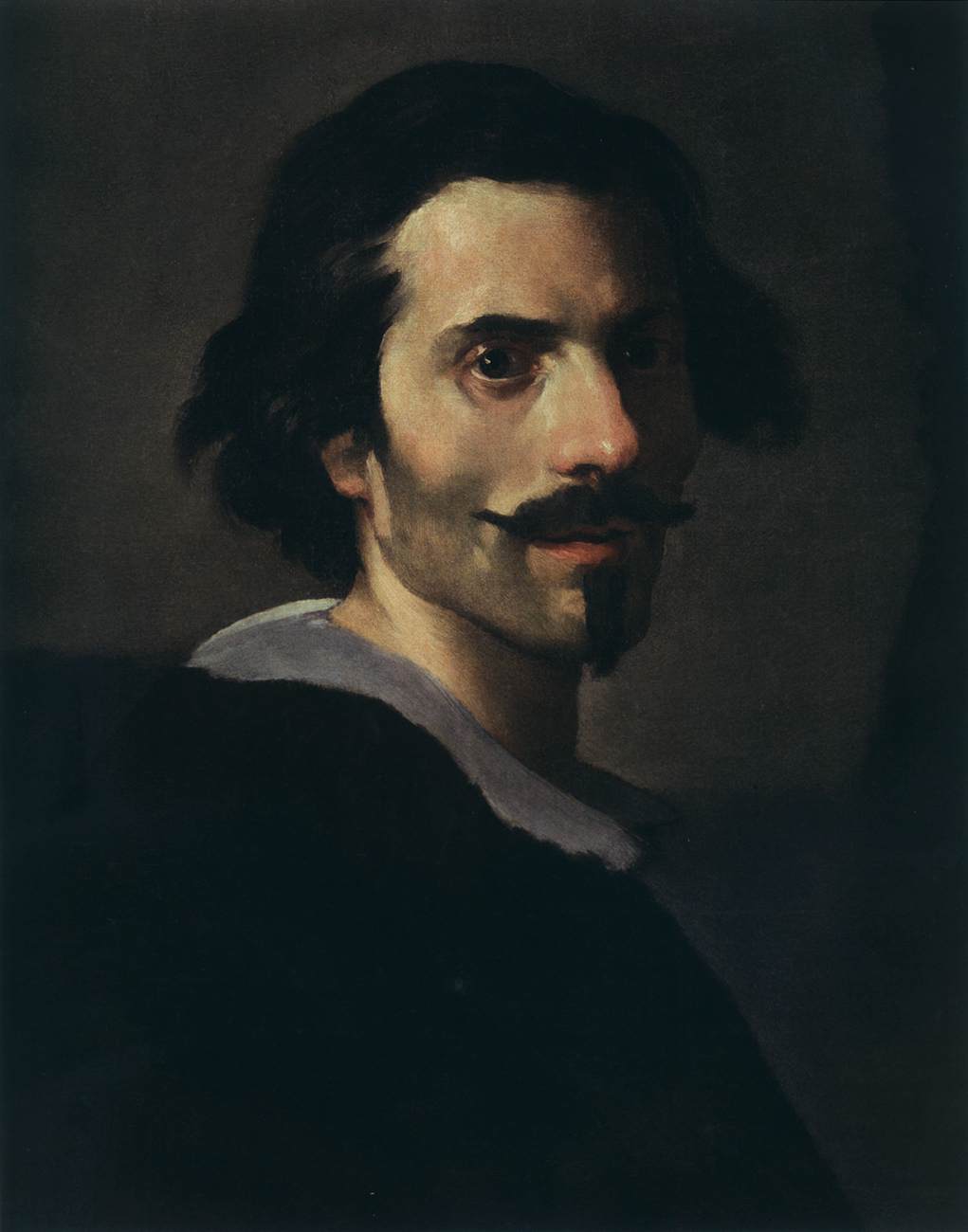
The painting presents Gian Lorenzo Bernini in a half-length portrait, set apart against a dark, even background. The man occupies the center of the composition, slightly offset to the right, and looks directly at the viewer. His abundant, wavy hair frames his face, while his prominent moustache and small beard beneath the lip accentuate the definition of his features. A very dark outer garment covers his shoulders and torso; beneath it, a grayish-purple collar adds a subtle touch of color. The absence of objects or landscape focuses all attention on the sitter’s physical presence.
As a self-portrait, the work does more than record the appearance of a mature man: it also constructs an image of identity. The genre allows the artist to present himself through his own features, turning the face into the primary site of personal expression. In the context of the Italian Baroque, to which Bernini belongs, portraiture could go beyond mere likeness to convey vitality, character, and psychological presence. Here, the simplicity of the composition and the absence of external attributes shift the focus to the sitter’s features, gaze, and silent relationship with the viewer.
The direct gaze serves as the painting’s expressive focal point. Light concentrated on the face sets its features apart from the surrounding darkness and gives particular prominence to the eyes, nose, moustache, and line of the mouth. The dark clothing and low-lit background eliminate distractions and reinforce a sense of visual restraint: the sitter’s identity rests not on symbols of rank or profession, but on the intensity of his expression. The half-length composition shows the head and upper body at close range, making the sitter seem to be in direct contact with the viewer.
Formally, the composition is structured around a strong contrast between the illuminated areas of the skin and the deep masses of hair, clothing, and background. The face emerges as a warm focal point within a palette dominated by blacks, dark browns, and charcoal grays, while the grayish-violet neck creates a transition between the head and torso. The vertical arrangement and close cropping at the side edges heighten the sense of proximity. The slightly turned head introduces a subtle tension into the frontal gaze, and every variation of light across the forehead, cheeks, and beard carries expressive weight.
The work is associated with the portrait tradition linked to Bernini, characterized by a vivid presence and an intense attention to the sitter’s personality. In this self-portrait, physical description and introspective solemnity are held in balance: the hair, mustache, and clothing identify the man, but it is the gaze that sustains the experience of the painting. The lighting turns the face into a point of direct contact, while the darkness surrounding it separates it from the outside world. In this way, a half-length portrait becomes a restrained meditation on the artist’s identity in maturity.
Have questions about our oil painting reproductions? See our frequently asked questions.