

Description
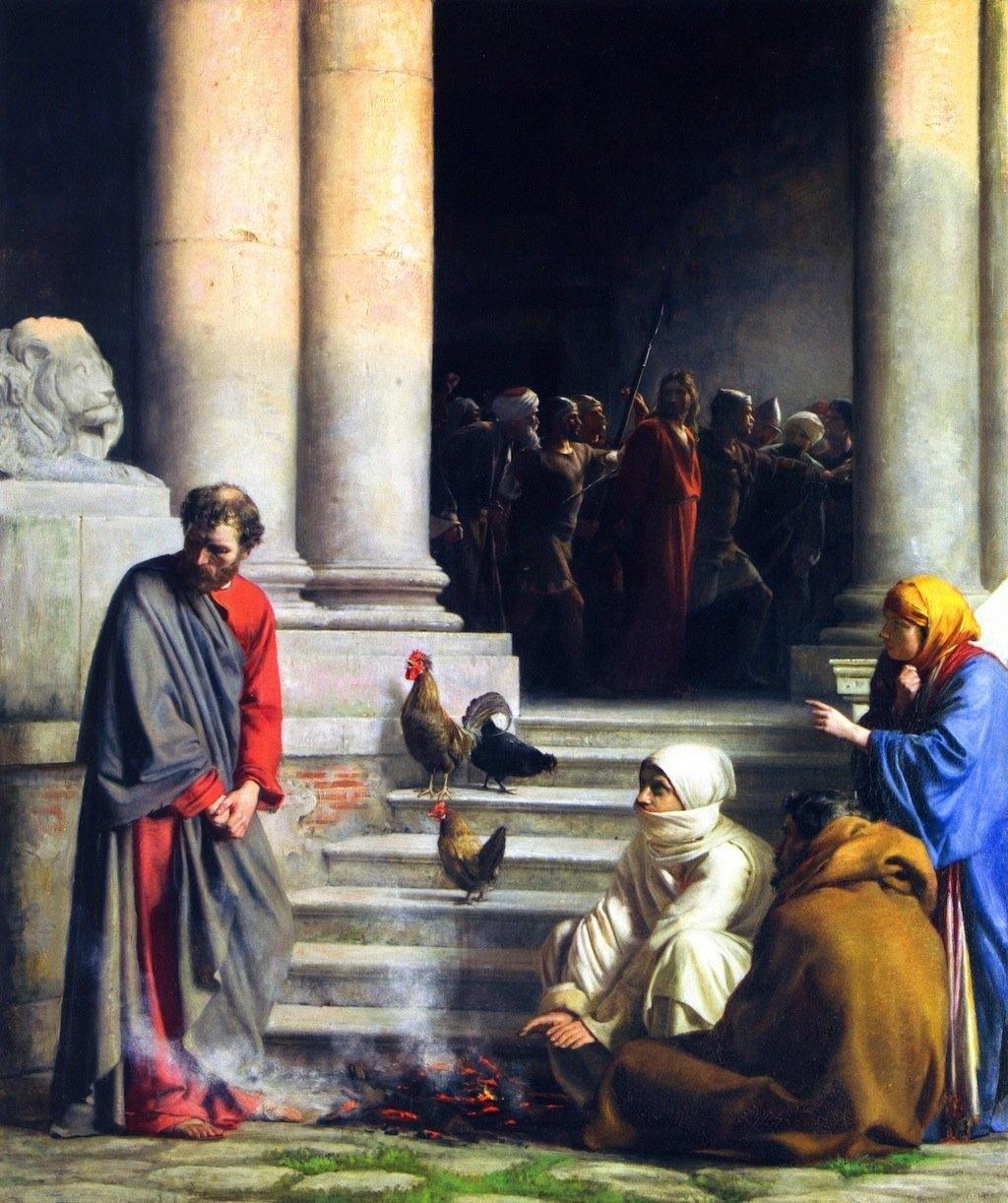
The painting The Denial of Peter, by Carl Bloch, presents a religious scene of great theatrical intensity on a monumental staircase. Stone columns frame a crowd gathered in the central area, while several figures occupy the first steps. On the left, a bearded man dressed in a gray tunic and red drapery stands beside the architecture; on the right, a woman in a blue dress and yellow head covering turns her attention toward the center. A kneeling or seated figure, wrapped in white, occupies the foreground beside another figure seen from behind beneath a brown and ochre cloak. Two roosters stand out on the steps, while embers and reddish glows on the ground introduce a warm focal point amid the somber scene. The statue of a lion on a pedestal to the left adds a sculptural accent to this solemn public space.
The work evokes the Passion episode in which Peter, under pressure from those surrounding Jesus, denies knowing him before the rooster crows. According to the traditional account, the denial occurs 3 times and is one of the most recognizable moments in the Gospel story. The title uses the word “denial,” a broad formulation that underscores the episode’s moral conflict: this is not a battle or a grand action, but a response uttered under fear and collective pressure. The setting transforms this moment of doubt into a drama shared by the witnesses and figures gathered around the fire.
The two roosters serve as direct iconographic clues to Peter’s denial and shape the narrative reading even before each figure is identified. The embers in the foreground evoke the fire beside which Peter was questioned and visually concentrate the tension of the moment. The crowd compressed in the half-light heightens the silent pressure on the nearby figures, while the light-colored garments and touches of red stand out against the dark background. The staircase creates a dramatic progression: each step draws the eye closer to the signs of the episode and raises the gathering into a space of public judgment. The stone lion adds a note of authority and permanence in contrast to the vulnerability of the human figures.
The vertical composition is built around the firm geometry of columns, steps, and ascending lines. The columns at the sides create depth and direct the eye toward the central group, while the repeated steps establish a visual rhythm that leads from the embers to the crowd. The motionless architectural masses contrast with the restrained movement of the figures: some lean forward, others turn toward the center, and the kneeling figure disrupts the regularity of the stone. Side lighting picks out the light surfaces of the columns and shapes the foreground robes, leaving the background in a bluish darkness. Reds, ochres, and yellows serve as warm accents within a palette dominated by grays, blacks, and blues.
The scene brings together features associated with Carl Bloch’s religious and history painting: clear storytelling, carefully rendered figures, dramatic lighting, and theatrical staging that makes the biblical episode easy to read. The monumental architecture provides scale, gravitas, and a stage-like structure for Peter’s conflict. As we look at the painting, our eyes move from the fire to the roosters and then to the group of figures; these elements connect the specific moment of denial with its moral consequence. The work’s strength lies in this union of narrative and visual composition, where the pressure of the crowd, the surrounding darkness, and the rooster’s foretold crow turn the scene into an experience of sustained tension.
Have questions about our oil painting reproductions? See our frequently asked questions.