

Description
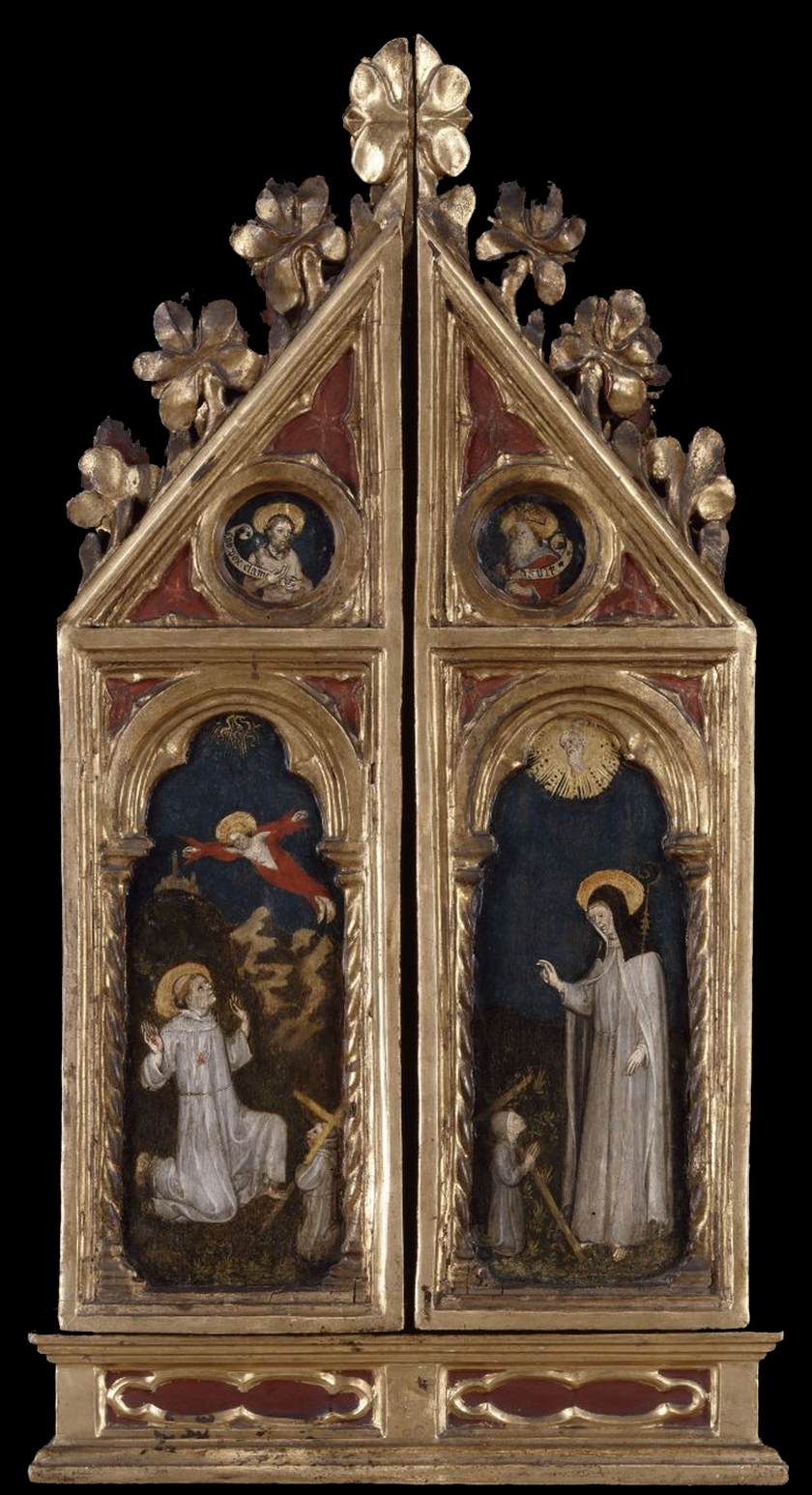
The painting shows a closed devotional triptych, conceived as sacred architecture in miniature. Two vertical panels rise beneath a double triangular crest, joined along a central axis and surrounded by gilt moldings, flowers, and pierced leaves. In the left panel, a kneeling, haloed figure is shown with a winged figure descending diagonally, dressed in red and pale tones. In the right panel, a standing, also haloed figure receives the attention of another kneeling figure, while a bird with outstretched wings descends from above. The deep blue, red, and dark landscape backgrounds heighten the spiritual intensity of the scenes.
As a closed view, the work presents the outer wings of a hinged ensemble of three panels. The triptych was particularly well suited to private devotion and the orderly contemplation of sacred images: when closed, its wings formed a compact, ceremonial surface; when opened, they revealed a more expansive interior space. Here, the religious character is conveyed through haloed figures, gestures of prayer or attention, and a structure resembling a small altarpiece. The narrative identity of each episode is subordinate to a broader reading of celestial presence, reverence, and spiritual encounter.
The halos turn the figures into focal points of meaning and establish a visual hierarchy within each panel. The winged figure introduces vertical and diagonal movement, contrasting with the stillness of the kneeling figures. On the right, the descending bird extends this axis from the upper area toward the standing figure, suggesting divine intervention or presence within the pictorial space. The gold of the frames and vegetal ornament is not merely decorative: it separates the sacred realm from the dark background and transforms the altarpiece into an object of exceptional ceremonial intensity. The inscribed bands on the upper medallions add visual authority and a rhythm of signs, although their content does not dominate the viewing experience.
The composition is organized around a firm symmetry, balanced by small variations in gesture, direction, and movement. The central axis divides the work, while the triangular finials guide the eye toward the two upper medallions and the ornamented apex. The gilded moldings create continuous lines that frame the scenes and contain the diagonal energy of the winged figures and the bird. The almost nocturnal blue makes the reds, ivories, and halos stand out, creating a symbolic rather than naturalistic illumination. At the bottom, the red frieze with gilded scrollwork stabilizes the whole composition and leads the eye back to the base, where the painted architecture and carved structure are integrated into a single visual surface.
The piece is associated with the 15th-century Italian devotional style linked to Bonifazio Bembo: refined linear drawing, vivid colors, sumptuous backgrounds, and a close union of painting, gilding, and altarpiece architecture. Its appeal lies precisely in this integration. The viewer sees not merely several sacred figures, but a visual device in which every frame, halo, fold, and ornament contributes to creating a sense of solemnity. It is worth noting how the closed triptych turns the two visible panels into an autonomous scene: the gilding defines its boundaries, the blue adds depth, and the winged diagonals create an upward movement within a rigorously stable structure.
Have questions about our oil painting reproductions? See our frequently asked questions.