


Description
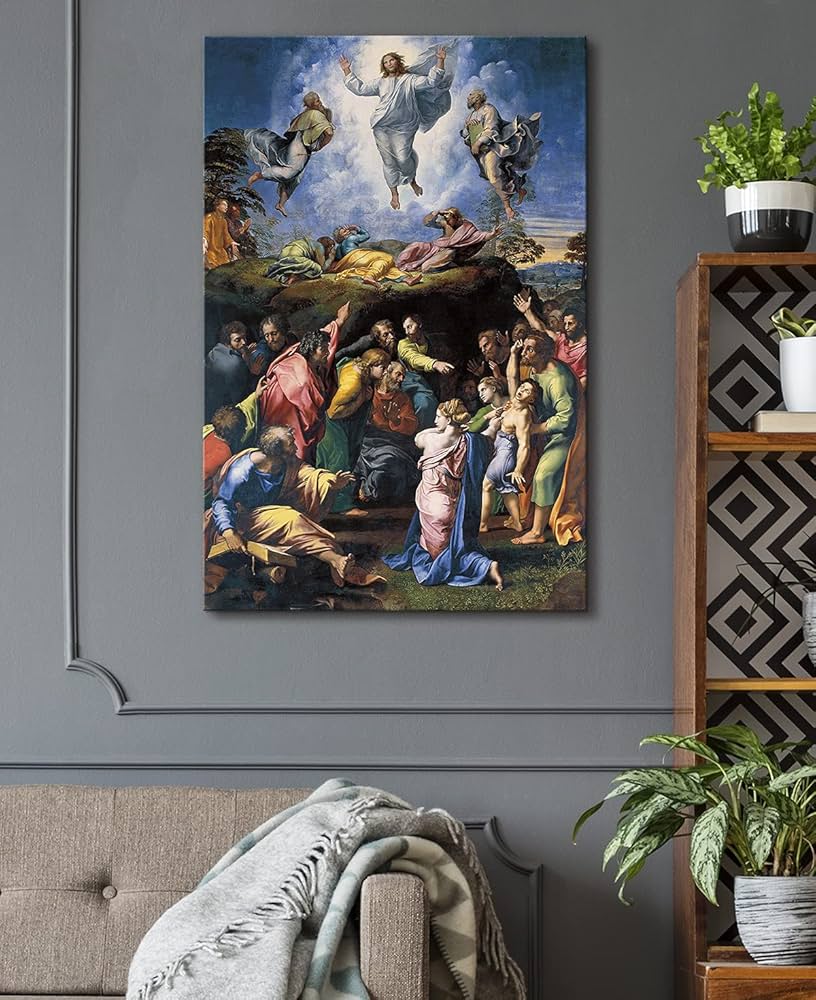
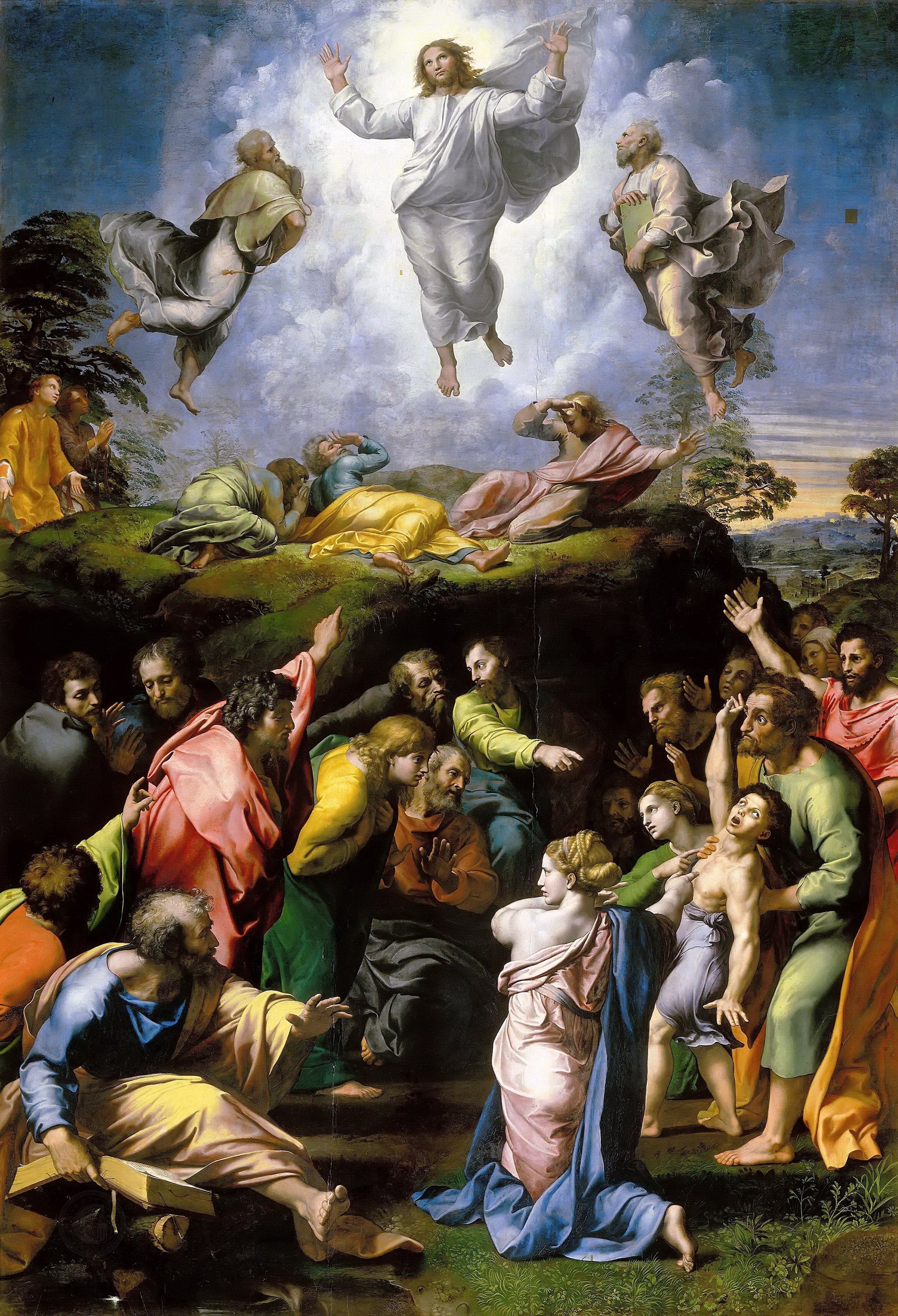
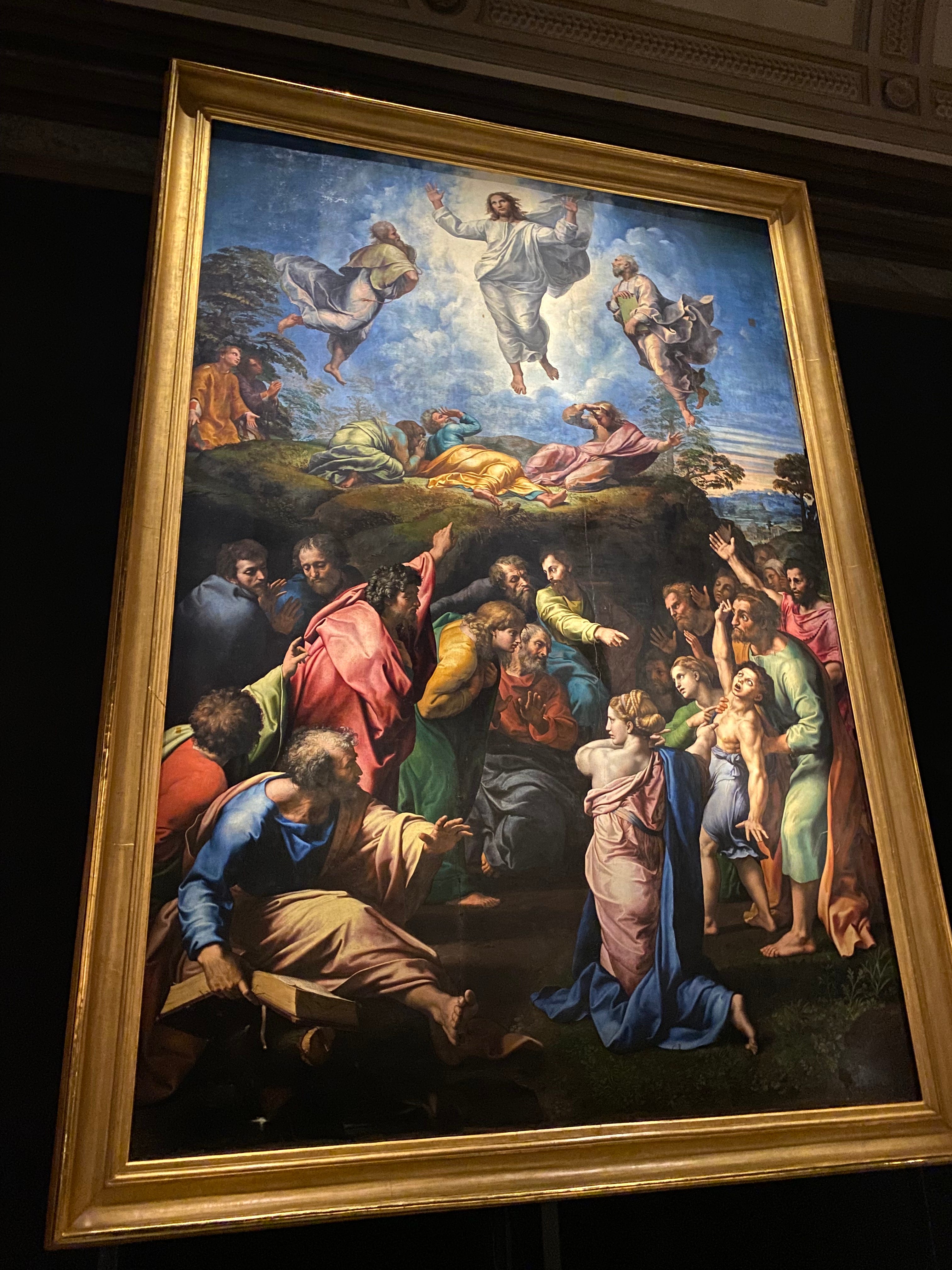
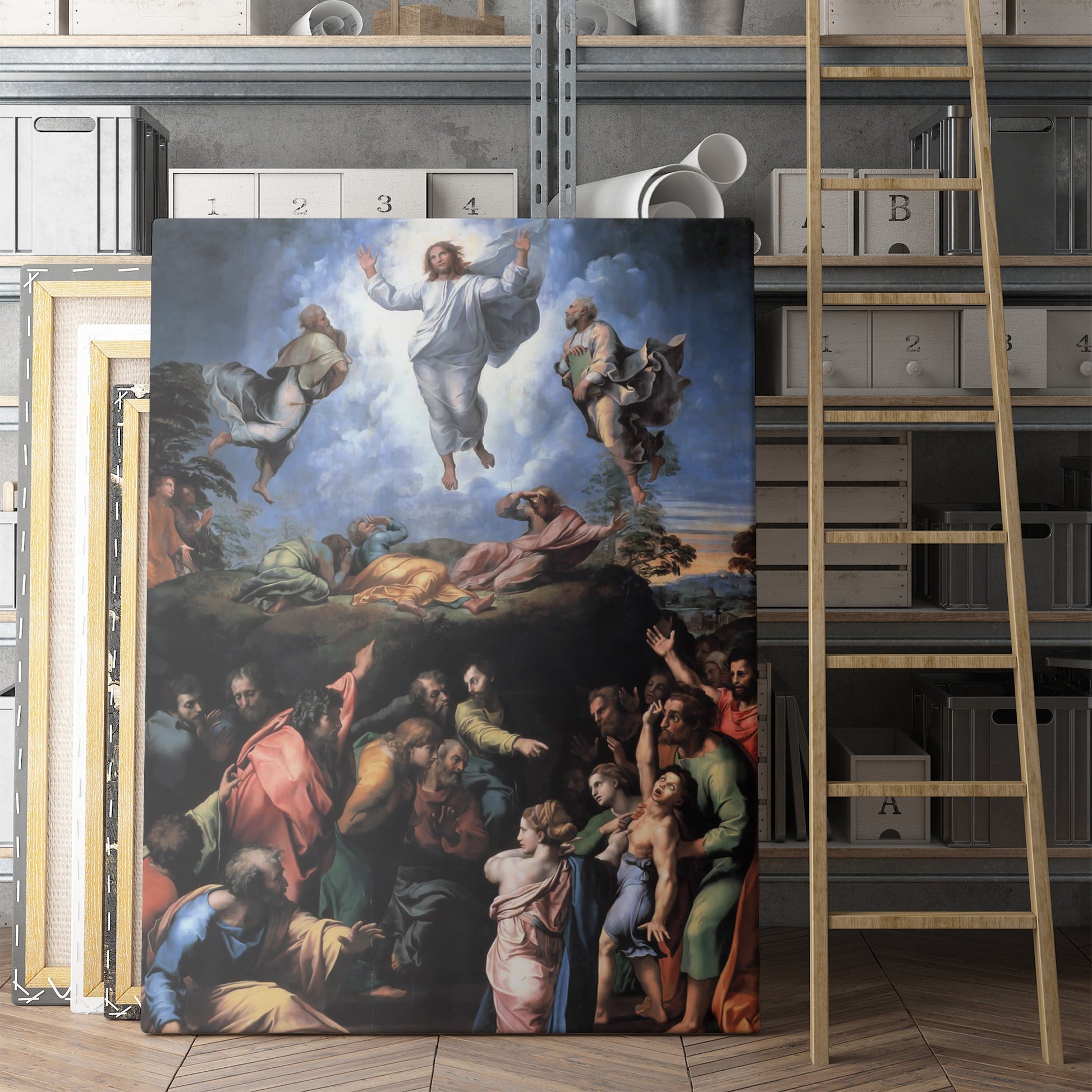
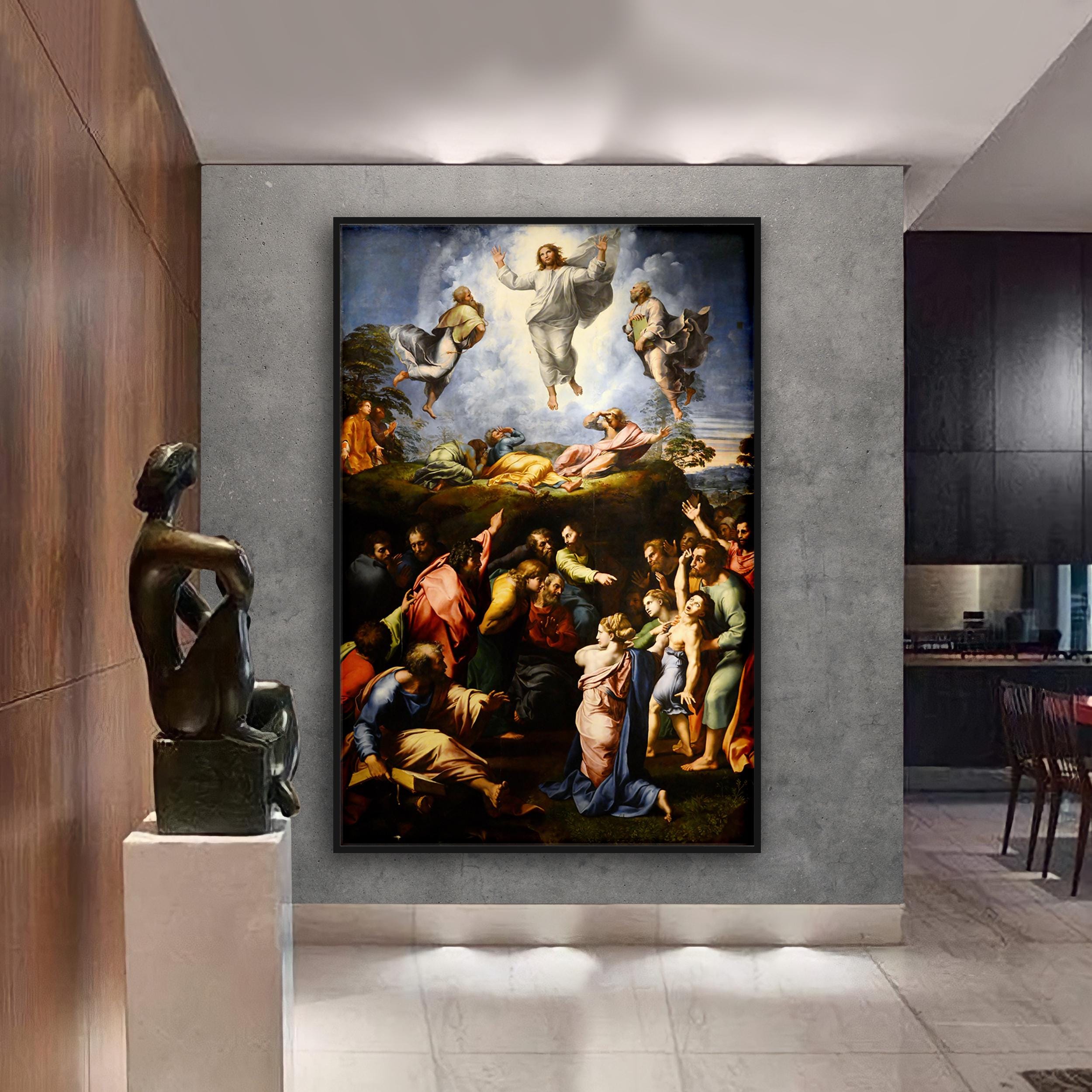
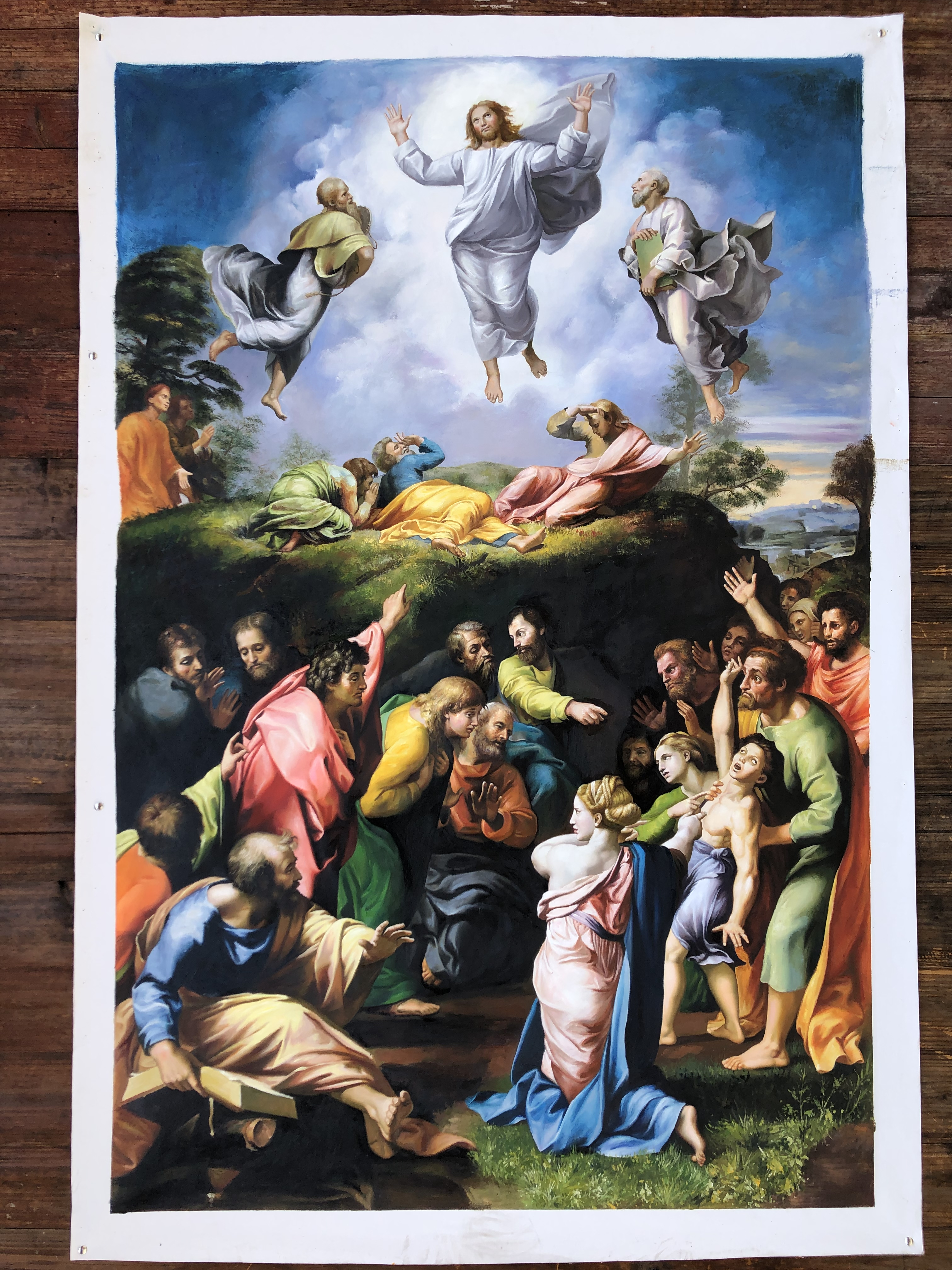
The painting shows Christ elevated at the center of a vertical composition, dressed in white and surrounded by a radiance that parts the clouds like a space of revelation. Two suspended figures accompany him on either side, wrapped in billowing robes, while below, a hillside stretches out, populated by disciples and onlookers. The earthly scene is filled with bent bodies, raised arms, open hands, and faces turned upward. At the lower right, several people support a young man with a bare torso, who becomes the dramatic focus of the crowd. In the foreground, a seated figure beside an open book provides a moment of reflection amid the turmoil. Trees, hills, water, and distant buildings extend the scene into a broad landscape, though all attention converges on the contrast between the heavenly apparition and human need.
The work depicts the Transfiguration of Christ, the episode in which Jesus appears in glory before Peter, James, and John. The Gospel tradition places Moses and Elijah beside him, figures who link Christ’s revelation to earlier sacred history. The lower section includes the episode of the afflicted young man waiting for the disciples’ help, creating a narrative continuity between the vision on the mountain and the suffering of those who remain on earth. Thus, the painting does not present an isolated apparition, but two related moments: above, the luminous manifestation of Christ; below, the confusion of a community seeking help and guidance.
The iconography is organized through highly precise contrasts. Christ’s white tunic and his elevation express a glory that seems to shed the weight of the world, while the luminous clouds serve as a threshold between the visible and the transcendent. The two figures at the sides reinforce the biblical dimension of the revelation. By contrast, the crowd’s gestures—the pointing, pleading, astonishment, and bodies supporting one another—turn the lower section into an image of bewilderment and dependence. The young man supported by several people embodies earthly suffering and offers a human counterpoint to Christ’s radiant serenity. Even the open book in the foreground contributes to the apostolic and narrative character of the scene.
The composition rises from the crowd’s dark density toward the expansive clarity of the sky. A pyramidal structure brings the figures in the lower section together, but the diagonals of arms, gazes, and drapery disrupt its stability and create continuous movement. The central white acts as an absolute focal point against the heavier greens, ochres, reds, and blues of the hillside. The suspended figures balance the upper section, while the landscape provides lateral breathing room and depth. The alternation of reclining bodies, kneeling figures, and characters rising to their feet creates a shifting visual rhythm: the scene seems to stir below and remain suspended above. The light does not merely illuminate; it separates two orders of experience within the same space.
In this work by Raphael, the monumental clarity of the structure is combined with intense expressiveness. The pyramidal arrangement and balance of the figures reveal a classical conception of harmony, while the sweeping gestures, flowing garments, and gathering of bodies introduce a powerful dramatic tension. The painting transforms The Transfiguration into an architecture of contrasts: Christ’s luminous, almost weightless presence confronts the turmoil of humanity seeking answers on earth. As you look at it, follow the path of the arms and gazes from the afflicted young man to the white-clad figure; along this route, the composition brings suffering, revelation, and hope together in a single scene.
Have questions about our oil painting reproductions? See our frequently asked questions.