
Description
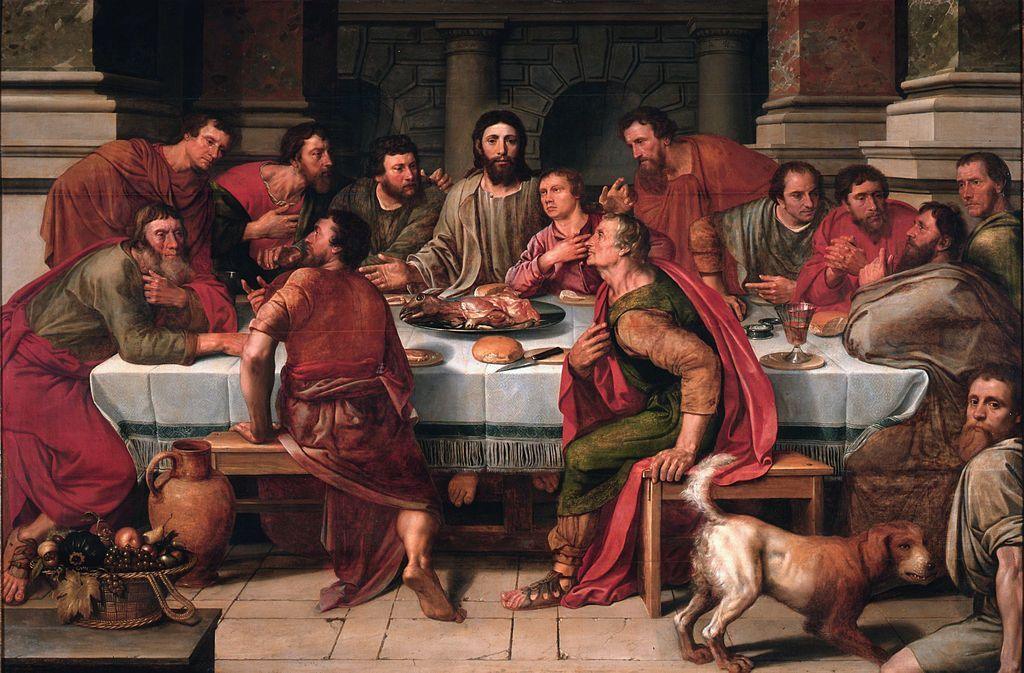
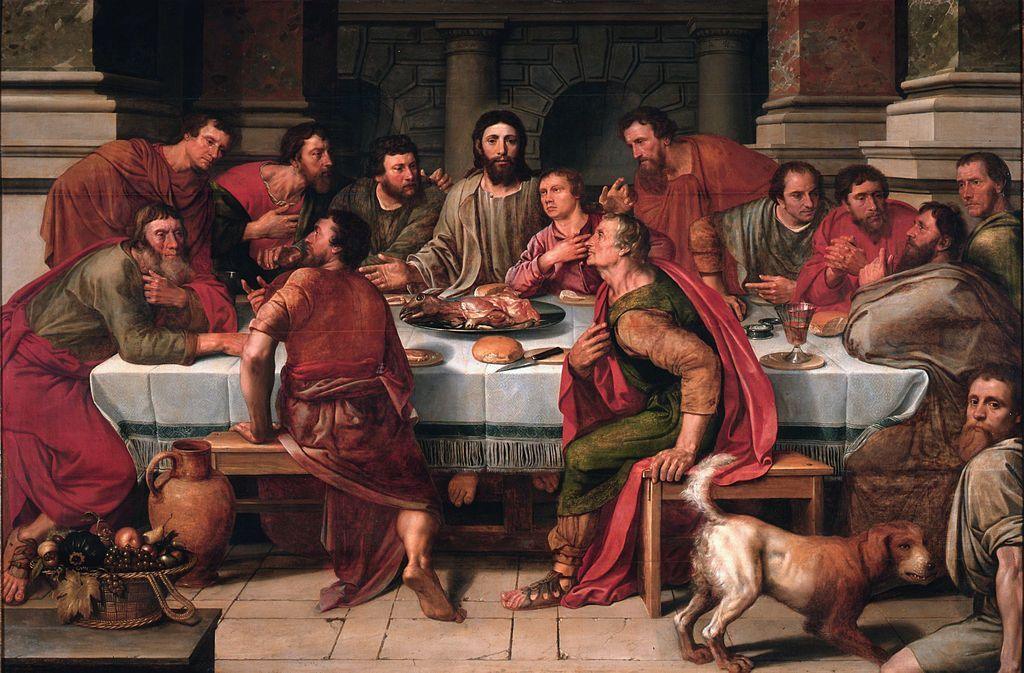
The painting depicts Christ’s Last Supper with his disciples in an architectural interior with a strong sense of theatrical presence. Fourteen figures gather around a long table covered with a white tablecloth, plates, serving dishes, food, goblets and vessels. Christ occupies the center, bearded and dressed in a light-colored robe, facing the viewer as he extends one arm and draws the group’s attention. Around him, the diners lean in, talk, raise their hands or turn their faces toward him. In the foreground, an earthenware jug and a basket of produce anchor the scene in the material world; on the opposite side, a dog walks in front of a wooden bench. Stone columns, an ornamented wall and a dark opening complete the space.
The scene depicts Jesus Christ’s final meal with his disciples before the Passion, a central episode in Christian tradition. The table serves not merely as a place to gather: it structures the narrative, bringing together on the same plane the presence of Christ, the community of his companions and the food associated with the banquet. The bread, wine and tableware arranged on the tablecloth connect the image with the Eucharistic dimension of the Last Supper. Christ’s prominent frontal position provides a point of stability within a group marked by varied reactions, as if the conversation and unease of the disciples were organized around his presence.
The iconography is built around contrasts between the spiritual, the communal, and the everyday. Christ’s light-colored tunic visually distinguishes him from the reds, greens, and browns of the group, making him the narrative authority at the banquet. The disciples’ gazes and gestures introduce dramatic tension: they do not all respond in the same way, but their bodies and hands repeatedly direct attention toward the center. The served table conveys both a sense of fellowship and an allusion to the Eucharist. The dog, by contrast, adds a domestic, earthly note; its presence brings the sacred episode closer to the ordinary experience of an inhabited space.
The horizontal composition is densely populated, yet retains a clear structure thanks to the central table and the luminous axis formed by Christ. The white tablecloth crosses the scene like a visual band, separating the figures from the floor and highlighting the plates, goblets, and dark serving dish at the center. The figures create a rhythm of inclinations, twists, and outstretched arms, while the figure seen from behind in the foreground adds depth and variety to the viewpoints. The rectangular floor tiles lead the eye toward the background, and the columns at either side serve as a monumental frame. The warm light on the figures contrasts with the dark opening and concentrates the drama on the gathering.
In the work attributed to Willem Adriaensz Key, The Last Supper unfolds as a theater of gestures and glances, where religious solemnity coexists with concrete details of everyday life. The stone architecture magnifies the scale of the episode, while the tableware, basket, jug, and dog keep the scene from becoming abstract or remote. It is worth noting how every element in the foreground contributes to the reading: the objects make the meal tangible, the animal introduces a domestic pause, and the table draws all attention back to Christ. Thus, the sacred does not appear isolated from the world, but is arranged within a collective, physical, and deeply theatrical scene.
Have questions about our oil painting reproductions? See our frequently asked questions.