

Description
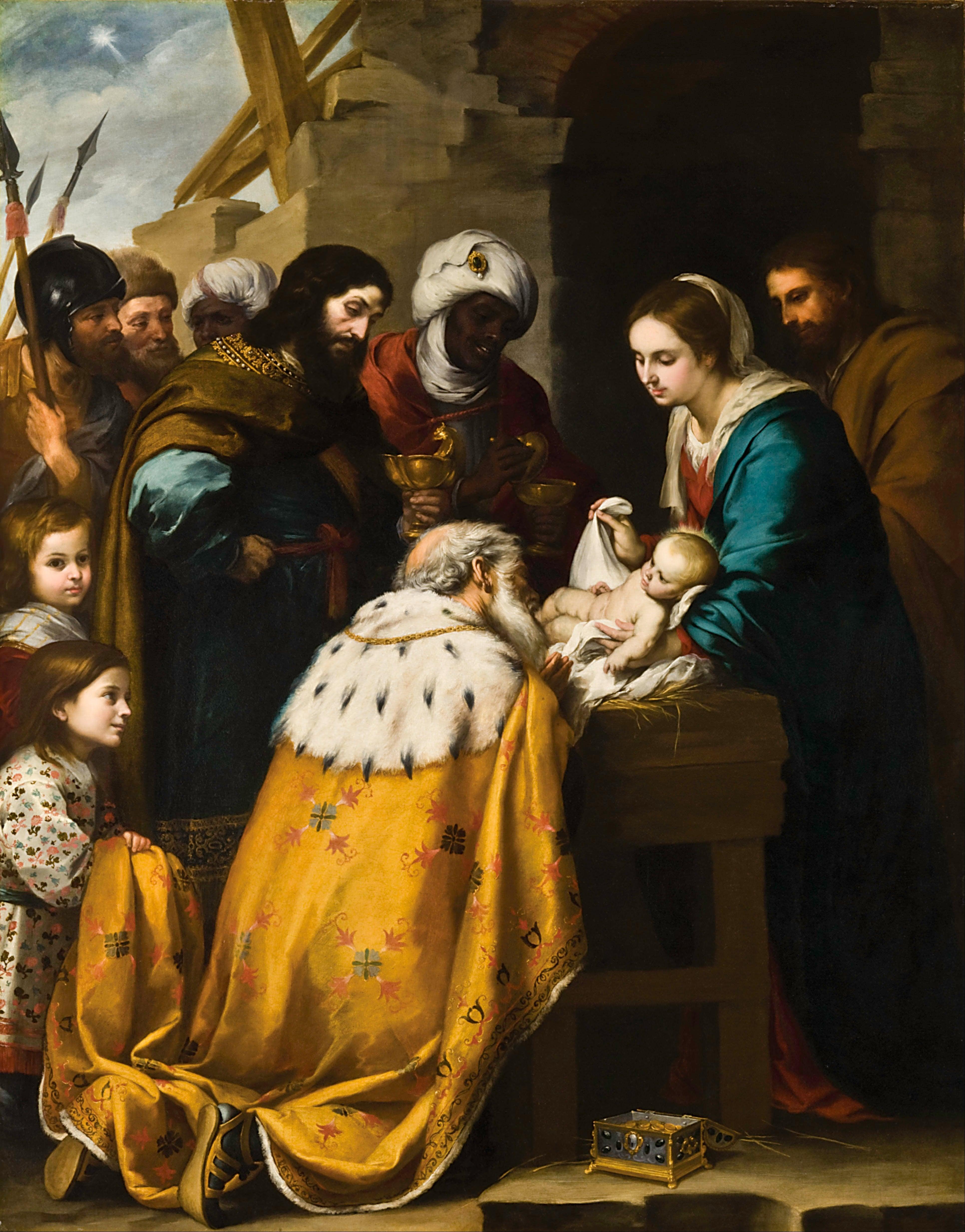
The painting depicts the Adoration of the Magi as a solemn, intimate gathering around the Christ Child. The baby rests on a wooden structure covered with straw, while a woman in a light-colored veil and a teal-blue cloak leans toward him. Around them, a group of bearded men wearing turbans and sumptuous robes, and carrying ceremonial weapons, gather; some hold metal cups, and a small ornamental chest on the ground completes the collection of gifts. In the foreground, a kneeling old man spreads out a wide golden cloak, whose spotted border and rich decoration draw the eye toward the sacred center of the scene. Two girls beside the cloak bring a note of intimacy and human presence.
The episode comes from the Christian account of the visit of the Magi, who traveled from the East to see the child Jesus. Tradition recognizes them as the Three Wise Men and associates their homage with offerings of gold, frankincense, and myrrh. Murillo sets this encounter in a humble space built of stone walls and wooden beams, with a dark opening, in contrast to the richness of the visitors’ fabrics, metals, and headdresses. In the sky, a small star links the earthly scene to the sign that, according to tradition, guides the Magi to the place of Jesus’ birth.
The iconography is shaped by objects and gestures of recognition. The manger underscores the Child’s vulnerability, while the cups, chest, and royal garments turn the visitors’ arrival into an act of homage. The elderly kneeling figure expresses reverence with his whole body: his lowered posture and outspread cloak create a visual bridge between the viewer and the child. The star, though discreet, extends the sense of spiritual guidance upward. The contrast between the shelter’s rustic simplicity and the visitors’ sumptuous retinue underscores the central paradox of the story: greatness is revealed in humble surroundings.
The vertical composition is densely populated, yet retains a clear direction. Heads, bent arms and raised spears form an arc that guides the eye from the far left toward the infant. The golden cloak in the foreground acts as a luminous surface, gathering the movement of the figures and reflecting it back toward the center. The ochres, browns and blacks of the architectural background bring out the faces, the blue and red fabrics, the child’s body and the metallic gleam of the cups. Depth emerges from the interweaving of bodies and planes, while the dark opening in the background intensifies the concentration of light around the encounter.
The work is consistent with the devotional painting associated with Bartolomé Esteban Murillo in its warm treatment of sacred figures, rich colouring and human closeness in its depiction of a religious episode. Its solemnity depends not on monumental architecture, but on the relationship between the gazes, the inclinations and the light gathered around the Child. When viewing it, it is worth following the path that begins at the golden cloak, passes through the offerings and the faces of the Magi, and ends at the infant figure: this reveals how the humility of the birth and the magnificence of the homage are brought together in a single visual and spiritual focal point.
Have questions about our oil painting reproductions? See our frequently asked questions.