

Description
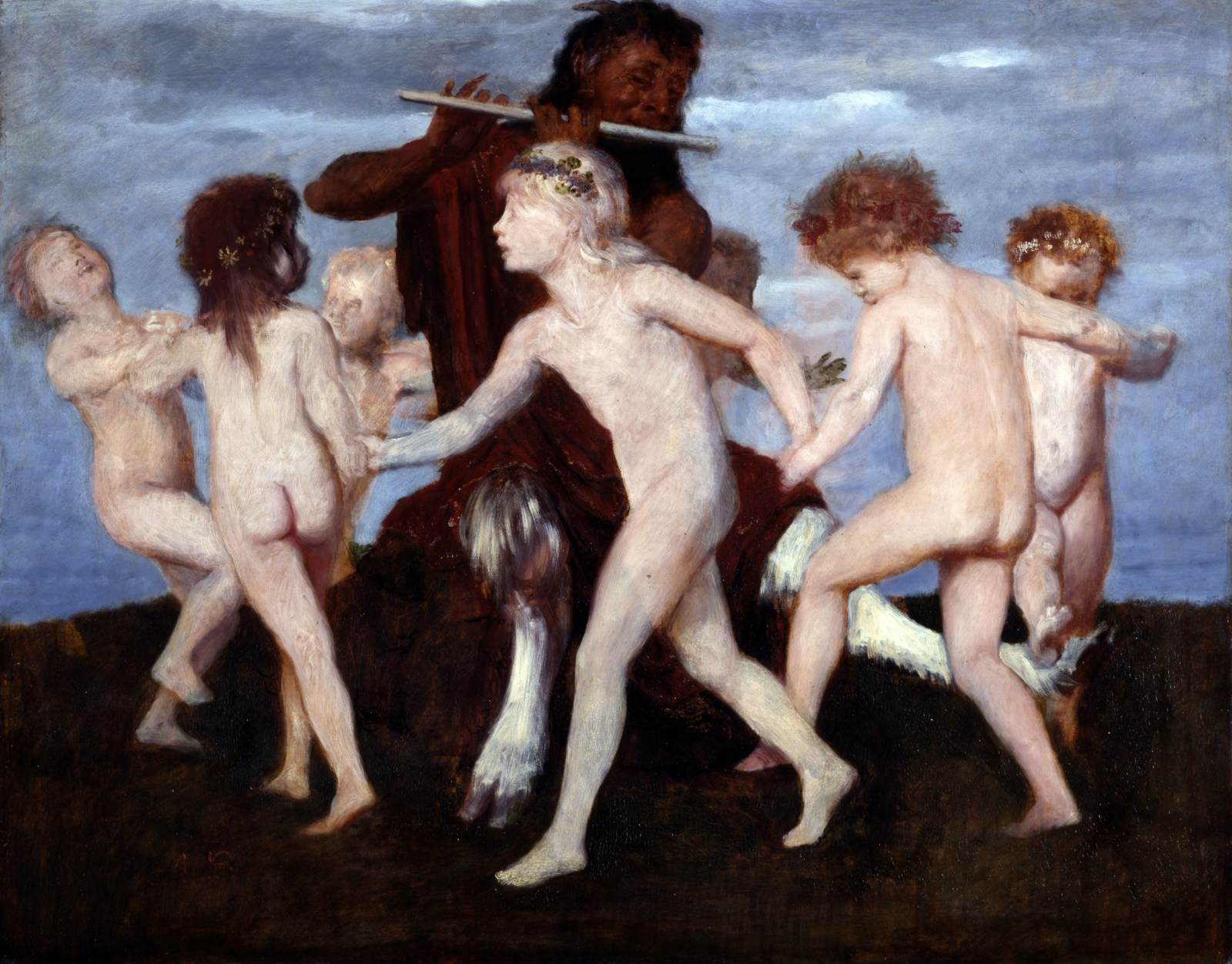
The painting shows Pan dancing with the nymphs in an open landscape, beneath a grayish-blue sky and on dark ground that supports the entire scene. In the upper central area, a dark-skinned male figure raises his torso and plays a horizontal flute, while a reddish-brown cloak partly covers his lower body. Around him, a group of nude figures unfolds, linked together or leaning toward one another in a circular movement. Their pale bodies, loose hair, and small floral adornments contrast with the shadows on the ground and the commanding presence of the musician.
Pan is a deity in Greek mythology associated with the untamed natural world, shepherds, and flocks. His most recognizable attribute is the syrinx, or Pan flute, which draws attention here and establishes the mythological setting. The nymphs, female deities associated with natural landscapes, appear as companions in a festive outdoor dance. The scene depicts a musical and physical gathering in which nature, movement, and sound form a single experience. The mythological world is thus set apart from everyday life and takes on the intensity of an elemental celebration.
The flute makes Pan the iconographic focal point of the composition, though his elevated position does not entirely separate him from the group: the arms, legs, and lines of the bodies continually guide the eye toward him, then scatter it among the nymphs. The floral ornaments in their hair reinforce their association with vegetation and the natural character of these figures. Nudity functions less as individual display than as a sign of an existence free from social conventions. The reddish cloak introduces a sense of weight and mystery at the center, while the contrast between the pale flesh and the dark landscape heightens the impression of a twilight ceremony.
The horizontal composition is organized through intersecting diagonals: outstretched arms, leaning torsos, and overlapping legs create a rippling, almost choreographic rhythm. The light-colored figure reclining in the foreground acts as a dominant diagonal and extends the movement toward the right edge, while the intermediate figures form a visual chain connecting both sides of the painting. Above this interweaving of bodies, the sky stretches across the canvas in cool, horizontal brushstrokes, providing a pause that intensifies the dynamism of the foreground. Ochres, pale pinks, and ivory whites stand out against browns, blacks, and grayish blues; the light outlines bodies and gestures as if on a theatrical stage.
The work is consistent with Arnold Böcklin’s interest in mythological themes, fantastical figures integrated into evocative landscapes, and an atmospheric approach of powerful chromatic and dramatic intensity. In Pan Dancing with the Nymphs, this sensibility transforms a scene of music and dance into a vision of elemental energy: the group seems to revolve around a musical center, but the cold sky and almost black ground prevent the celebration from becoming lighthearted. The flute, the cloak, and the intertwined bodies form a single structure: the instrument identifies the god, the dance activates the space, and the chromatic contrast turns the landscape into a pagan theater of contained tension.
Have questions about our oil painting reproductions? See our frequently asked questions.