

Description
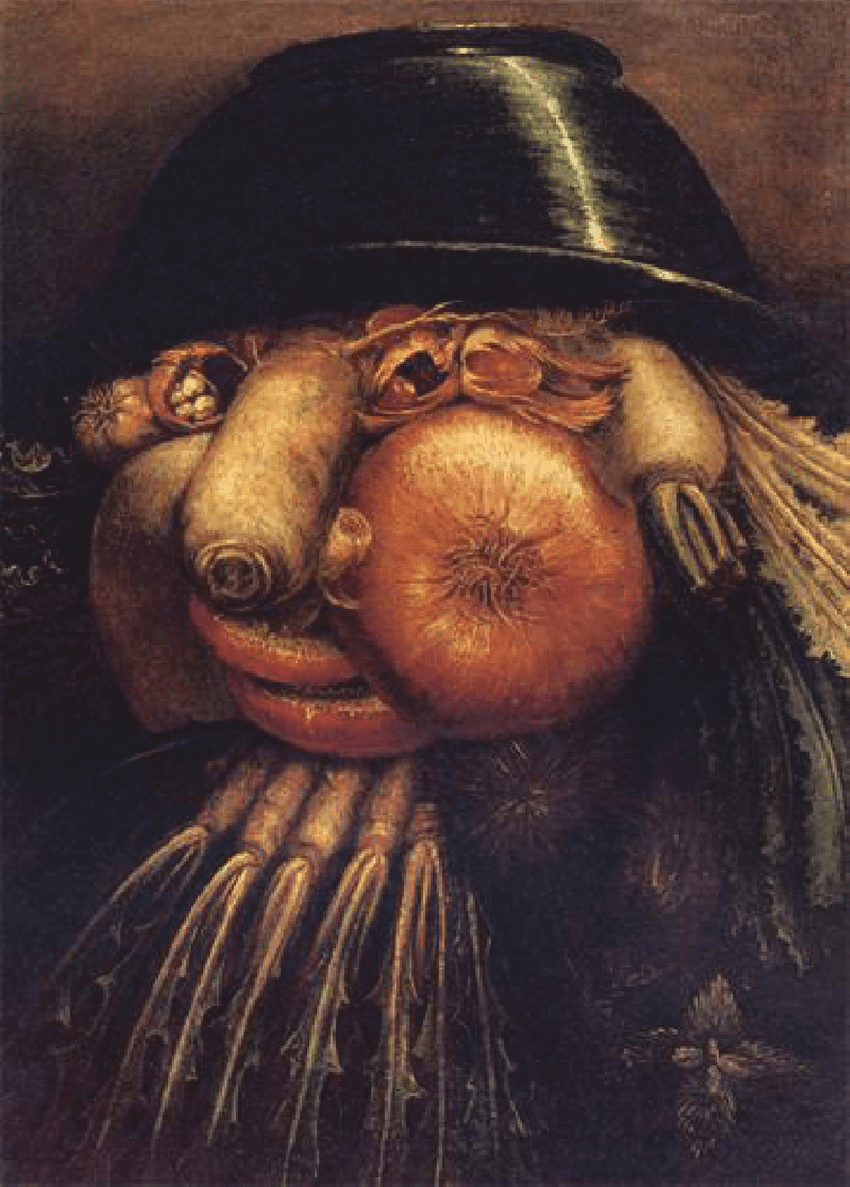
The painting presents The Gardener as a frontal, theatrical bust, constructed almost entirely from the produce of the land. Beneath a wide-brimmed black hat, the figure’s face features a long ochre-colored nose, a red fruit covering the right cheek, small vegetable elements for eyes and a partially visible reddish mouth. Light-colored hair falls on either side, while a broad ruff of fibers and stems extends the figure toward the lower edge. The dark brown background envelops the composition and makes the figure emerge like a warm, fantastical apparition.
The work belongs to Giuseppe Arcimboldo’s singular world. He is celebrated for transforming fruits, vegetables, flowers and other objects into human faces. Here, the gardener is not depicted in a conventional portrait, but as a still life that takes on the appearance of a person. The elements associated with cultivation and harvest are no longer accessories; they literally become his features. The figure’s identity thus emerges from the relationship between his occupation and the natural materials that represent him, in a clever synthesis of portraiture, allegory and observation of the plant world.
The metamorphosis of the face links the figure to fertility, the harvest and cultivated land. The red fruit, elongated shapes and accumulation of fibers create an image of abundance, but also of transformation: what is edible becomes expressive, and plant life takes on an almost human presence. The hat reinforces the characterization of the field worker, while the radial ruff extends the vegetation from the head toward the body. The frontal, almost ceremonial presentation turns this collection of fruits and stems into a recognizable figure, at once comic, enigmatic and wondrous.
The composition guides the eye from the hat to the center of the face and then to the flaring lower part of the ruff. The black brim creates a band of shadow that heightens the small eyes and focuses attention on the forms that construct the face. By contrast, the ochres, golds, beiges, and reds are bathed in warm light, setting each element apart from the dark background. The overall symmetry lends stability, while differences in size and texture among the fruit, vegetable nose, fibers, and hair introduce an irregular rhythm characteristic of a living assemblage. The result combines the stillness of a portrait with the energy of nature in growth.
This work exemplifies a widely recognized feature of Giuseppe Arcimboldo’s style: the creation of composite portraits from natural elements, treated with keen observation, visual wit, and a pronounced fantastic effect. The Gardener turns a profession into a bodily construction; it not only depicts a character connected to the earth, but makes the earth form his face. It is worth pausing to consider how each object retains its material identity while also contributing to a human expression: the fruit serves as a cheek, the fibers as clothing, and the whole as a theatrical figure. This double reading is what gives the painting its force.
Have questions about our oil painting reproductions? See our frequently asked questions.