

Description
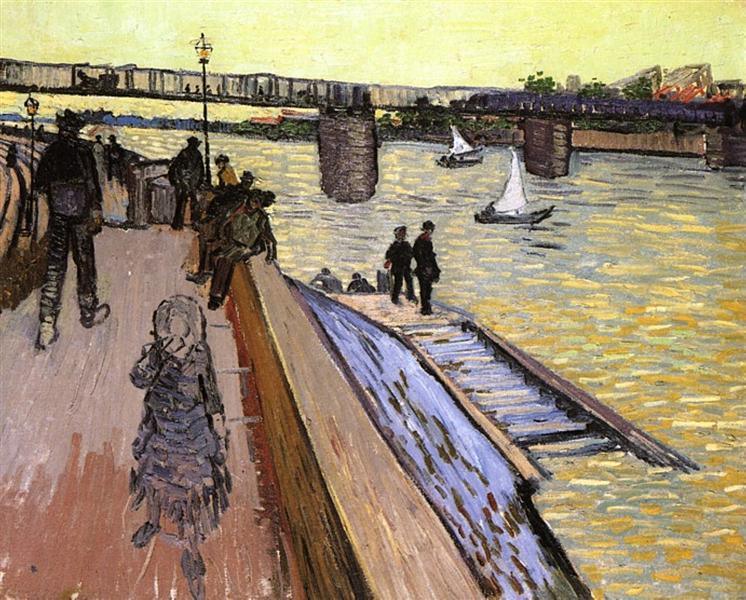
The painting shows the Bridge at Trinquetaille as the focal point of an open, lively riverside scene. The structure stretches horizontally across the upper part of the composition, supported by several pillars that descend into the water. In the foreground, a broad sloping surface leads the eye from the figure seen from behind towards the central landing stage, where several people gather, stand or lean over the riverbank. Two sailboats with white sails cross the river in front of the bridge, while a lamppost rises above the quay, adding a vertical accent to the composition. On the far side of the water, vegetation, low buildings and urban forms complete the harbour setting.
The title places the scene in Trinquetaille, an area of Arles beside the Rhône. The bridge organizes the view as a link between the two banks and makes an everyday experience of the urban landscape the central subject of the work. The sailboats, quay and figures establish a tangible human scale: the river is not merely a luminous expanse, but also a place of passage, encounter and activity. The architecture is integrated into riverside life without entirely overshadowing the breadth of the water and the low horizon.
The bridge acts as a stabilizing line against the diagonals of the quay and the walkway that lead towards the centre of the scene. This tension between horizontal lines and an oblique path makes the space feel dynamic, as if the eye could keep moving between the people, the boats and the opposite bank. The sailboats reinforce the harbour character and lend lightness to the scene, while the broken reflections visually connect the architecture, sails and sky. The figures gathered on the landing stage introduce an everyday dimension and, by contrast, emphasize the river’s vast scale.
The composition rests on a clear network of lines and planes. The bridge forms a solid band across the upper area; below it, the pillars mark vertical intervals and establish depth. By contrast, the foreground extends diagonally, creating an energetic visual entry that leads to the group of people and the water’s surface. Pale yellows and ochres mingle with grayish blues, dark greens, browns, and blacks, while the white sails concentrate small points of light. The visible brushwork and horizontal reflections make the water shimmer, transforming each architectural element into a chromatic presence as well.
In The Bridge at Trinquetaille, Vincent Van Gogh approaches the urban landscape through intense color, contrasts between yellows, blues, and greens, and brushwork that keeps the painted surface alive. The scene retains the clarity of a recognizable view, but its visual rhythm sets it apart from a static description: the bridge anchors the structure, the diagonals guide the eye, and the water dissolves outlines into shifting reflections. Notice how the small figures and sailboats balance the architectural mass; thanks to them, the bridge ceases to be a mere backdrop and becomes the center of a spatial experience shaped by light, movement, and the breadth of the river.
Have questions about our oil painting reproductions? See our frequently asked questions.