



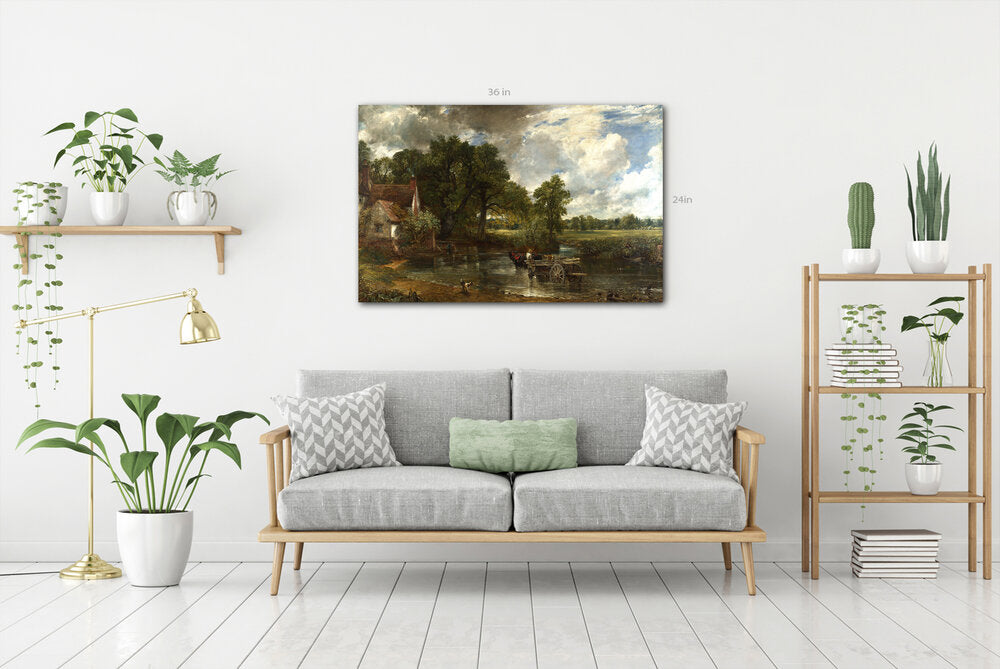
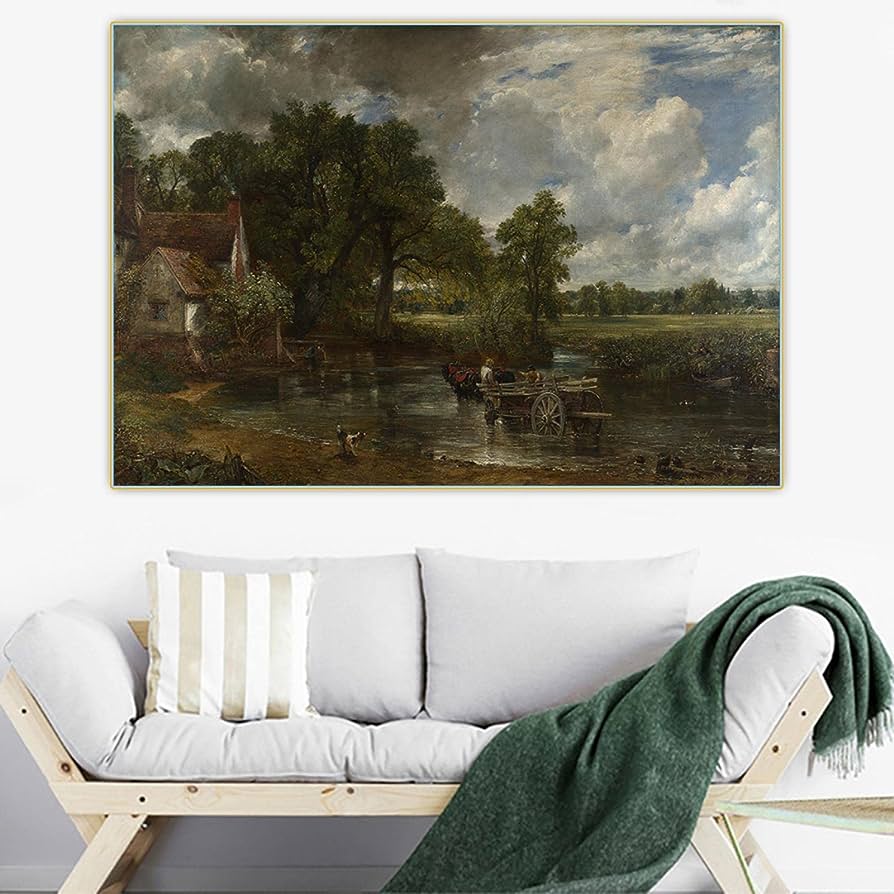


Description
In The Hay Wain, John Constable chose to paint a rural scene stretching into the distance across sunlit meadows, balanced by the cool waters of the pool in the foreground. The subject of this painting is rural life and the beauty of the landscape the artist loved so much.
The painting is regarded as one of the most emblematic works of English art and one of the most influential in the history of landscape painting.
What is notable about this work is that it was created at a transitional moment in art history, when many artists were turning away from the tradition of history painting and portraiture in favour of landscape painting. Constable became one of the leading exponents of this movement, and The Hay Wain is an outstanding example of his ability to capture the beauty of nature.
In addition, this work is famous for its outdoor painting technique, known as “plein air,” which became one of the distinguishing features of the Impressionist movement. Constable made numerous studies outdoors before producing the final painting in his studio, which allowed him to capture the atmosphere and natural light of the scene with great precision.
The Hay Wain has been the subject of extensive analysis and study by art experts, who have identified numerous interesting details, such as the presence of a rainbow in the upper left of the painting, which adds an extra dimension to the work and reflects Constable’s fascination with natural phenomena.
The Hay Wain ranks No. 73 on the list of famous paintings