

Description
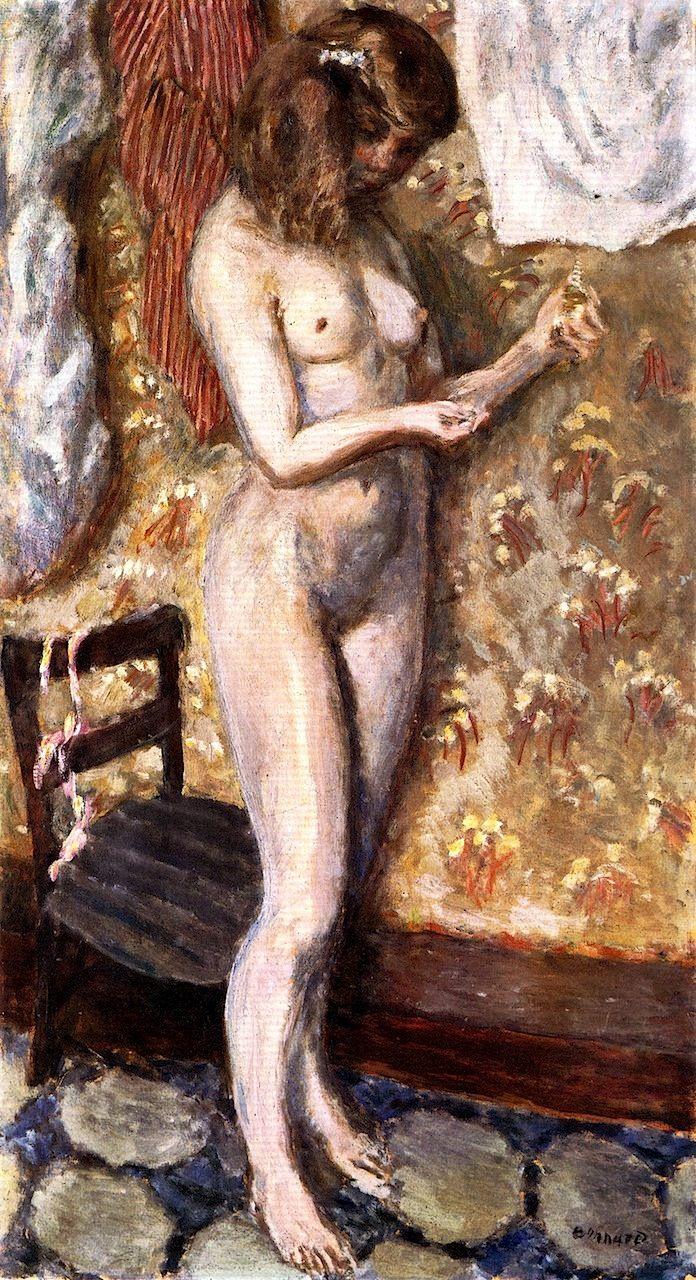
The painting shows a nude figure in the light: a dark-haired person occupies the center of a richly decorated interior. The body extends from the head to the lower part of the composition in a seated or leaning pose, while the torso turns to the right and one arm reaches in that direction, holding a small light-colored object. Behind the figure is a red fabric with vertical folds; on the left, a dark wooden chair introduces a structural counterpoint, while a horizontal piece of furniture stretches across the lower area beside a floor composed of stone-like shapes or slabs. Everything is enveloped by a surface of floral and vegetal motifs in cream, red, and ochre tones.
The scene belongs to the genre of the domestic nude, in which the presence of the body is closely connected to the surrounding space. Here, there is no anecdotal story or mythological identity: attention is focused on the interplay of the figure, furnishings, textiles, and decoration. The interior offers an intimate, sensory experience, closer to the contemplation of light, color, and texture than to the depiction of a narrative episode. The figure is presented both as a physical presence and as the axis organizing our perception of the surroundings.
The illuminated body draws the eye and establishes the work’s main expressive contrast. The pale skin stands out against the curtain’s brick red, the browns of the furnishings, and the floral pattern in the background, giving light an almost architectural function: it separates the figure from her surroundings without isolating her completely. The botanical motifs and red fabric lend the scene an enveloping, sensuous quality that integrates the nude into the interior. The outstretched hand extends the visual direction to the right, while the inclined pose introduces a note of naturalness and repose. The decoration is not merely a backdrop; it contributes to the construction of the visual meaning by turning the domestic space into an immersive experience.
Formally, the composition is organized around a vertical axis defined by the body. The head, torso, and leg form a descending line that guides the eye fluidly, while the extended arm opens up a lateral trajectory and keeps the structure from feeling static. The dark elements of the chair and furnishings balance the central luminosity and anchor the scene along the lower edge. By contrast, the floral background distributes subtle variations of color across the entire surface, creating a decorative rhythm that both competes and engages in dialogue with the anatomy. The reds, ochres, and bluish grays create depth through layers of color rather than through a strictly defined perspective. The brushwork and ornamental forms give the surface a rich tactile quality, as though the entire space were vibrating around the figure.
This way of turning an intimate interior into a living interplay of color and light is consistent with traits widely associated with Pierre Bonnard: richly articulated decorative surfaces, intimate interiors, and a close relationship between pattern, atmosphere, and figure. In Nude in the Light, the body is not viewed apart from the domestic world, but as the point of greatest intensity within a network of fabrics, flowers, wood, and stone. Notice how the brightness of the skin visually reappears in the creamy tones of the background, while the red and dark furnishings sustain the chromatic tension. The work thus turns an everyday scene into a pictorial meditation on intimacy, where looking means following the dialogue between the illuminated figure and the space that contains it.
Have questions about our oil painting reproductions? See our frequently asked questions.