


Description
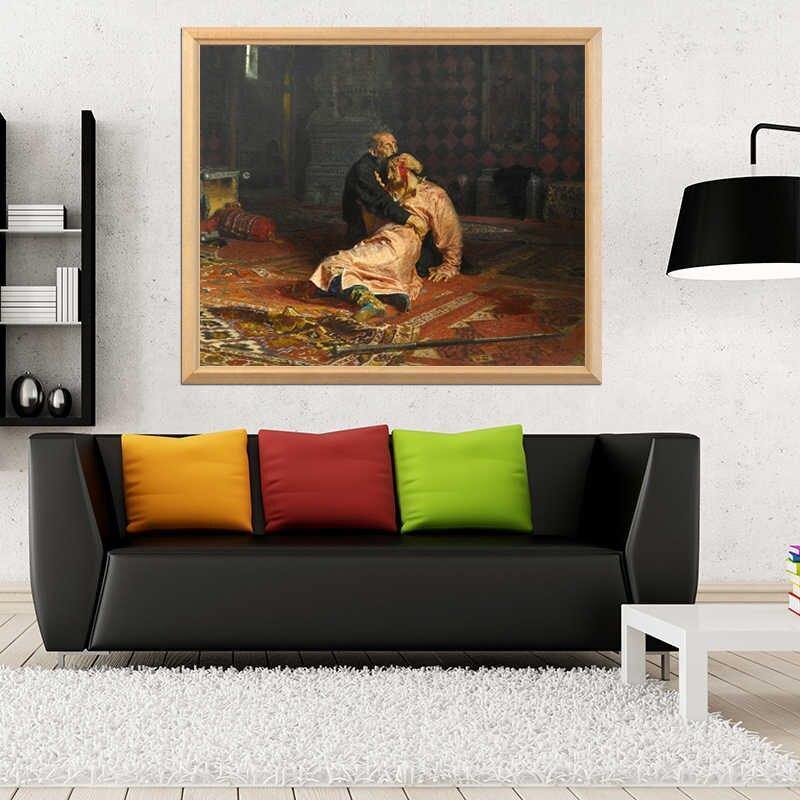
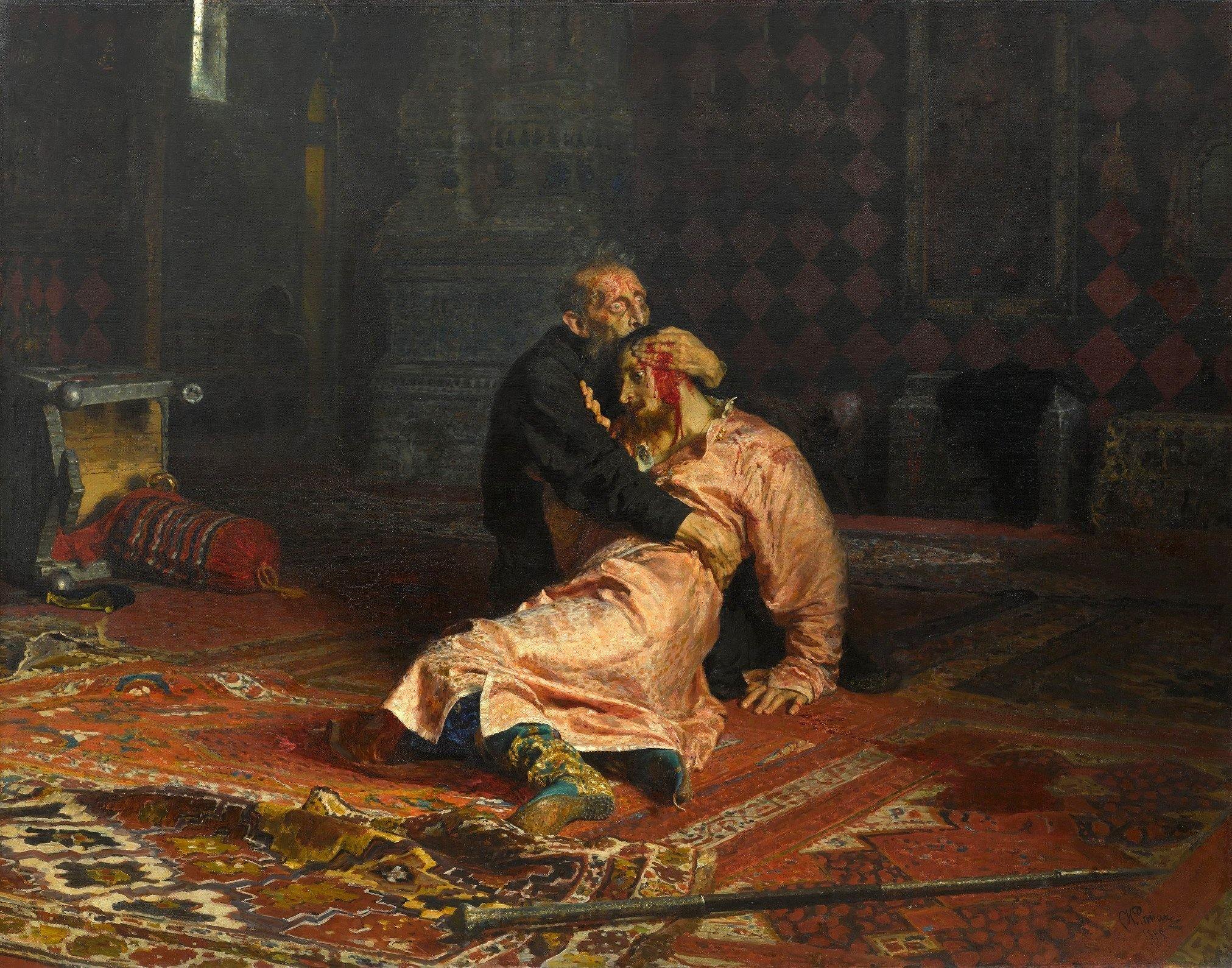
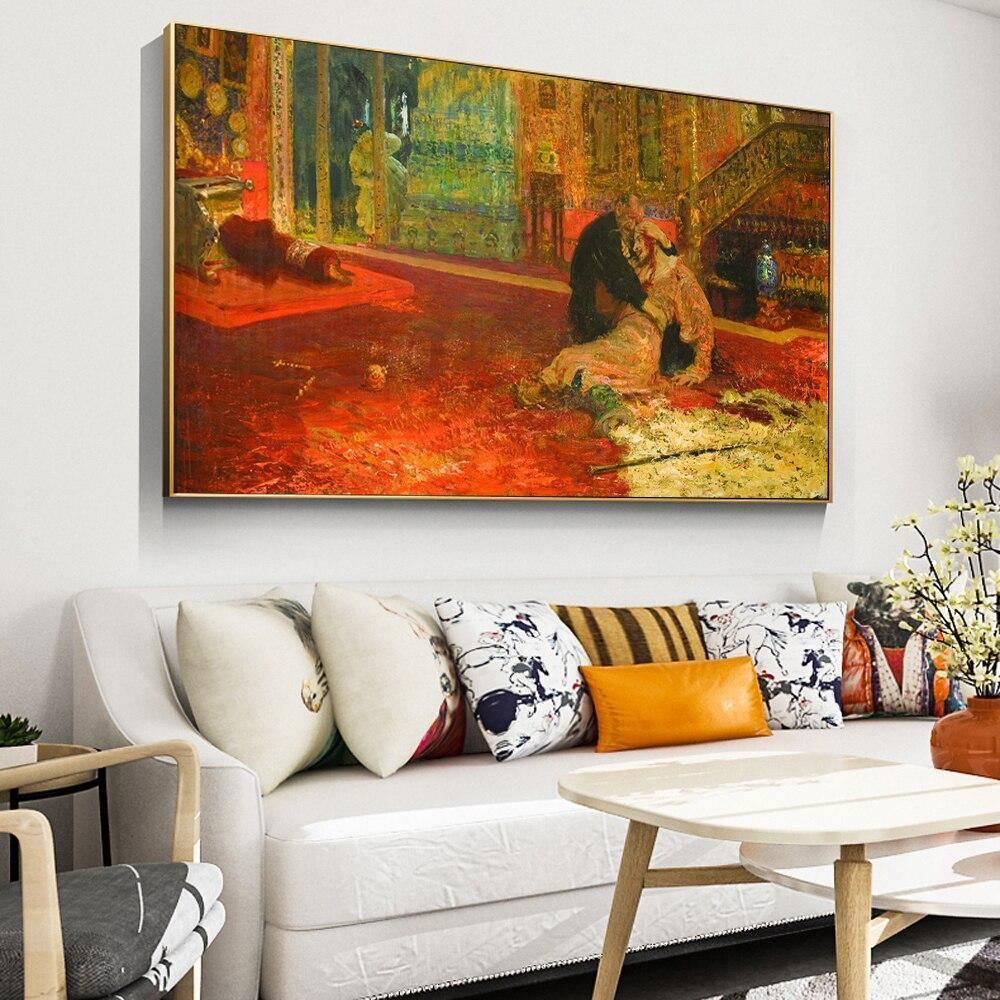
The painting shows Ivan the Terrible holding his son Ivan in the moments after an irreversible act of violence. At the center, the darkly dressed figure leans over the young man and clasps his head in his arms, as if trying to protect him and hold on to him at the same time. Covered by a voluminous, pale pink robe, the son sits or reclines on the rugs, one hand resting on the floor. The reddish marks on his face and head make the severity of the wound visible. A shadowy interior unfolds around them, filled with textiles, furniture, and decorated surfaces; a cylindrical cushion lies to the left, while overlapping rugs cover nearly the entire foreground.
The episode belongs to the history of tsarist Russia and depicts the death of Ivan Ivanovich after an assault by his own father. The historical scene is thus distilled into a heartbreaking moment of intimacy: rather than a battle or public ceremony, it captures the shock, remorse, and grief of the sovereign embracing the son he has mortally wounded. This focus on the two figures turns the historical painting into a family tragedy. The clothing, interior decoration, and rich textiles place the event in a palatial setting, but no element of its opulence can soften the violence of the moment.
The embrace serves as the work’s iconographic core. The hand supporting the young man’s head conveys care, despair, and a belated attempt to make amends; the wounded face, by contrast, introduces the fragility of life and the imminence of death. The contrast between the father’s dark clothing and the son’s light robe visually distinguishes the aggressor from the wounded man and draws the eye to their faces and hands. The carpets and ornamental textiles are not merely a decorative backdrop: they envelop the scene in material richness, making the intimacy of the event all the more brutal. The opulence of the setting contrasts with the figures’ emotional desolation.
The composition is horizontal and centered, but its balance is threaded with strong diagonal tension. The dark figure leans toward the young man, while the arms and gazes lead the eye to the wounded head. Warm light is concentrated on the figures and carpets, leaving the background in shadow that compresses the space and keeps the decoration from competing with the drama. Brick reds, ochres, and browns tie together the wounds, fabrics, and shadowed areas; against them, the robe’s pale pink creates a vulnerable focal point. The background’s geometric patterns and the stripes of the carpets lend rhythm and visual stability, in contrast with the bodies’ contained agitation.
In this work, Ilya Repin displays traits associated with Russian Realism: an attention to psychological expression and a dramatic composition built around gestures, glances, light, and color. The intensity does not depend on an extended action, but on the closeness of the two figures and the precision with which their embrace conveys guilt and pain. Notice how the luxurious surroundings recede behind the relationship between the two figures: every carpet, shadow, and decorated surface ultimately reinforces the isolation of that moment. The painting turns an episode of dynastic violence into an intimate tragedy, in which history becomes visible in the trembling of hands and in the gaze of a father who understands the magnitude of his loss too late.
Have questions about our oil painting reproductions? See our frequently asked questions.