

Description
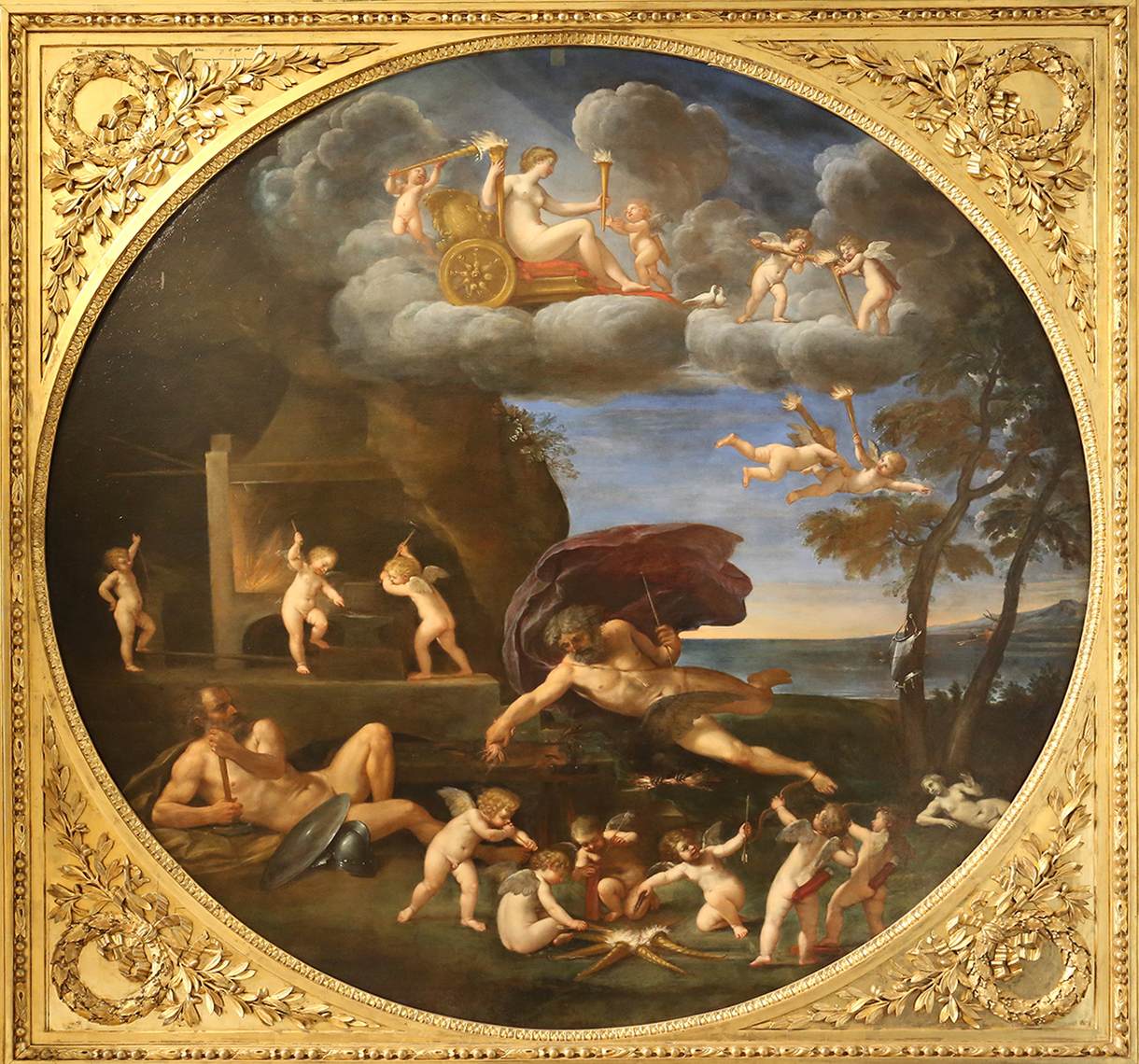
The painting depicts an allegory of Fire unfolding as a fantastical, densely populated ensemble scene. In the upper section, a nude woman sits on a red-and-gold chariot or platform, surrounded by small figures raising torches and holding instruments. Below, other nude, winged figures pass through the clouds or appear to hover above the landscape. The lower section brings together a blazing hearth, groups of winged children, reclining figures, a shield, metal objects and a large man beneath a dark cloak. The water, trees, rocks and coastal horizon extend the scene into a natural world that contrasts with the intensity of the fire. The whole composition is enclosed by a gilded frame with vegetal ornamentation, giving the painting a ceremonial appearance.
In the Western tradition, fire is one of the four elements, along with air, water and earth. These allegories are not usually limited to depicting a natural phenomenon: they transform it into an active presence through personified figures, attendants and symbolic settings. Here, fire is conveyed through embers, torches and warm glows, but also through the upward movement of the figures and the theatricality of the composition. The work thus presents a dynamic vision of a force associated with heat, energy and transformation, set between the earthly realm of the landscape and the celestial space of the clouds.
Torches are the most immediate attribute of the allegory, running through the composition like small points of light. The fire visible in the lower structure introduces a material, almost domestic or artisanal dimension, while the flames raised by the figures carry that energy to a cosmic scale. The coexistence of embers, water, clouds, and vegetation heightens the dialogue between opposing natural forces. The nude, winged figures act as allegorical presences that animate the subject, and their outstretched arms, flights, and upward gestures create a sense of spreading. The man covered by the large dark cloth provides a heavier, more earthly counterpoint to the lightness of the bodies floating above him.
The composition is arranged in 3 clearly related vertical levels. At the top, voluminous clouds, torches, and the chariot dominate; in the center, the suspended figures link the sky with the landscape; below, the bodies, objects, and embers form a more compact foreground. This tiered structure guides the eye from the golden glow of the upper group to the fire in the lower corner and then to the concentration of figures and metals. Browns, ochres, and dark reds bring warmth, while the grays of the clouds and the blues of the sky and water create areas of contrast. The golden frame extends this luminosity and establishes an ornamental boundary around the movement within. The variety of scales, diagonals, and gestures prevents the abundance of figures from becoming static.
The work is consistent with the allegorical and mythological vein associated with Francesco Albani, recognizable here in the presence of idealized figures, numerous putti, nudes, and a close relationship between human groups, landscape, and luminous atmosphere. Its ornamental richness is not limited to the frame: it also emerges in the rhythmic accumulation of bodies, fabrics, instruments, clouds, and metallic objects. When viewing it, it is worth following the path of the torches: from the tangible fire of the embers to the points of light rising among the clouds. This journey sums up the painting’s logic, transforming an elemental force into a theatrical vision in which matter, landscape, and figures all partake of the same energy.
Have questions about our oil painting reproductions? See our frequently asked questions.