

Description
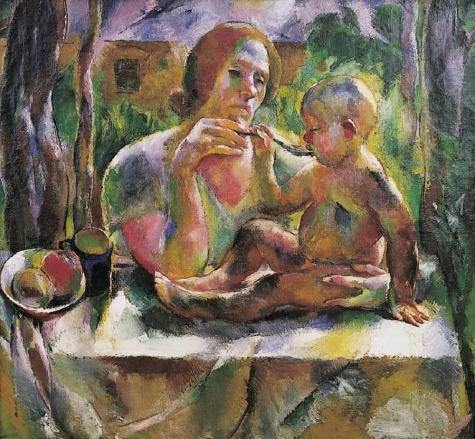
The painting depicts a convivial pause in a summer garden. Two figures gather around a table covered with a light-colored cloth: an adult seated at the center of the composition holds a slender utensil near their face, while a smaller figure leans toward them and reaches across the table. In the foreground, a dark bowl holds red, yellow, and green fruit, accompanied by another vessel in a deep shade. Trees surround the scene on both sides, revealing a glimpse of an ochre-colored building among the foliage in the background. The arrangement brings together the figures’ intimate gesture and the tactile abundance of the table and garden.
The subject belongs to the realm of the outdoor domestic scene: a light meal or shared tea enjoyed away from formal interiors. The work depicts no dramatic action, but rather an everyday pause in which conversation, caring for another person, and gathering around a table become the focus of the experience. The presence of an adult and a younger figure suggests a relationship of care and closeness without assigning them specific identities. The garden serves as an extension of domestic life, a sheltered space where food, utensils, and conversation blend with the natural rhythm of summer.
The table with its fruit and vessels brings the painting’s sensory and social dimensions into focus. Their vivid colors stand out against the dark greens, browns, and ochres of the surroundings, as though the food offers a warm center amid the dense foliage. The gathering of the two figures suggests familial intimacy and everyday companionship, while the trunks at the sides create an embracing frame that sets this small encounter apart from the outside world. The dappled light on the cloth, ground, and leaves becomes an active element: it not only illuminates the scene but also conveys the serene warmth of a summer afternoon and makes the surfaces shimmer.
The compact vertical composition draws the eye to the central group. The table forms a horizontal band across the lower third, balancing the verticality of the trunks and providing a visual base for the figures. The utensil raised between the two people introduces a delicate line that animates the center and connects the adult figure’s gesture with the younger figure’s approach. Around them, masses of foliage create depth in layers: the nearby elements carry greater weight and contrast, while the background opens up through patches of light, greens, and ochres. The visible, vibrant brushwork avoids a rigidly naturalistic rendering; each form contributes to a continuous chromatic rhythm.
In this work by Vilmos Aba-Novák, intense color and dynamic composition transform a simple scene into an image with a strong pictorial presence. The forms are arranged through masses of color that link the light-colored dress, the fruit, the vegetation, and the architecture in the background, while expressive light unifies the different planes. The result is a luminous coexistence of the domestic and the natural: the table brings order, intimacy, and human scale; the garden offers expansiveness, shade, and movement. Notice how the gaze travels from the fruit in the foreground to the hands and faces, then disperses among the trunks and patches of light: along this path, the painting transforms a simple tea shared together into a complete experience of care, presence, and summer.
Have questions about our oil painting reproductions? See our frequently asked questions.