

Description
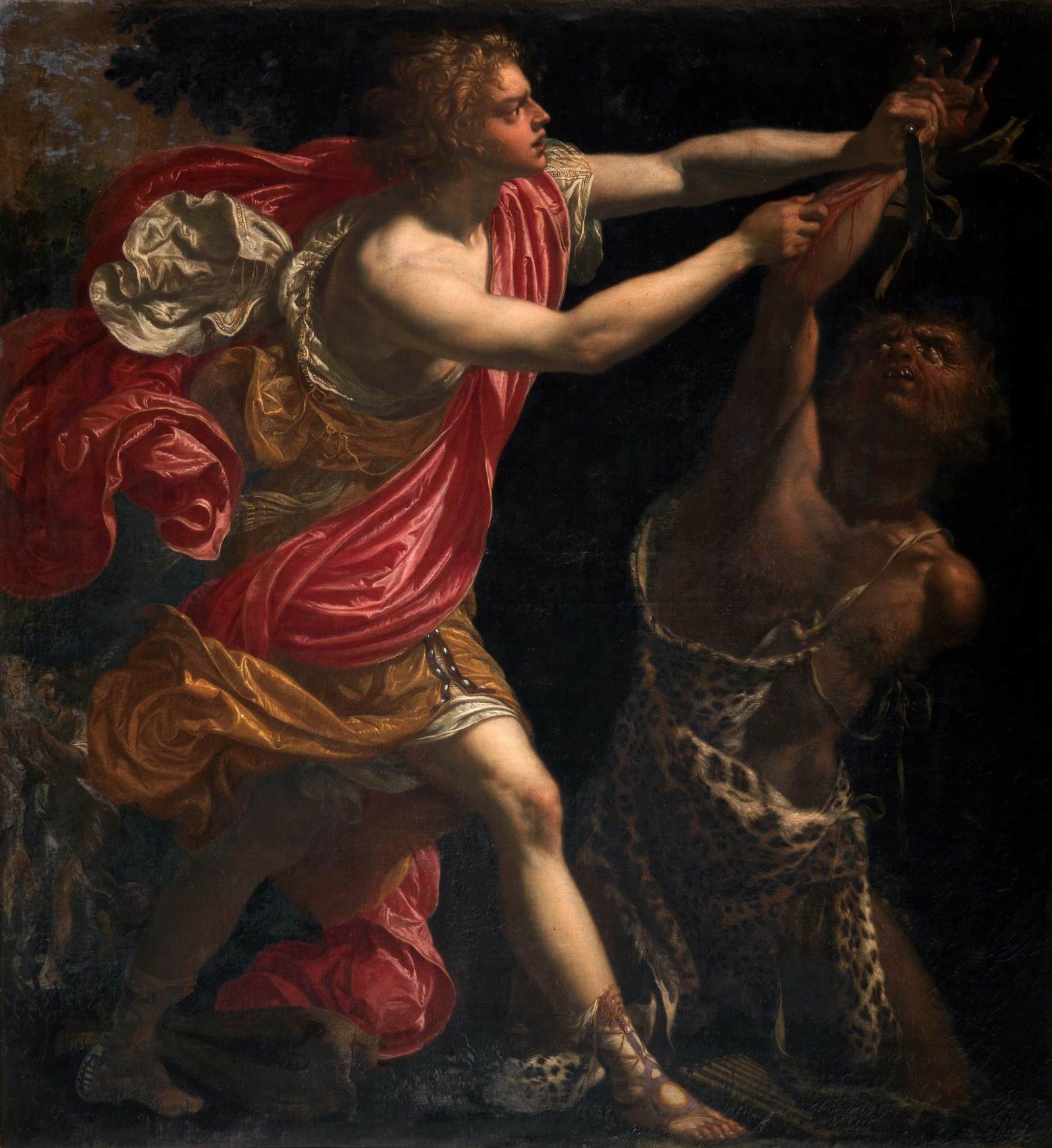
The painting depicts Apollo flaying Marsyas in a vertical scene of darkness and intense physical drama. The central figure, with pale skin and curly hair, moves to the right, wrapped in a large red cloth and golden and pale fabrics. Facing this figure is Marsyas, with dark skin, abundant hair and beard, and a bare torso, partially covered by a mottled fabric that evokes his wild nature. Their arms rise and intertwine near the upper-right edge, concentrating the tension of the episode there. Rocky ground and barely illuminated vegetation frame the confrontation in a rugged, shadowy setting.
The subject comes from Greco-Roman mythology. Marsyas, a satyr renowned for his musical skill, challenged Apollo to a contest. The god’s victory led to an extreme punishment: Apollo flayed Marsyas. The painting focuses on the moment of greatest physical conflict, when the relationship between victor and vanquished is expressed through the closeness of their bodies, the gesture of their arms and the tension in their hands. The story brings together divine triumph, pride, punishment and violence—themes that the artistic tradition has turned into an image of powerful theatricality.
The iconography is built around the contrast between the two figures. Apollo occupies the brightest area and dominates the composition with his red and golden fabrics, while Marsyas is associated with the shadows, the ground and the animal-like texture of the fabric covering him. This visual opposition reinforces the difference between the divine figure and the satyr associated with the wild. Their intertwined hands form the narrative core of the scene, concentrating the resistance, subjugation and direction of the punishment. The vegetation and rocks isolate the episode from the everyday world and transform it into a setting of mythical violence.
The formal construction hinges on an ascending diagonal that begins with the fabrics in the lower part of the painting and leads the eye toward the raised arms. The crimson red introduces a curved, fluid, vibrant mass against the almost black background; its broad folds create rhythm and make Apollo’s figure seem to advance into the scene. Light is concentrated on the faces, arms, hands, and textile surfaces, leaving the landscape in deep shadow. This chiaroscuro establishes an immediate hierarchy: first the action comes into view, then the surroundings. The contrast between skin, fabric, and rock adds tactile variety to the painted surface.
In Giovanni Bilivert’s work, the mythological episode is presented as a confrontation of bodies, colors, and opposing forces. Apollo’s luminosity does not dispel the darkness of the event; on the contrary, it makes it more visible and theatrical. The red fabric draws the eye from the center toward the contact between the hands, while Marsyas’s figure is associated with the ground, the shadow, and the mottled texture. The dynamic composition and cruel narrative reinforce each other: the myth becomes a visual spectacle of triumph, punishment, and suspended tension. The painting’s intensity lies in this contrast between the radiance of the fabrics and the silent gravity of the dark landscape.
Have questions about our oil painting reproductions? See our frequently asked questions.