

Description
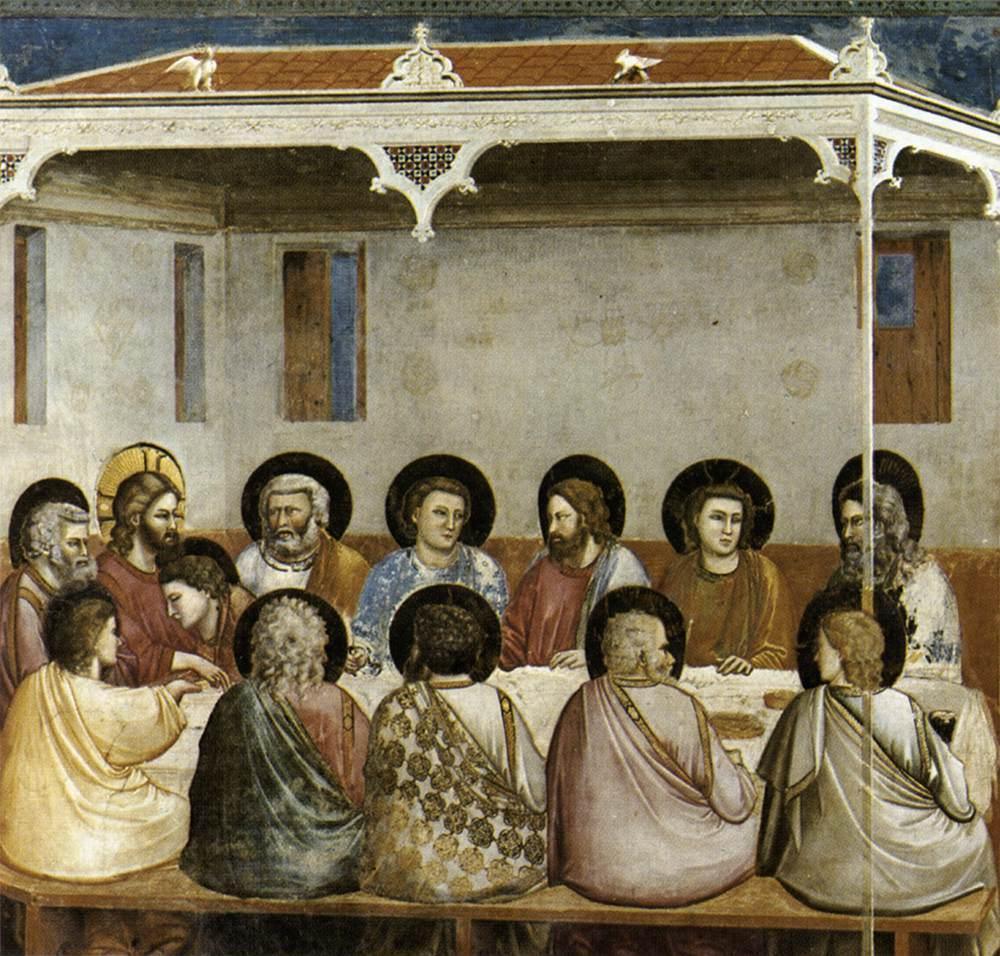
The painting shows Christ and his disciples gathered around a long table in a scene of intense collective presence. The white tablecloth runs horizontally across the center of the composition, separating the group in the background from several figures in the foreground, seen from behind or in profile. The figures wear robes and mantles in shades of cream, red, blue, green, brown, and purple, while their hair, beards, and gestures distinguish them within the gathering. Above them rises a porticoed gallery with broad arches, narrow windows, wooden doors, and an ornamented reddish roof. The dark blue sky closes off the upper part of the scene and focuses attention on the ceremonial space.
The work depicts the Last Supper, the Gospel episode in which Christ shares his final meal with the disciples before the Passion. The gathering therefore combines the intimacy of a shared meal with the gravity of a decisive moment. The table functions not merely as a piece of furniture within the space: it organizes the community of figures and turns their bodies, gazes, and hands into a visual narrative. In Christian tradition, this scene belongs to the Passion cycle and holds a central place because of its devotional and dramatic dimensions. The architecture provides a stable frame for this encounter, as if the sacred event were unfolding before a structure specially ordered to make it visible.
The circular halos, dark and golden, mark the sacred status of those present and create a luminous rhythm among their heads. The white tablecloth reinforces the idea of a shared ritual meal while providing a light surface that draws the eye toward the narrative’s center. The figures seen from behind serve a decisive purpose: they do not block the scene but draw the viewer into it, turning contemplation into a gradual approach to the table. The gathering of figures around the center heightens the sense of community, while the geometric and floral decoration of the architecture and some of the garments connects the human element with a carefully arranged setting.
The horizontal composition is anchored by the contrast between the upper architectural band and the compact gathering of figures below. The arches repeat a regular rhythm that steadies the scene, set against the varied inclinations, profiles, and gestures of the figures. The foreground figures create a layered sense of depth: from their backs, the eye moves toward the tablecloth and then to the row of disciples behind them. The earthy colors and deep blues create a concentrated atmosphere, while the light tones of the robes and tablecloth define the main visual focal points. The ornamental design of the gallery provides structure without detracting from the human drama.
In Giotto di Bondone’s work, religious narrative is connected with figures of solid presence, expressive gestures, and architecture capable of organizing the dramatic space. This clarity can be seen here in the way each plane contributes to the story: the gallery frames the scene, the table brings the figures together, and the characters give visible form to the episode’s solemn tension. The work turns the Last Supper into an experience of collective presence rather than an isolated scene centered on individual protagonists. Notice how the figures seen from behind bring the viewer closer to the event, and how the halos, white tablecloth, and arches together create an image of community, ritual, and anticipation of the Passion.
Have questions about our oil painting reproductions? See our frequently asked questions.