

Description
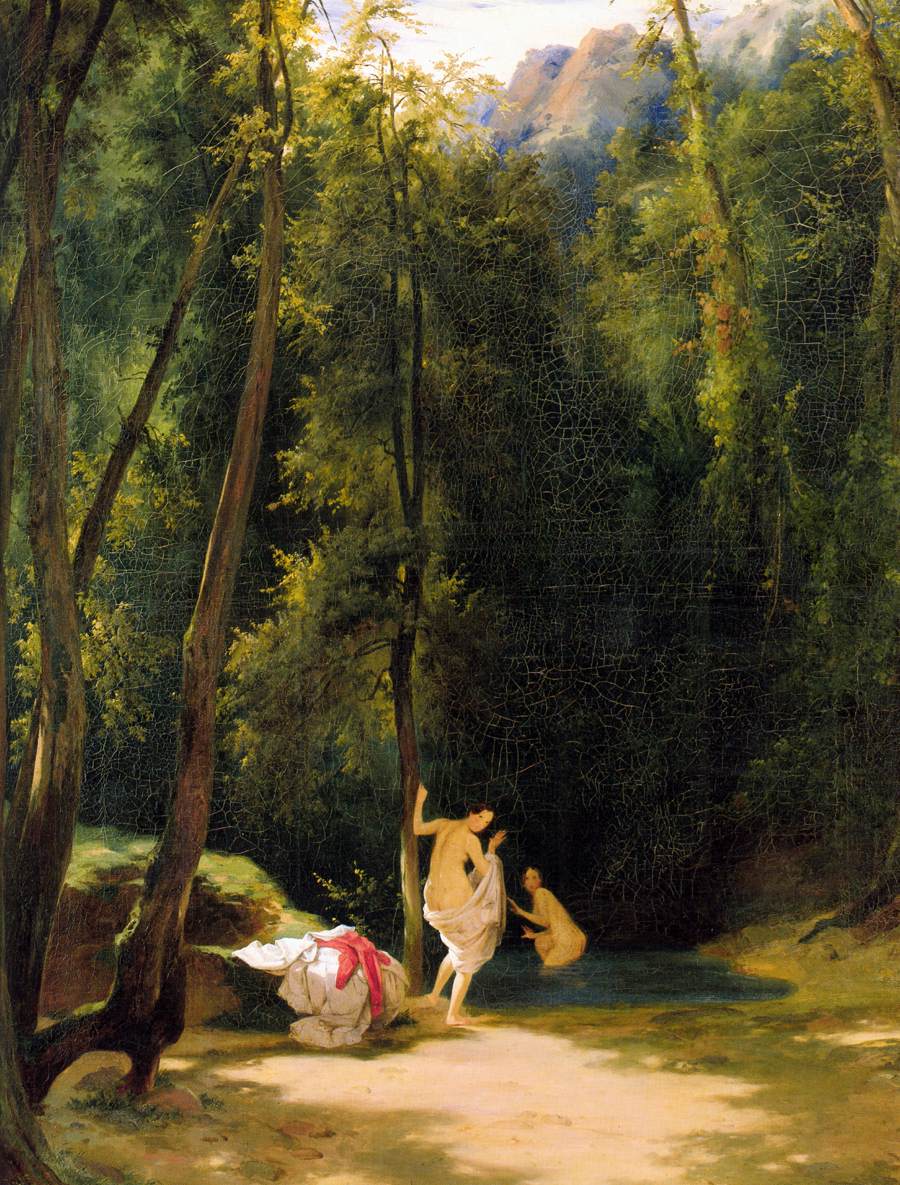
The painting shows two bathers in a wooded landscape, beside a small stretch of water that occupies the lower part of the composition. At the center, a nude figure rises from the water with a white cloth wrapped around the body and raises one arm toward the trunk or branch of a tree. Behind this figure, another remains seated or crouched in the water. The garments left on the ground, including a striking red piece, complete this everyday scene and place the action in a secluded clearing in the forest. Tall trunks, dense vegetation, and mountains visible in the distance create a deep, enveloping setting.
The title places this bathing scene in the Park of Terni. Rather than presenting an isolated anecdote, the work turns contact with water and nature into an intimate leisure experience, far removed from the urban world. The figures do not dominate the landscape through their scale; they are integrated into it, as part of a space where the human body, earth, water, and trees share the same scene. The simplicity of the action—bathing, dressing, and resting by the shore—thus takes on a contemplative dimension.
The white and red garments serve as a visual and narrative counterpoint to the bathers’ nudity. Set down in the foreground, they make visible the moment of transition between everyday life and immersion in nature. The dark forest surrounding them heightens the sense of refuge, while the sunlit clearing suggests a bright pause amid the dense woodland. The distant mountains broaden the scope of the scene: the figures’ intimacy is set within a much larger landscape, where bathing becomes a way of communing directly with the surroundings.
The vertical composition is structured by the tree trunks, which act as natural columns and frame the clearing below. The darker, denser vegetation at the center draws the eye toward the figures and the water, while the beige and golden tones of the ground open up a luminous space in the foreground. The deep green, the reddish-brown of the bark, the blue-green water, and the white and red accents of the garments establish a clearly defined chromatic rhythm. At the top, the bluish mountains create atmospheric depth and balance the density of the forest.
In Karl Blechen’s work, the landscape is characterized by intense contrasts of light and shadow, atmospheric depth, and nature’s dramatic presence. In Bathers in the Park at Terni, these qualities do not make the surroundings a mere backdrop, but the true setting for human experience. Notice how the light in the clearing first draws the eye toward the fabrics and figures, and how the trunks, vegetation, and mountains then lead it into the distant space. The work brings together a simple bathing scene and a broad, silent, deeply immersive landscape composition.
Have questions about our oil painting reproductions? See our frequently asked questions.