

Description
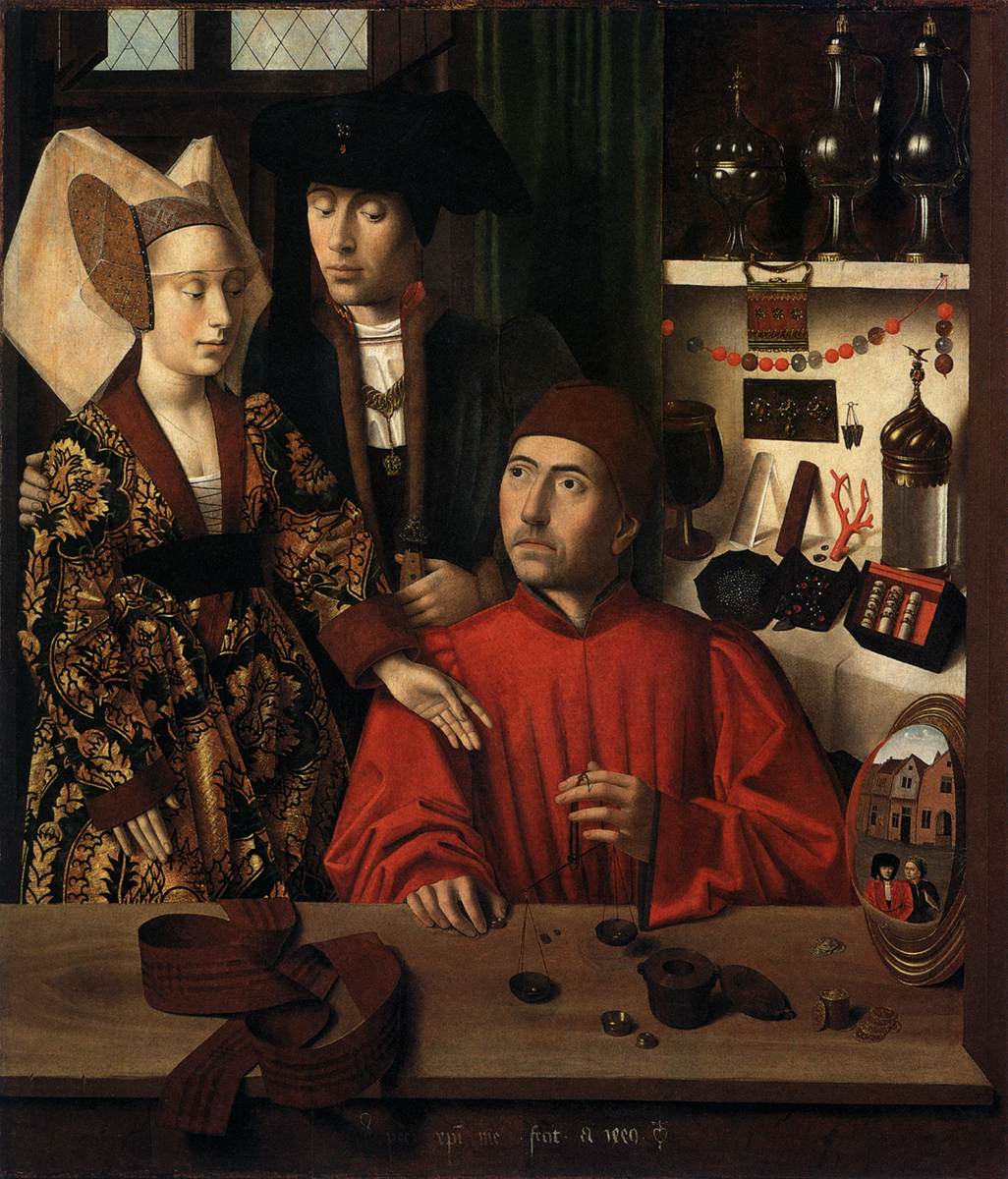
The painting shows Saint Eligius inside his workshop, surrounded by the tools and materials of a trade that demands precision. A richly dressed woman occupies the left side, wearing a large, light-colored headdress and a dress covered in gold motifs. Behind her stands a man in a black hat, while at the center a third figure, wrapped in a voluminous red robe, leans over the worktable. In front of him are a balance, weights, bowls, and small vessels. To the right, the shelves hold metal jugs, beads, jewels, trays, and carefully arranged objects; in the foreground, an oval vessel contains a tiny scene of houses and figures.
Saint Eligius is traditionally associated with goldsmithing and metalworking, and is venerated as the patron saint of goldsmiths, blacksmiths, and other related trades. The scene conveys this identity through a specific professional setting, closer to a commercial and artisan workshop than to an abstract vision of holiness. The saint is shown immersed in the everyday activity of the workshop, among objects being weighed, examined, and transformed. The couple beside him adds a dimension of exchange: the trade becomes a meeting point for technical knowledge, material value, and trust.
The scales and weights serve as essential attributes of the goldsmith, evoking the precise valuation of metals and precious objects. The beads, vessels, jewels, and gleaming surfaces expand this reading, turning the shelving into a visual inventory of material culture. The abundance of objects also suggests that the artisan’s knowledge is built through close observation. The red tunic distinguishes the central figure in the gloom and lends him an almost ceremonial presence, while the contrast between manual labor and the richness of the materials links devotion with the dignity of skilled work.
The vertical composition is densely organized. The three figures form a triangular core on the left and in the center, balanced by the laden shelving that occupies the right side. The table establishes a powerful horizontal line across the lower third, bringing together the gestures, tools, and objects that shape the narrative. The subdued light falls on the faces, the white headdress, the golden details, and the tunic’s crimson red; around them, browns and blacks absorb the space and create a restrained sense of depth. The diamond-paned windows in the background introduce an orderly geometry, while the accumulation of vessels and beads creates a rhythm of small, gleaming forms.
In A Goldsmith in His Shop, Petrus Christus connects the descriptive precision of 15th-century Flemish painting with a scene of intense visual concentration. The attention to surfaces, textiles, metals, and tiny objects makes the workshop seem like a place of practical knowledge, but also of contemplation. The darkness does not conceal the details: it selects them and makes them significant. The scales direct the gaze toward the saint, and from there the eye moves toward the shelves, following a chain of materials, measurements, and trades. Holiness thus becomes inseparable from the precision of the work.
Have questions about our oil painting reproductions? See our frequently asked questions.