


Description
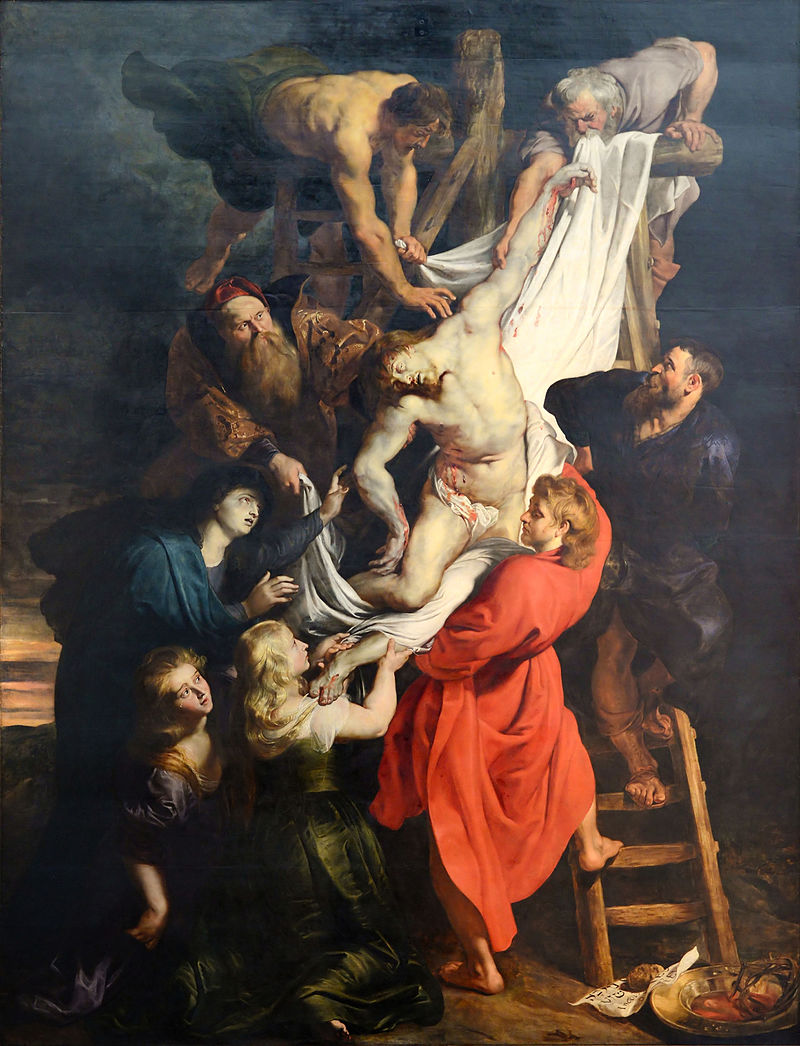
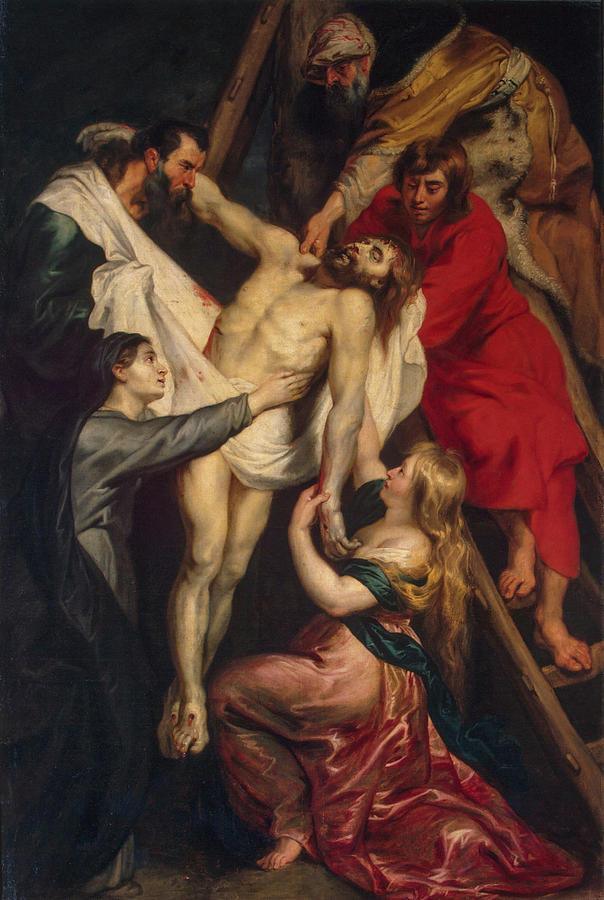
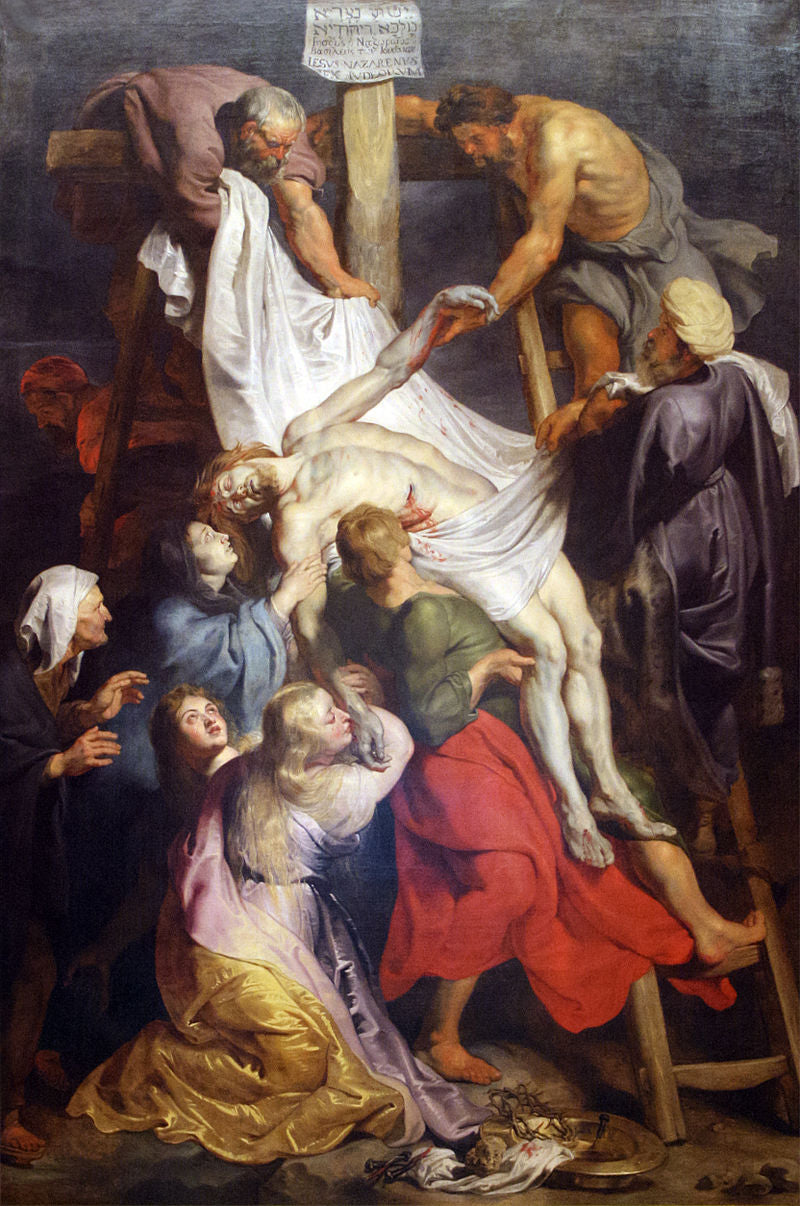
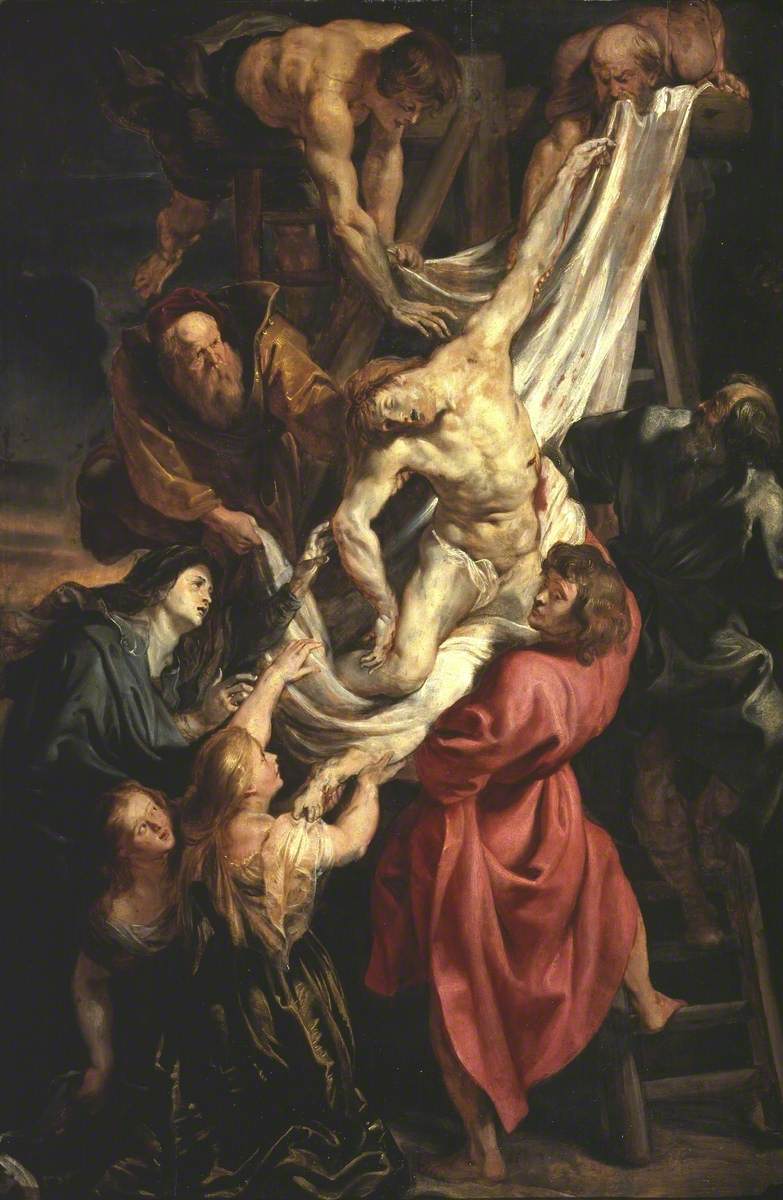
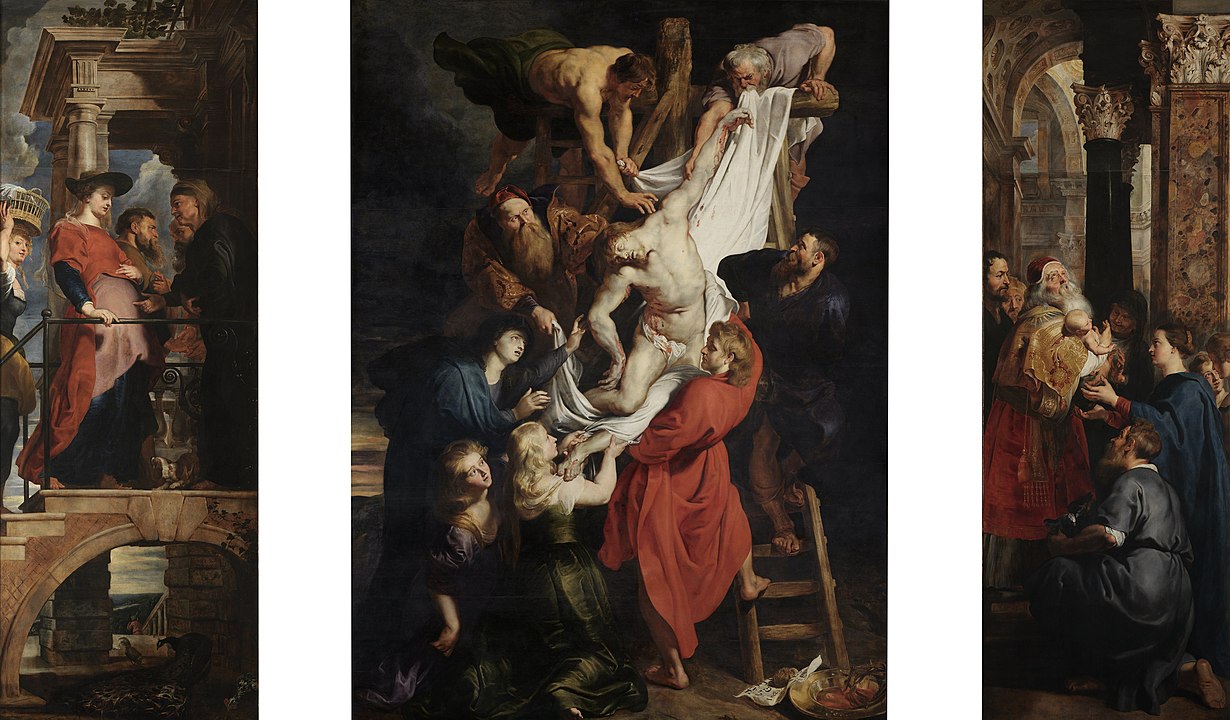
The painting depicts the Descent from the Cross as a collective action scene centered on Christ’s pale body. His naked figure extends diagonally across the center, while several people support him and receive him on a large white cloth. At the top, two men work beside the wooden structure; one pulls on the cloth while the other helps guide it downward. Around them, men and women lean in, raise their hands, and take part in the downward movement. The ladder on the right, the wooden crossbeams, and the objects scattered on the ground place the episode in the moments immediately after the Crucifixion. Dark, blue, green, and brown garments surround the central body, while a red robe creates a vivid focal point in the foreground.
The subject belongs to the narrative of Christ’s Passion and depicts the moment when Christ is taken down from the cross after his death. The scene brings together those helping with the descent and the figures sharing in the grief and lamentation. It is more than a physical act: the body passes from the cross to the group of his followers, and this transition turns the composition into an image of care, loss, and contemplation. The women’s raised hands intensify the human dimension of the episode, expressing an immediate response to death and directing attention toward the body they are all trying to support.
The white cloth serves a dual purpose in the work. It is a narrative element, allowing the body to be received and carried, but it also visually extends the diagonal that structures the entire scene. Its broad folds connect the figures above with those below and turn the descent into a continuous movement. The wooden structure and the ladder make the connection to the cross visible, as well as the tasks required to remove the body. The dark background sets the group apart from a barely suggested landscape and transforms the space into one of spiritual contemplation. Thus, the contrasts between light and shadow, skin and cloth, and stillness and physical exertion heighten the gravity of the episode.
The composition is arranged as a powerful diagonal chain. The illuminated body leads the eye from the upper right toward the lower left, while the arms, the folds of the cloth, and the lines of the wood repeat and reinforce this direction. The clustering of figures creates a sense of density, yet every gesture keeps the flow of the action clear: some pull, others receive, and still others watch. The ivory white of the body and cloth stands out against the almost black background, while the red garment in the lower right serves as a chromatic counterpoint and visual anchor. The lighting powerfully models the muscles, faces, and drapery, making the drama perceptible both in the bodies and in the rhythm of their movements.
In this work, Peter Paul Rubens draws on a Baroque visual language marked by powerful physicality, dynamic diagonals, collective action, and dramatic use of light. The intensity comes not from a single isolated gesture but from the coordination of all the participants around Christ: the cloth unfurls, the wood supports the scene, and the bodies form a choreography of exertion and grief. Notice how the clarity of the central figure directs every gaze, and how the deep colors make Christ seem to move toward the viewer as he is lowered. The result transforms an episode of the Passion into a profoundly solemn visual experience, in which narrative, symbolism, and formal structure remain inseparable.
Have questions about our oil painting reproductions? See our frequently asked questions.