


Description
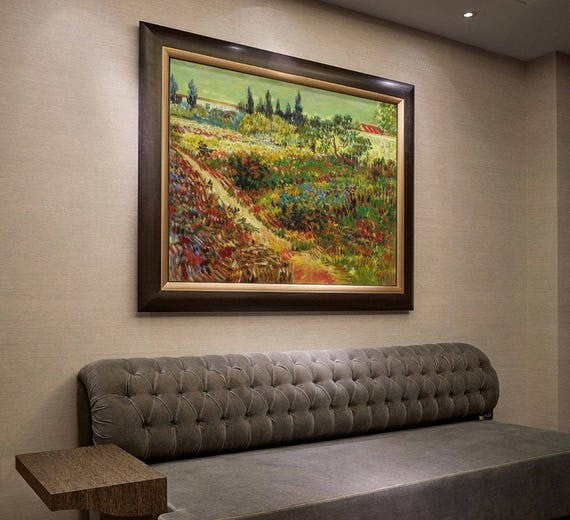
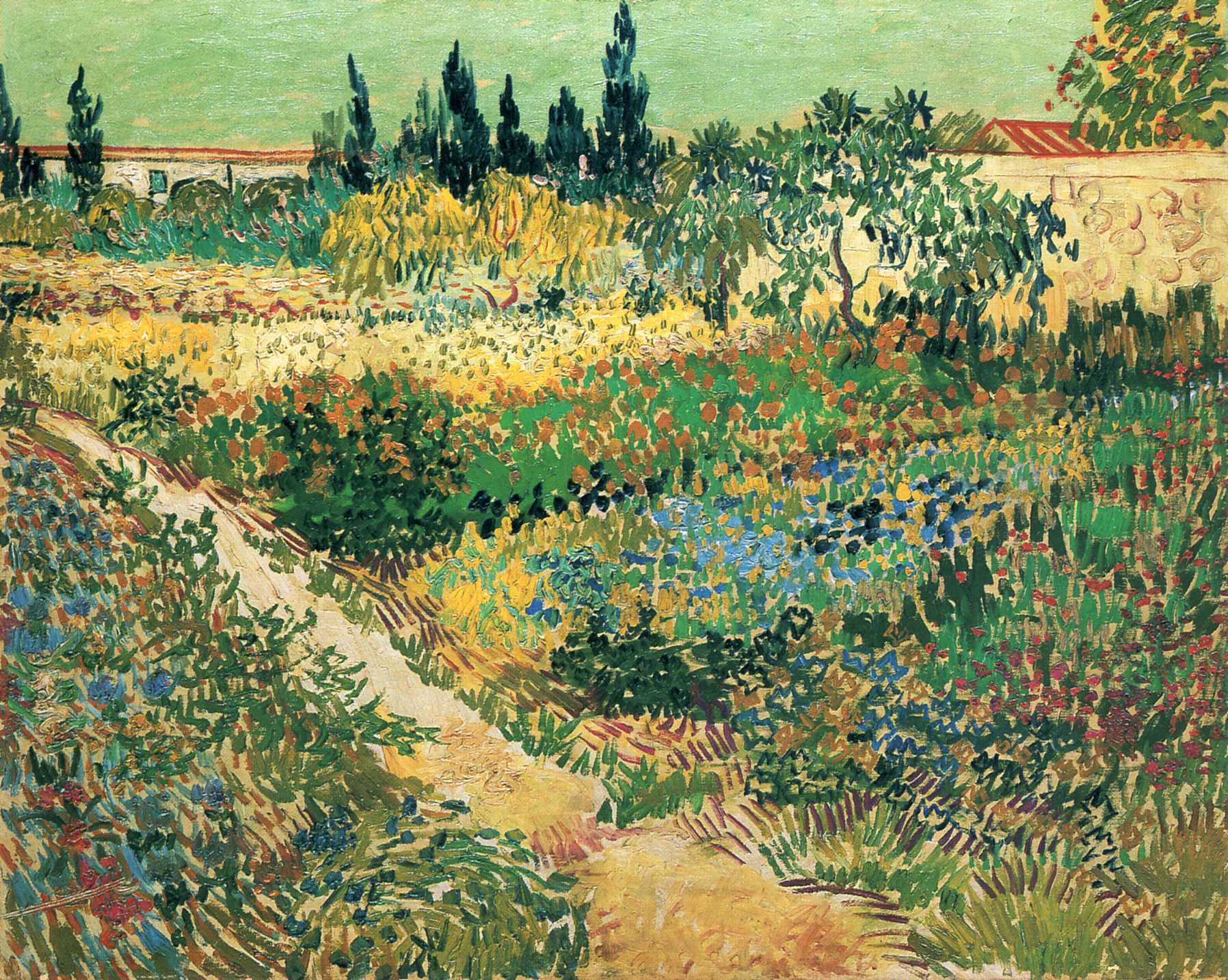
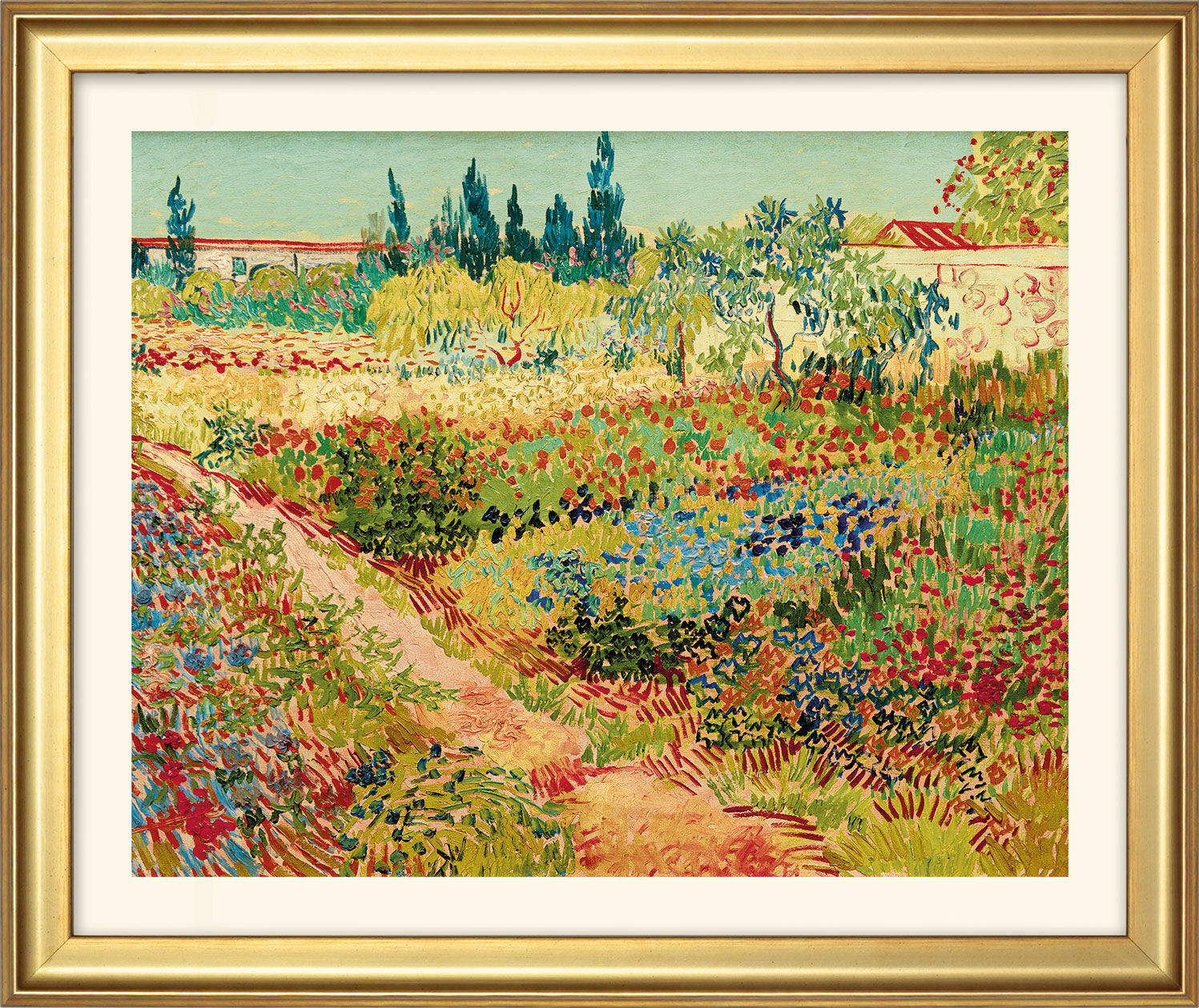
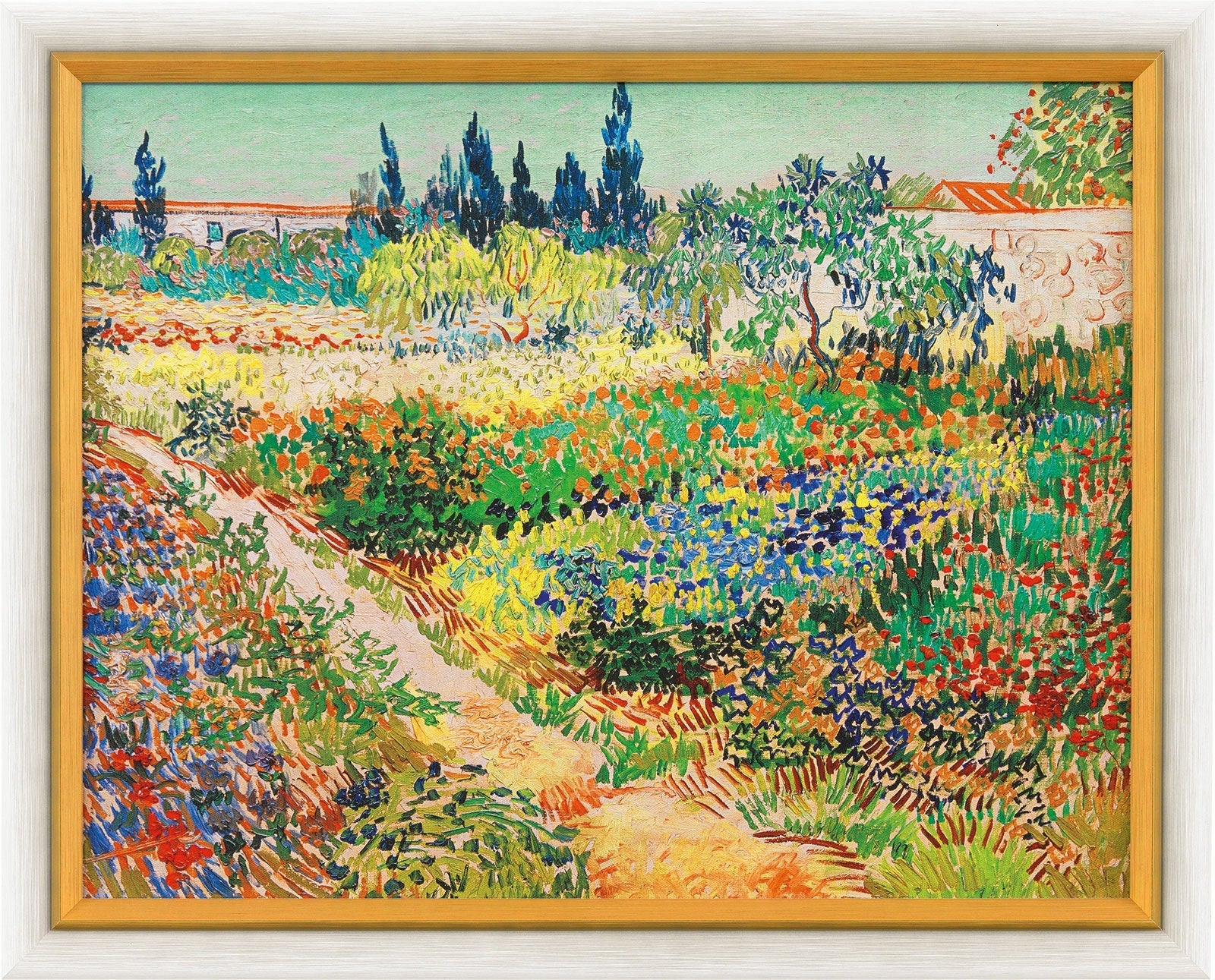
The painting depicts a lush garden crossed by a pale, winding path that enters from the foreground and leads the eye toward the center of the composition. On both sides of the path, flower beds extend in irregular bands, with reds, yellows, blues, oranges, pinks, whites and greens interspersed throughout. Shrubs and masses of foliage fill the space with an almost tactile richness, while a group of tall, slender trees marks the horizon. In the background, a cream-colored wall and several reddish roofs add a subtle architectural presence without detracting from the prominence of the vegetation.
As a garden landscape, Flowering Garden with a Path does not develop a specific historical, religious or mythological narrative. Its subject is the experience of walking through a cultivated space at the height of its seasonal vitality: an open garden, structured by paths and flower beds yet overflowing with color and growth. The path serves as a visual invitation to enter the scene, while the wall and buildings in the background suggest that this flower-filled setting is part of an inhabited space. The work thus connects with a landscape tradition that turns an everyday subject into an opportunity to study light, the rhythms of nature and the emotional intensity of color.
The path serves as a guiding line and route through the garden. Its curved course avoids a frontal entrance and leads the eye forward in stages, from the nearby flowers to the trees and structures on the horizon. The abundance of vegetation evokes fullness, renewal, and the energy of spring, while the transition between the garden and the wall lends a sense of scale and depth. The small pink ornamental marks in the background contribute to the surface’s chromatic animation without becoming an independent narrative element. The composition draws its strength from the relationship between the cultivated and the spontaneous: the flower beds are arranged with order, yet there is also an expansive vibrancy in the way they are depicted.
The horizontal composition is organized around a dominant diagonal. The path begins at the lower edge and curves to the left, establishing an axis that both divides and connects the masses of flowers. In the foreground, short, dense brushstrokes build up into visible marks; in the middle ground, these rhythms shift into bands of color and clusters of shrubs; in the background, the vertical trees and the wall anchor the scene. The blue-green sky opens up the upper part of the painting, providing a serene counterpoint to the intensity of the ground. The light is not concentrated in a single focal point but distributed across the entire surface, so that each flower bed contributes to the overall luminous effect. The eye continually shifts between the path and the contrasts between patches of flowers and foliage.
The approach associated with Vincent van Gogh is evident here in the chromatic intensity, the visible, directional brushwork, and the construction of the landscape through dynamic rhythms of vegetation and light rather than through neutral description. The garden ceases to be a mere setting and becomes an active surface, where every stroke contributes to a sense of movement. When viewing it, it is worth following the curve of the path first, then observing how the colors spread toward the flower beds, the trees, and the wall. This journey reveals the work’s central thesis: an everyday space can take on extraordinary energy when the structure of the landscape and the vibration of the brushwork work together.
Have questions about our oil painting reproductions? See our frequently asked questions.