

Description
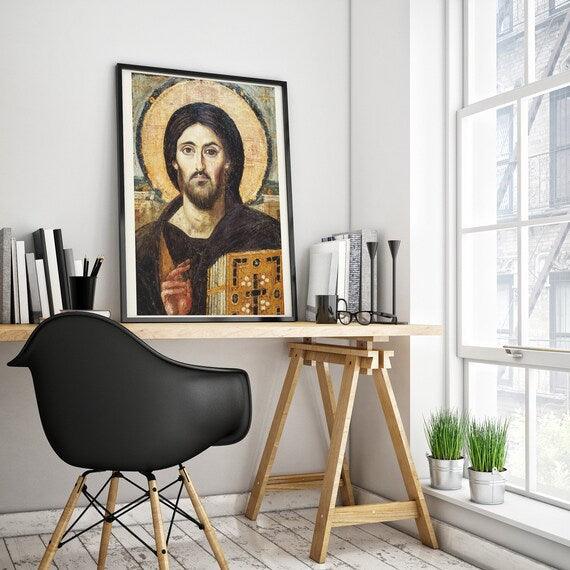
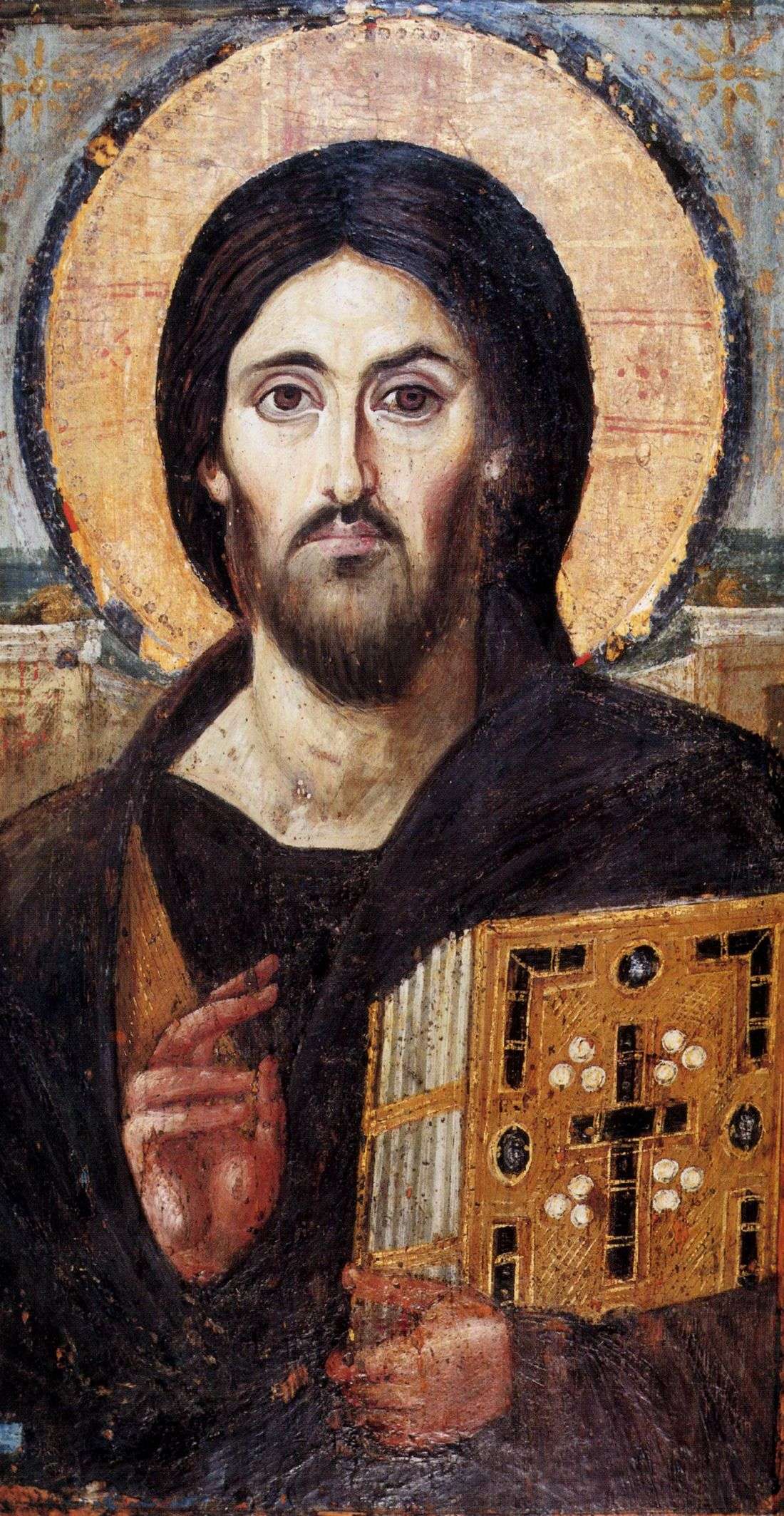
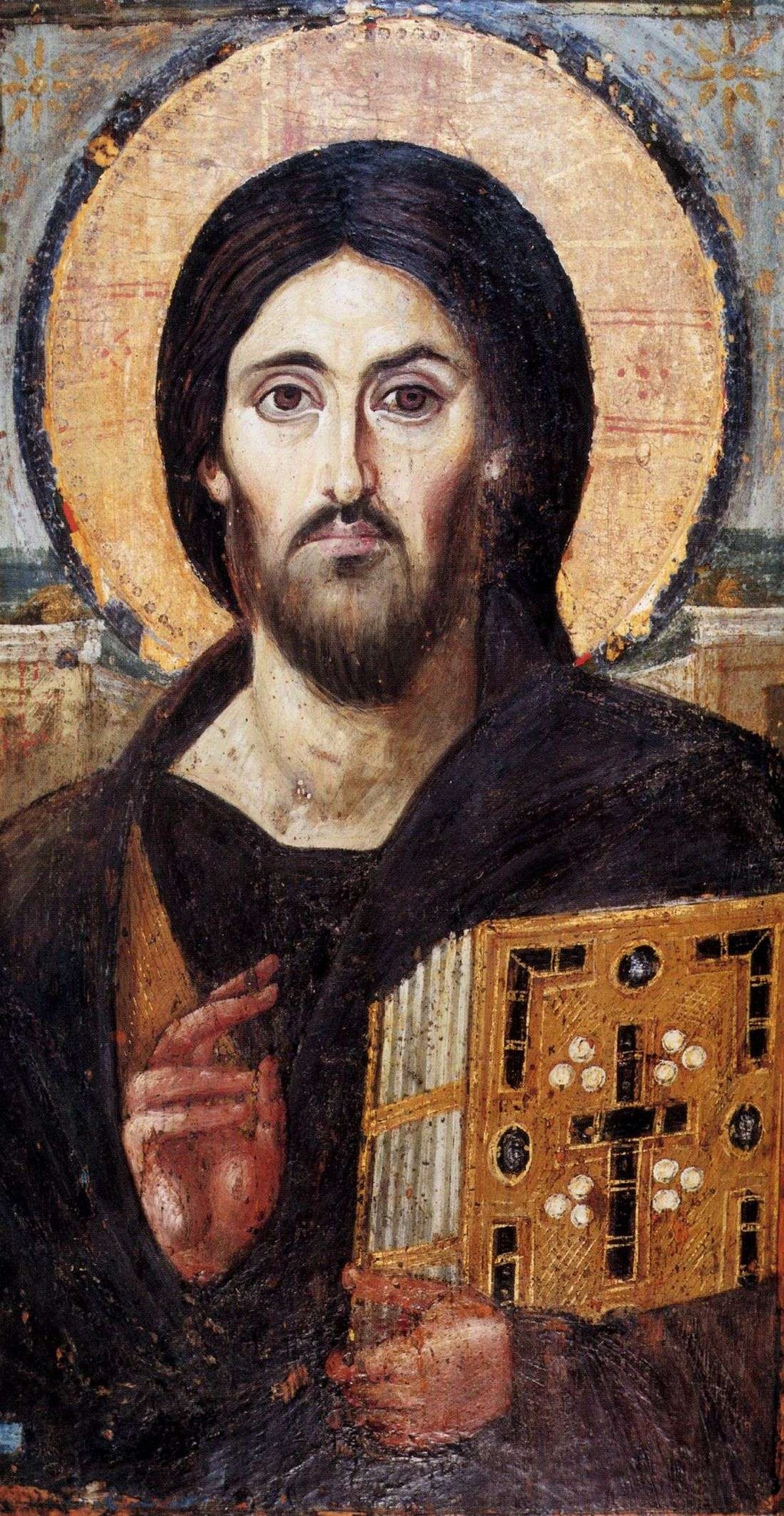
The painting depicts Christ Pantocrator in a frontal, focused composition. The male figure, with long hair, a beard, and a mustache, occupies the center of the painting and directs his serene presence toward the viewer. A large circular golden halo surrounds his head and extends toward the upper edges, while a dark mantle covers his shoulders and torso. His raised hand, open and facing forward, forms a gesture of blessing. In the lower area, a rectangular, richly ornamented golden object balances the composition and reinforces the ceremonial nature of the depiction.
Pantocrator is a Christian title that presents Christ as Almighty and universal sovereign. Unlike a narrative scene, this image does not recount a specific episode; instead, it offers a direct, timeless devotional presence. The hieratic frontal pose, serene gaze, and steady arrangement of the body make the figure one of spiritual authority. The halo identifies his sacred nature, while the hand gesture and the object associated with teaching refer to Christ’s role as guide, judge, and bearer of the divine word. The work thus belongs to a visual tradition centered on contemplation.
The attributes are arranged as a precise symbolic language. The golden circle surrounding Christ’s head visually separates him from the background and signifies his holiness; at the same time, its monumental scale makes the figure seem to radiate light from within. The raised hand can be read as a solemn blessing and as a manifestation of spiritual authority. The golden object, resembling an ornamented book, introduces the ideas of doctrine, knowledge, and the sacred word. The small geometric motifs on the halo and the object add a ritual dimension, while the dark mantle focuses attention on the face, hand, and symbols of power.
Formally, the work is built around a vertical, symmetrical, almost architectural structure. The face occupies the upper focal point, framed by the halo, and from there the gaze descends to the hand and the golden object, which serve as two secondary focal points. The contrast between black, deep brown, and gold clearly defines the figure, while the grayish blues and beige of the background soften the surroundings and keep them from competing with the subject. The horizontal bands and angular forms create a restrained ornamental rhythm. The rigid frontal pose lessens the sense of movement and instead evokes a feeling of ceremonial stillness.
In KUADROS’s interpretation, Christ Pantocrator is presented through a synthesis of chromatic austerity, decorative geometry, and recognizable symbols. The muted background brings out the radiance of the halo; the dark mantle gives the figure bodily weight, while the golden details add a precious shimmer without disrupting the gravity of the composition. Notice how the painting guides the gaze downward, from the halo to the face, from the face to the blessing hand, and from there to the ornamented book. This visual sequence brings the entire work together: holiness, authority, and teaching are united in a silent, frontal presence.
Have questions about our oil painting reproductions? See our frequently asked questions.